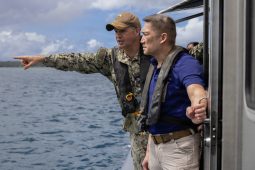
Hung Cao, then-undersecretary of the Navy, meets with Capt. John Frye, commanding officer, U.S. Naval Base Guam, Feb. 23, 2026. (U.S. Navy photo by Rey Rabara)
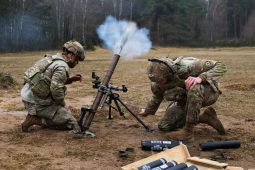
U.S. Army Staff Sgt. Freddy Muñoz and Sgt. Kory Millsap, assigned to 3rd Squadron, 2d Cavalry Regiment, engage a target using an M224A1 60mm Lightweight Mortar System from a conventional setup at Grafenwoehr Training Area, Germany, March 17, 2026. (U.S. Army Reserve photo by Sgt. Addison Shinn)
Blast overpressure, as the effect is called, is the sudden, volatile expansion of air from not only explosions, but weapon systems commonly used by ground troops.
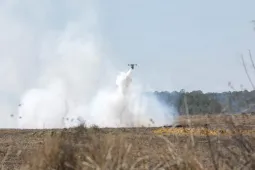
U.S. Soldiers assigned to 6th Squadron, 8th Calvary Regiment, 2nd Armored Brigade Combat Team, 3rd Infantry Division deploy a smoke screen during Spartan Focus at Fort Stewart, Georgia, Feb.13, 2026. Dogface Soldiers employ drones to identify enemy movements, extend reconnaissance and enhance obscuration efforts through coordinated smoke screens. (U.S. Army photo by Cpl. Jaimee Perez)
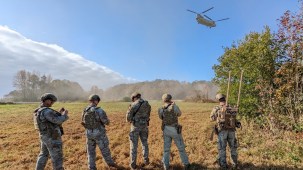
Airmen at Joint Base Langley Eustis, Virginia perform field exercises during Force Protection Operational Rehearsal (FPOR). An Airman (right) carries the dismounted “manpack” JCREW system to show capabilities during the event in November of 2022. (Defense Dept. photo)