Precision Strike Missile, made possible by Trump’s treaty withdrawal, has combat debut against Iran
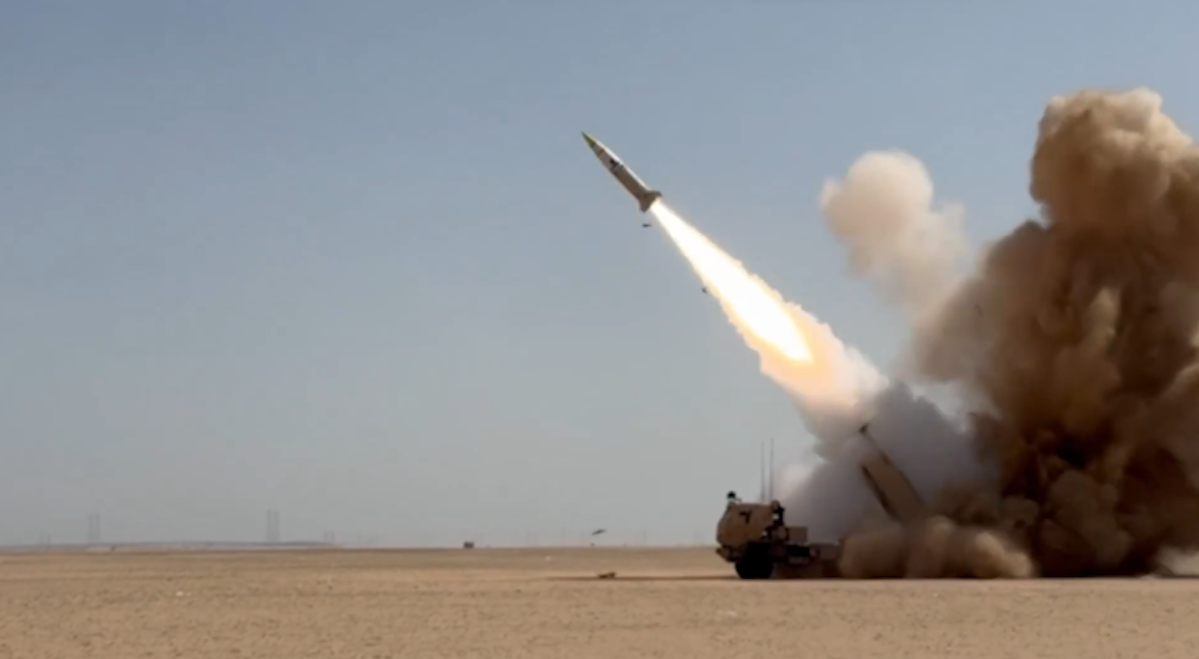
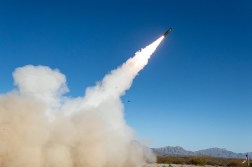
The Army’s Precision Strike Missile (PrSM) was used during Operation Epic Fury to strike Iranian targets, marking the long-range weapon’s first operational deployment since it was fielded in 2023.
U.S. Central Command confirmed the weapon’s use Wednesday in a post on X, which included a video showing PrSM being launched from an M142 High Mobility Artillery Rocket System (HIMARS). While the command has not provided details as to where the munition is located, the post noted that PrSM is “providing an unrivaled deep strike capability” to U.S. forces in the Middle East.
“I just could not be prouder of our men and women in uniform leveraging innovation to create dilemmas for the enemy,” Centcom commander Adm. Brad Cooper said in a statement.
Developed and manufactured by Lockheed Martin, the PrSM Increment 1 is a surface-to-surface ballistic missile designed to gradually replace the MGM-140 Army Tactical Missile System (ATACMS) that was first used during Operation Desert Storm. The weapon can be launched via HIMARS ground vehicles or the M270 Multiple Launch Rocket System (MLRS).
The most notable capability of the PrSM is its extended range, as it is able to strike targets from at least 500 kilometers away using a GPS navigation system. Although its operational debut was in the Middle East, the weapon was initially designed to counter China’s anti-access/area denial (A2/AD) capabilities in the Indo-Pacific from great distances.
The Pentagon was previously unable to field ground-launched missiles of that range due to limitations posed by the Intermediate-Range Nuclear Forces (INF) Treaty, which the U.S. pulled out of in 2019 during President Donald Trump’s first term.
“Now that we’re out of the INF Treaty, it can be longer than 500 kilometers in range and we’re going to be pumping those out like sausages,” Tom Karako, director of the Missile Defense Project at the Center for Strategic and International Studies, said Thursday during a webinar. “Anybody in the world, our friends, who has a HIMARS launcher is going to want to stuff some PrSMs into it to have longer reach than the previous ATACMS.”
Centcom did not share what the targets of the PrSM launch were during the opening days of Epic Fury. The command publicly stated its current targets for ongoing strikes are Iranian command and control centers, air defense systems, ballistic missile sites and more. Given the weapon’s range, Karako noted that the PrSM could have been fired into Iran from across the Persian Gulf.
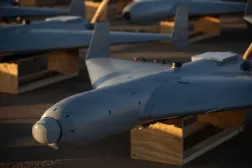
The Pentagon has deployed a range of munitions during Epic Fury, including Patriot interceptors, Terminal High Altitude Area Defense (THAAD) systems and Tomahawk land attack missiles, according to Centcom. Low-cost Uncrewed Combat Attack System (LUCAS) drones also made their operational debut in the opening days of the campaign.
However, the scope of the operation has raised concerns about the United States’ munitions stockpiles and the defense industrial base’s ability to rapidly replenish the weapons spent in Iran.
In the case of long-range weapons like the PrSM, defense experts have warned that overusing them in the Middle East will deplete the U.S. military’s missile supply meant to be deployed during a potential conflict with China in the Indo-Pacific.
“I would hope this was more of a demonstration launch, and that the PrSMs are being conserved for future use in the Pacific theater,” retired Rear Adm. Mark Montgomery, senior fellow at the Foundation for Defense of Democracies, told DefenseScoop. “This is particularly important as [Chairman of the Joint Chiefs of Staff Gen. Dan Caine] mentioned that we are reducing our use of the more expensive munitions in the strike campaign against Iran.”
The PrSM has a price tag ranging from $1.6 million to over $3.5 million based on production volume. The Army’s budget request for fiscal 2026 included funds to procure just 45 of the missiles.
Meanwhile, the service is planning for multiple follow-on variants to the PrSM Increment 1 baseline that feature unique and upgraded capabilities. Increment 2 — known as the Land-Based Anti-Ship Missile (LBASM) — will have a multimode seeker and be able to strike sea-based targets, while Increment 3 is meant to use a more explosive munition.
Lockheed Martin and a Northrop Grumman-Raytheon team are currently competing for the Army’s PrSM Increment 4 design, expected to fly more than 1,000 kilometers. The service also said in 2024 that it is pursuing an Increment 5 variation that can be deployed from an autonomous launcher.