Army gives some civilian employees days to accept reassignments, separations or face involuntary moves amid force-wide rebalancing effort
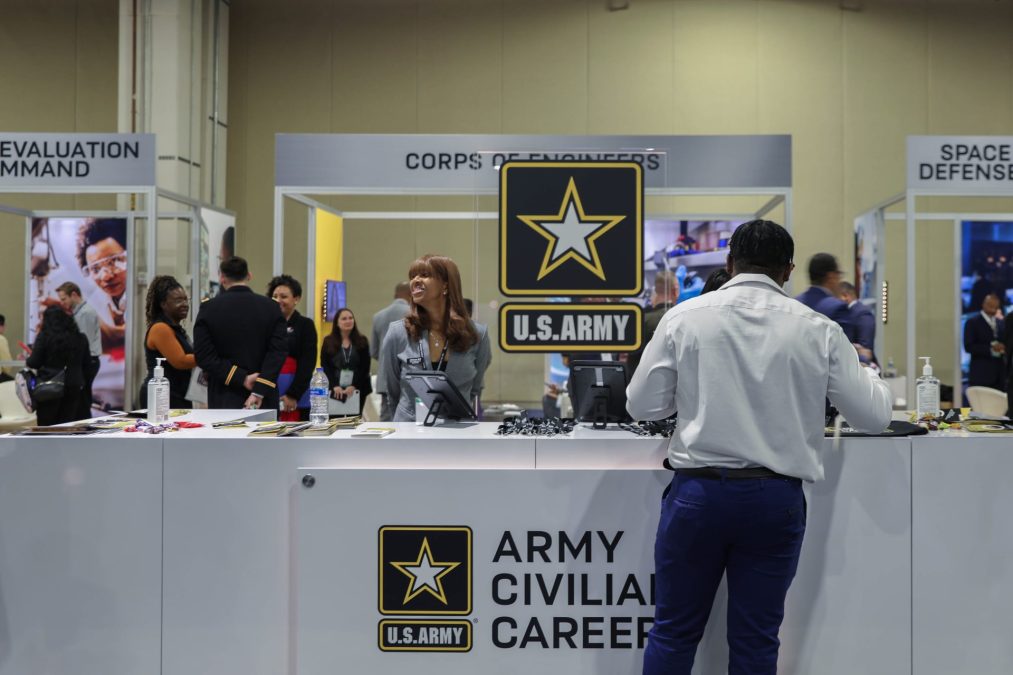
As part of a force-wide “rebalancing” and cost-saving effort, the Army started notifying thousands of civilian employees this week that their roles are surplus, DefenseScoop has learned, giving them days to accept offers to voluntarily fill open vacancies or separate, or be forced to move positions.
Since the beginning of the second Trump administration, the Army has undergone significant structural changes, to include consolidating multiple entities into a single command. The result has produced roughly 20,000 vacant positions across the force and marked thousands of jobs as excess because they aren’t authorized under the service’s current structure.
Over the last three months, Army officials told DefenseScoop, commands across the service looked to match those vacant positions with available — now surplus — personnel to level that disparity using an AI tool. While the tool was used to make the matches, they said, “all moves must be approved by” commanders and unit HR personnel.
The employees can appeal involuntary “management-directed” reassignments, but should those requests be denied or civilians reject the service’s offers altogether, they will be cut from federal employment. One commander said the rebalancing will bring “difficult decisions” for his civilian workforce.
“This strategic realignment is the most responsible path forward, ensuring the Army’s civilian talent is positioned for maximum impact while securing significant cost savings and enhancing readiness,” said Col. Marty Meiners, a spokesperson for the Army. “This will improve operations for units across the Army.”
The Army employs roughly 250,000 civilians and this reorganization is expected to affect 5,000-6,000 personnel, officials said. They laid out a multi-phase plan — expected to extend into next month — which includes first matching employees to open spots within their command, and then to vacancies across the Army.
If an employee is notified of an “intra-command” move, they will have two days to accept or deny the offer, an Army official said. If it is a “non-local” move, meaning a position outside of their current command, they will have five days to decide, though either option could “take several months” to relocate employees.
The restructuring comes amid sweeping changes to the Defense Department’s workforce under the Trump administration, changes that have caused top service officials to signal concern over their organizations’ readiness and low morale among the DOD’s civilian staff.
Last spring, Defense Secretary Pete Hegseth began a sweeping push to slash tens of thousands of DOD civilian jobs amid a broader administration effort to reduce the size and spending of the federal government. Hegseth also implemented a hiring freeze, blocking the services from bringing in new employees outside of critical exceptions.
For the new rebalancing effort, one official said the service stood up a “strategic hiring committee” to identify positions, but the Army “wanted to be good stewards of the taxpayers’ dollars and not just hire — we wanted to rebalance first and then hire.”
Officials billed this reorganization as the Army Command Matching Program, meant to avoid a reduction in force and “get our people in the right places and create a disciplined path back to external hiring.”
“Command Matching is about aligning our talented civilians with the roles where their skills, experience, and dedication are most needed,” Meiners said. “Eliminating discrepancies between outdated personnel allocations and updated command structures will lead to a cost savings in the billions — which can be used to re-divert critical funding into key Army transformation priorities.”
Last year, the service began a massive overhaul known as the Army Transformation Initiative, aimed at shedding outdated systems for tech-forward programs to become “leaner.” That initiative has shaken-up force structures, acquisition systems and brought uniformed personnel cuts.
“For the uniform side, there is an expectation when you put on the uniform that the Army could move you,” said Katherine Kuzminski, a military policy expert at the Center for a New American Security. For civilians, “there has been more of an expectation that this is a stable job, and I’m not likely to have to move unless I choose to move within the [Department of the Army] civilian architecture. So I do think that it may be a decision they didn’t expect to have to make.”
It was not immediately clear how moving several thousand employees, some of whom may take separation pay, would result in billions in savings.
Army officials said the service’s rebalancing was not part of the Trump administration’s DOGE efforts, which wrought mass personnel cuts across the federal government last year. They said they weren’t offering the Deferred Resignation Program to employees, a now-closed initiative often referred to as the “fork in the road” that the Trump administration used to reduce the workforce.
Instead, the Army is offering two federal separation options. The first is the Voluntary Separation Incentive Payment, which allows restructuring agencies to pay employees who have worked for the government for at least three consecutive years, up to a $25,000 lump-sum to leave federal service and is often used to avoid “disruptive” reductions in force.
If an employee chooses this option and returns to federal government work within five years, they must repay the entire amount back to said agency.
The other is the Voluntary Early Retirement Authority, which allows agencies to temporarily lower retirement requirements so federal employees who are at least 50-years-old with 20 years of federal service or any aged employee with at least 25 years of service can retire early.
An Army official said the rebalancing is directed at larger service and theater-level entities, naming Army Materiel Command as one.
One of the concerns top service officials expressed amid mass slashings last year was that they affected different entities disproportionally, meaning some units bore the brunt of cuts and had to adjust more than other counterparts.
While the official did not disclose how many total commands will experience the rebalancing, they said surplus “over hires” range from just a few employees to 75 across units.
One community affected by the reorganization is the Army’s cyber force, part of a digital domain that top service officials said has become increasingly important to combatting sophisticated adversaries.
In an email reviewed by DefenseScoop, U.S. Army Cyber Command’s top officer told personnel that the service started “an Army-wide rebalancing to optimize our workforce” because its authorized fiscal 2027 structure cut positions and left “critical vacancies across the force.”
Lt. Gen. Christopher Eubank, commanding general of ARCYBER, laid out a three-phased “strategy” in the message: voluntary resignations and retirements; voluntary reassignments and placements; and the final phase, “management-directed reassignments (involuntary),” according to the email.
That strategy aligns with the path other Army officials described, though it includes different internal phasing.
“The Army has now directed Commands to begin implementing Phase III,” Eubank wrote. “While this involves difficult decisions, we are committed to prioritizing voluntary options first and minimizing involuntary actions.”
He added that his command will prioritize finding new positions “for our teammates within the local commuting area,” an effort he said is already underway. He also said ARCYBER will “only consider reassignments” to other locations after “all local options have been exhausted” and, “where feasible, consider alternate work locations for certain positions.”
Spokespeople from ARCYBER did not respond to DefenseScoop’s questions by publication.
ARCYBER, headquartered at Fort Gordon in Georgia, is the supporting Army headquarters under U.S. Cyber Command and conducts defensive operations to protect military networks and offensive ops against adversaries. It also has regional centers in Arizona, Hawaii, Germany, South Korea and Kuwait, according to the organization’s website.
When asked if an “intra-command” move would mean a civilian employee may need to leave the country, given commands have units across the globe, the Army official said “it’s possible [but] out of the country is probably low, the person would have to volunteer for that, but it is possible outside of the state.”
The official said the AI tool, housed in Army Vantage, which is developed by Palantir, was used to inform commanders of matching options for their employees, but that they are ultimately deciding where to move personnel. They said moves may also be “down the hallway.”
“Part of what we’ve done with this tool though as well is [being] able to identify positions that are within commuting distance of their current locations and flagging that before you move a person out of state,” they said. “The tool helps with that, identifying where that person is — [their] geolocation code — and then where the vacancies are to minimize the amount of moves that are required.”