The Pentagon is pursuing multiple initiatives to enhance its space posture, including the Proliferated Warfighter Space Architecture and the Space Data Network.
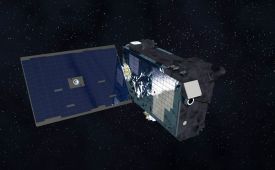
STEP 2.0 will fill an existing gap in the Space Test Program’s ability to procure and launch science-and-technology payloads, according to the Space Force.
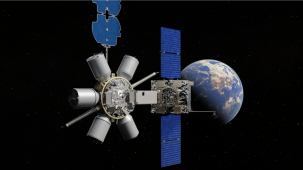
Rendering of Northrop Grumman’s GAS-T design that will leverage an ESPAStar-D satellite platform to add fuel and extend the life of in-orbit assets. (Northrop Grumman image)
The efforts are driven in part by U.S. Space Command’s shift towards “dynamic space operations” — the ability to easily, continuously and quickly maneuver on-orbit satellites.
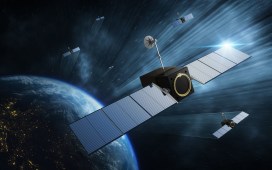
The successful review paves the way for six satellites — part of Epoch 1 of the service’s Resilient Missile Warning and Missile Tracking-MEO (MEO MW/MT) program —…
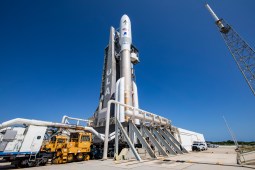
A United Launch Alliance (ULA) Atlas V rocket with the SILENTBARKER/NROL-107 mission for the National Reconnaissance Office (NRO) and United States Space Force rolls from the Vertical Integration Facility (VIF) to the launch pad at Space Launch Complex-41 at Cape Canaveral Space Force Station, Florida. (United Launch Alliance photo)