DISA looks to ramp up capability acquisition, delivery speed
TOWSON, Md. — In light of renewed calls for procurement reforms across the Pentagon, the Defense Information Systems Agency is reworking how it rapidly buys and fields “functionally relevant capabilities,” according to the agency’s director.
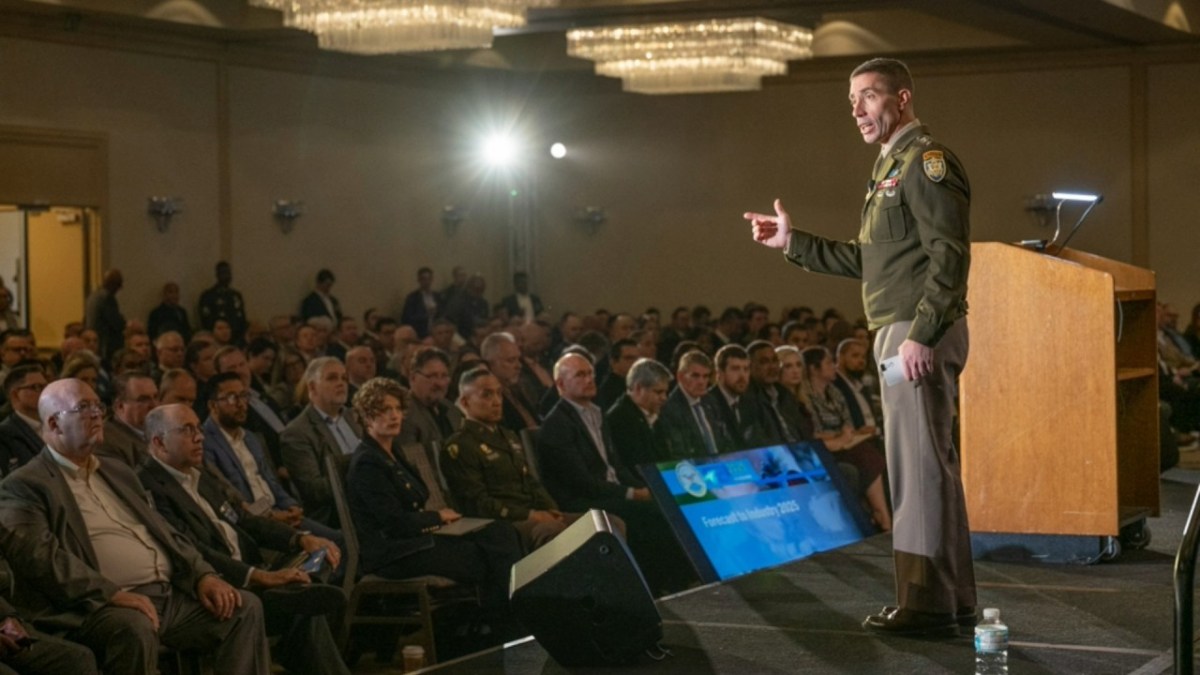
“Functionally relevant capability means that I do not hand [Adm. Samuel Paparo, U.S. Indo-Pacific Command commander] a widget, but rather a fully integrated system-of-systems that solves a meaningful problem for the commander and his warfighting requirements,” Lt. Gen. Paul Stanton, director of DISA and commander of Department of Defense Cyber Defense Command, said Monday during a keynote address at the agency’s annual Forecast to Industry event.
Over the last few months, the Defense Department has launched a slew of efforts to reform its acquisition processes to drastically reduce the time it takes to put new capabilities into the field. A key part of the Pentagon’s strategy has been directing the military services and other DOD components to prioritize deployment of functional systems that are about an 80 percent solution — rather than spend time waiting for a perfect solution that might never arrive.
During a meeting with reporters, Stanton added that DISA has already been employing that strategy across its portfolios and is now looking for opportunities to scale it across the enterprise.
“What we’re doing now is bringing them together in time and space aligned with the requirement presented by a combatant command,” Stanton said during a media roundtable at DISA’s annual Forecast to Industry event. “It’s not that we’re doing less, it’s [that] we’re organizing ourselves to deliver functionally relevant capabilities in support of an actual mission, and then we’ll look to scale that.”
That doesn’t mean DISA is starting new programs and only developing them to 80 percent completion, according to Jason Martin, the agency’s component acquisition executive and acquisition director. Rather, the strategy focuses on modernizing existing systems with new technology based on the specific needs of combatant commanders, he told reporters.
“The vast majority of our requirements come through operational discussions, operational meetings, meetings with the customer base or the mission partner, … and we are either slightly adjusting things or incorporating new capability into existing products,” Martin said.
At the same time, DISA is looking to shift its culture to embrace agile and fast procurement. Starting in March 2026, at least 40 percent of the agency’s programs should use at least one of the so-called “acquisition accelerators,” and at least 80 percent will use those tools by the end of fiscal 2026.
DISA Director of Procurement Services Directorate Doug Packard explained that acquisition accelerators are mechanisms currently used for the agency’s task order awards — such as a blanket purchase agreement or internal contracting vehicle. Another option could be oral presentations that can substitute or augment a bidder’s written program proposals, he said.
By implementing the accelerators like oral presentations, DISA hopes it will be able to speed up the entire source selection process, Carlen Capenos, director of the agency’s office of small business programs, told reporters.
“It’s getting the information in a one-hour session, versus five source selection member teams reading a 30-page proposal [and] getting together to sort it out,” Capenos said.