How Transcom is handling medical evacuations and planning for Operation Epic Fury
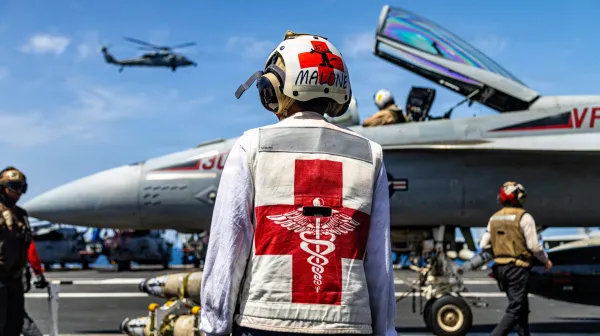
Operation Epic Fury is stress-testing the U.S. military’s medical evacuation system at a time when lawmakers say it is already ill-prepared for future scenarios involving multi‑theater wars.
Beyond moving forces and cargo worldwide for all combatant commands and defense agencies during peace and wartime, U.S. Transportation Command is also responsible for quickly transferring sick and injured troops to medical facilities for specialized treatments and recovery, at the request of other combatant commands.
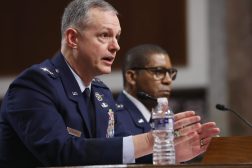
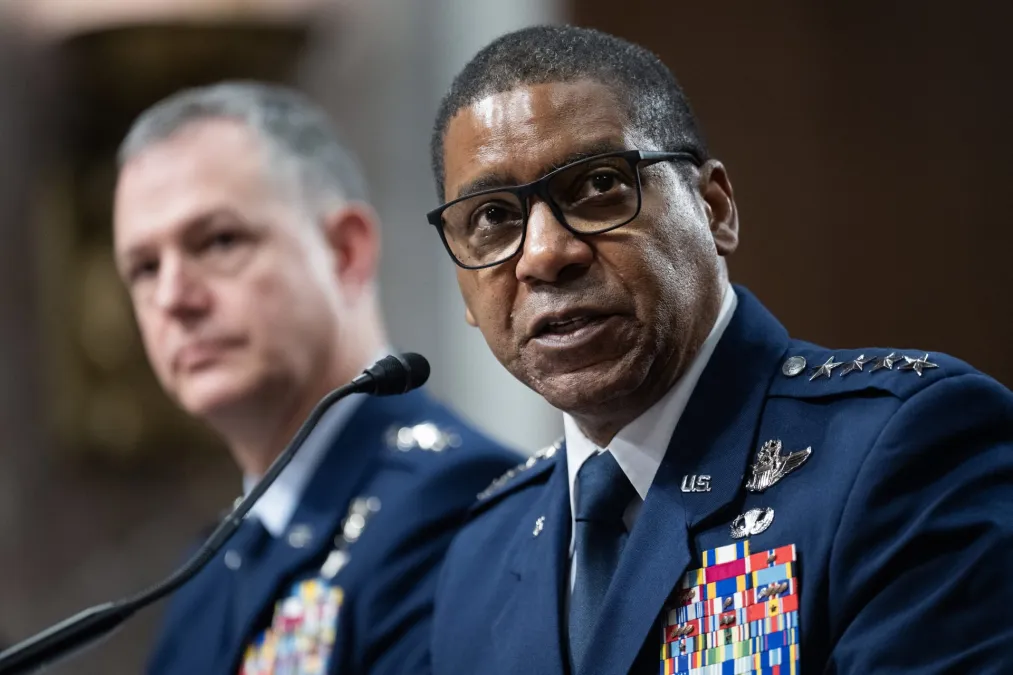
Transcom commander Gen. Randall Reed said his team has established “a network for aeromedical evacuation in order to bring home the wounded and to also get them to a higher level of care” amid Epic Fury.
His testimony at a recent Senate Armed Services Committee hearing as well as new details shared by a Transcom spokesperson, shed light on some of the command’s recent accomplishments and obstacles emerging with medical evacuations in high-intensity conflicts.
“U.S. Transportation Command stands ready to swiftly move wounded, ill and injured personnel to life-saving care anywhere in the world, delivering on our nation’s promise to bring them home,” the spokesperson said.
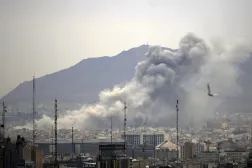
President Donald Trump launched Operation Epic Fury on Feb. 28 as a U.S.-led, Israel-coordinated military campaign to destroy Iran’s leadership, weapons arsenals and nuclear infrastructure.
In response, Iran is holding up maritime traffic near the Strait of Hormuz on a major global shipping route for oil, while also attacking U.S. military facilities and other targets with explosive drones and missile barrages around the Middle East.
Approximately 200 U.S. service members were wounded over the two initial weeks of assaults, a U.S. Central Command official told DefenseScoop last week. At least 13 U.S. military personnel have reportedly been killed.
On Monday, Trump announced a five-day pause on planned U.S. strikes against Iranian power plants and energy infrastructure, citing “very good and productive” talks with Tehran. Not long after the president’s social media post, Iran’s foreign ministry denied that such dialogue occurred between the nations.
Open-source flight log reports suggest Transcom and its Air Mobility Command component have completed about a dozen or fewer aeromedical operations since the start of Operation Epic Fury, although a total number of medevacs has not been publicly confirmed.
“For Epic Fury, we have executed patient movement to safely deliver service members to locations best-suited to facilitate the appropriate level of care,” a Transcom spokesperson told DefenseScoop. “These movements are closely coordinated with operational and medical authorities for safe and efficient transport across the continuum of care.”
The command is operating in complex environments where distance, time and threat conditions challenge traditional assumptions about access, routing and timelines.
On top of that, multiple senators warned at the SASC hearing that America’s current war with Iran is applying further pressure on Transcom’s aging air mobility and refueling fleets — and the medevac system’s capacity to simultaneously support other theaters and exercises.
“Medical evacuation in contested settings requires coordination across air, ground, and command and control domains, while addressing disruptions to routing, communications, and access to forward locations. These challenges can delay movement, limit options, and increase risk to patients and medical teams,” the Transcom spokesperson said. “We are adapting patient movement planning and execution by emphasizing distributed operations, closer collaboration with combatant commands, and greater flexibility under degraded conditions.”
In his written and verbal testimonies for the SASC hearing, Reed also discussed contemporary issues the command is confronting when transporting critical care patients in air spaces that are threatened by missiles and drones — like what’s unfolding currently in the Middle East.
“Meeting the demands of large-scale conflict requires continued progress on aeromedical evacuation and Critical Care Air Transport Team readiness; work that demands deliberate, multi-year investment,” he told lawmakers. “We are addressing these requirements while continuing responsible use of all available resources.”
Reed also noted that conducting medevac while under fire requires Transcom to use a full system that involves people, secure paths, and close integration with combat operations.
The commander pointed to a need for “forward-staging” medical, communications and information technology teams and assets, and the force protection that underpins medevac operations during warfare.
“Sometimes we have to put those in place in an environment that’s contested, and then they continue to serve throughout, but that is done in concert with the theater commander who provides the force protection. And then once the scheduling begins, we then put the aircraft in place at the point and time of need. It requires that the patients are stabilized — and once they’re assembled, we pick them up, and then we fly them out,” Reed told lawmakers. “We also depend on force protection to clear the airspace so that the aircraft can get to the next [destination].”
Forward-staged teams are typically small, specialized units positioned closer to operational areas to stabilize and prepare patients for movement. They are trained to operate with limited infrastructure and under potential threats.
“Protecting these teams and aircraft is critical to safe operations. This includes working with commanders to secure locations, safeguard personnel, and maintain access to airfields or landing zones,” the Transcom spokesperson said. “Forward positioning and protection reduce time to care and allow patient movement in challenging conditions.”
Funding is needed to advance mobility platforms, medical equipment, and training for operations in risky environments to help Transcom adapt and enhance patient movement capabilities for potential future conflicts.
“Priorities include improving interoperability across the Joint Force, strengthening coordination with interagency and international partners, and preparing the force to operate under degraded conditions,” the spokesperson told DefenseScoop. “Continued support postures us to move wounded, ill, and injured personnel wherever required.”
The command is also increasingly working with international, military, federal and civilian partners to move patients globally from the point of injury to definitive care.
According to Reed’s testimony, the National Defense Authorization Act for fiscal 2026 “significantly expanded [Transcom’s] authorities to enter Military Medical Cooperation Arrangements with the [Five Eyes] partner nations.”
Members of the intelligence-sharing Five Eyes alliance include the U.S., U.K., Canada, Australia and New Zealand.
“These authorities present a unique opportunity to foster international collaboration and integration in the delivery of medical care and treatment to the wounded,” Reed wrote. “They have the potential to build the type of strong collaborative relationships across the military medical treatment enterprise that mirrors our combat forces.”