Army taps industry for sensor tech to help assess impacts of blasts on troops
The Army is looking for sensors designed to assess the physiological effects of rapid, damaging shock waves caused by explosions, according to a recent government notice.
Officials are conducting market research on technologies that could give the military better data about troop health after decades of blast exposure and new impacts of lethal drones.
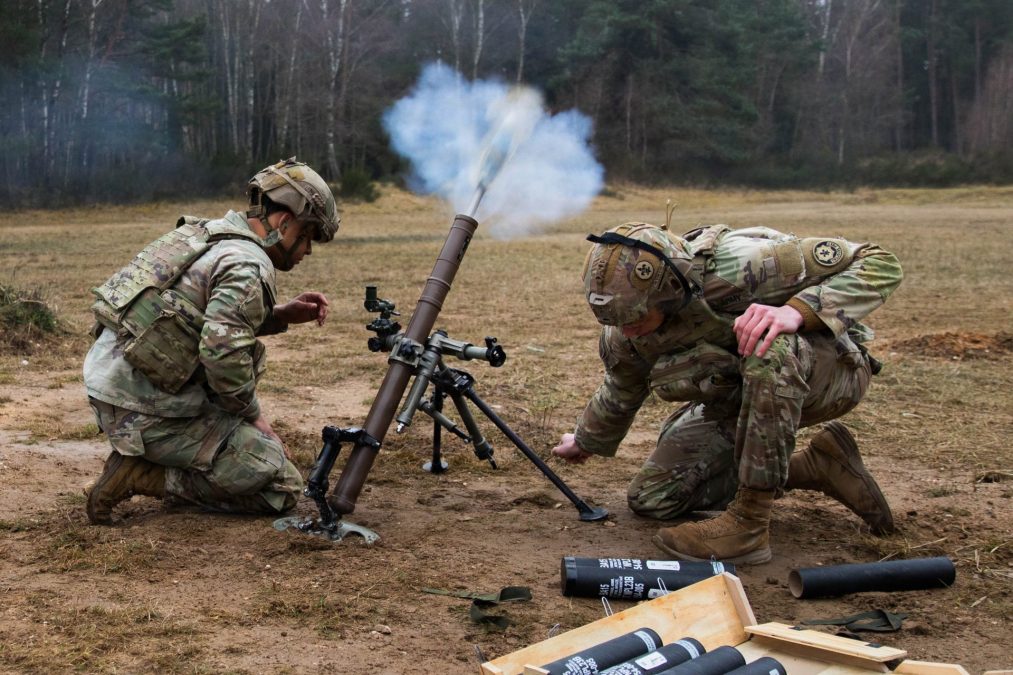
Blast overpressure, as the effect is called, is the sudden, volatile expansion of air from not only explosions, but weapon systems commonly used by ground troops. The Army RFI said the sensor should be able to measure bodily outputs, including brain activity.
For years, military personnel experienced harmful symptoms from improvised explosive devices and other blasts during the Global War on Terror, ones the military was slow to recognize even after troops left service. And now, as the war with Iran passes its first month during Operation Epic Fury, Tehran has been targeting American troops with drones and missiles.
Thirteen U.S. troops have been killed during the conflict, with hundreds injured. While a significant majority of those wounded have returned to duty, according to U.S. Central Command, blast symptoms — like traumatic brain injuries — can take time to manifest and assess.
Even before this recent conflict, American service members experienced drone and missile attacks in the Middle East. Ten New York National Guard soldiers received Purple Hearts last year after a Tehran-linked militia launched a drone at Tower 22 in Jordan in 2024, which killed three soldiers. In 2020, more than 100 service members experienced brain injuries from an Iranian attack on Ain al-Asad airbase in Iraq.
Since earlier this year, military researchers said they’ve entered a “new phase” of study into the effects of blast overpressure after years of neglecting the issue. Part of that effort includes establishing baseline tests on explosive ordnance disposal troops.
TBIs, digestive problems, heart complications and suicide are all part of a maelstrom of issues blast-exposed troops are still battling, according to reporting from the Assembly, which obtained Army data and interviewed members of the EOD community who served during the GWOT.
Those effects are not limited to EOD personnel. Over the last few years, the New York Times has reported on blast issues related to other military jobs, including mortarmen and tankers who are exposed to deleterious effects from the high-powered weapons they use.
According to The Times, citing a military program mandated by Congress, sniper rifles, machine guns, and shoulder-fired weapons could cause health risks. Military services, such as the Marine Corps, have recently turned to indoor simulated trainers that let troops practice firing weapons without being exposed to their shockwaves.
Army Contracting Command made the request for sensors last week and is looking at industry to provide both hardware and software for blast overpressure sensors paired with a physiological monitoring system.
That device “must” be able to measure heart rate, respiration, eye movement, gate, blood oxygen saturation and electrical brain activity.
Responses to the RFI are due April 16.
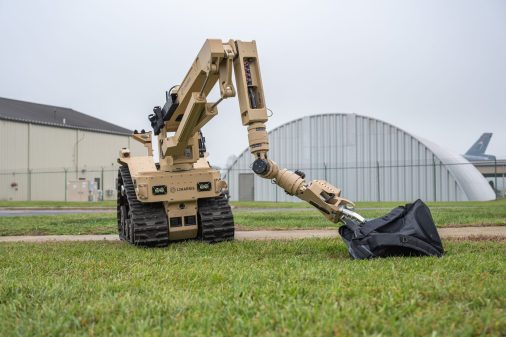
Meanwhile, parts of the military have been turning to unmanned systems for certain military tasks, in part to decrease the risk to troops. While EOD techs used robots during the GWOT, for example, services have been increasingly investing in them for different purposes, such as underwater ordnance operations.