Saronic asks court to halt Navy O&S contract for small maritime drones, LCS mission modules
Saronic Technologies filed a lawsuit asking the U.S. Court of Federal Claims to stop the Navy from awarding or moving forward with a solicitation issued in January that bundles work associated with the operation and sustainment of littoral combat ship mission modules and small unmanned surface vessels.
In a 34-page redacted version of its bid protest, Saronic alleged that the Naval Sea Systems Command contracting opportunity violates federal statute and a Trump administration order to expedite certain government contracting, among other challenges.
As written, the solicitation is limited to being carried out by “a large, non-commercial, traditional defense contractor” and contains terms that “unduly restrict competition,” Saronic claimed. It asked the court for a permanent injunction to prevent an award from moving forward.
Saronic filed its sealed pre-award complaint with the court March 4. The redacted version was made available March 13, the day before NAVSEA’s solicitation went inactive on Sam.gov.
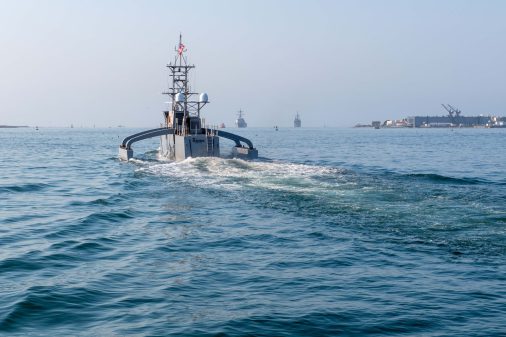
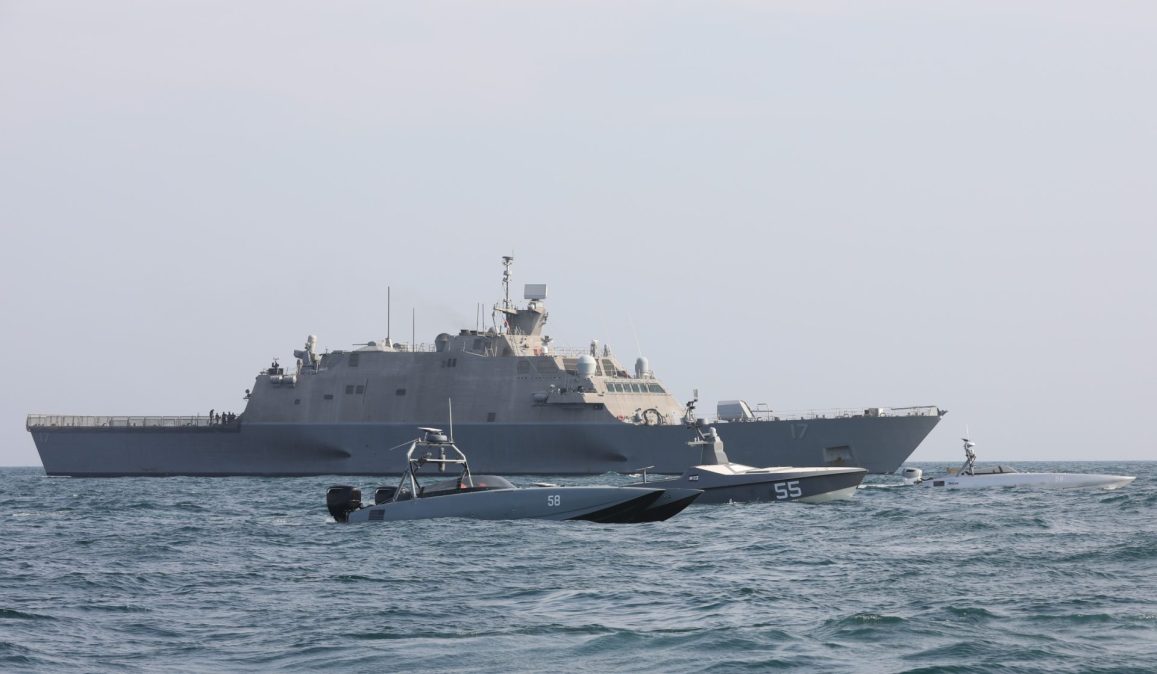
The Navy launched its full-and-open procurement to consolidate operations and sustainment (O&S) for Littoral Combat Ship (LCS) mission modules and small unmanned surface vessels (sUSVs) on Jan. 16, with plans to make a single award on or around Oct. 29.
The vision prioritizes mature, “roll-on/roll-off” modular and containerized capabilities to enhance and repair systems, developed and integrated in an incremental way without drastically altering the Navy’s existing, core LCS structure.
Small- and medium-sized USVs are substantial contributors to the sea service’s plan to shift toward a more distributed force that would include a hybrid, “Golden Fleet” of around 500 manned and unmanned vessels, by 2045.
The Navy entered into an other transaction agreement (OTA) worth more than $392 million with Saronic in May 2025, and was expected to purchase multiple batches of autonomous maritime drones from the Texas-based defense startup by mid-2031.
In the lawsuit, Saronic laid its grounds for protest across three counts.
The company broadly argued that, when issuing the solicitation earlier this year, the Navy failed to follow a specific federal contracting law that prioritizes commercial products and President Donald Trump’s Executive Order 14271 on ensuring commercial, cost-effective solutions in government contracting.
Specifically, Saronic said that the agency’s decision to combine O&S for LCS and sUSVs, rather than separating those services, disadvantages commercial service providers and limits the vendor pool to large, traditional defense contractors.
Among its claims, Saronic stated that the Navy “incorporated terms and conditions into the Solicitation that preclude commercial service providers from competing, and in some cases, actually penalize offerors for offering commercial services with their commercial terms.”
Saronic also argued that O&S of small maritime drones must be set aside for small businesses, and that multiple elements in the NAVSEA solicitation, including its data rights and cost disclosure requirements, are “unduly restrictive on competition.”
Bid protests can be filed at the specific agencies involved, with the Government Accountability Office (GAO) for speedier decisions, or within federal court for more specialized rulings and litigation.
“The [process with the Court of Federal Claims] will definitely take longer and thus has a higher likelihood of impacting the time to resolve the protests,” Jerry McGinn, director of the Center for Strategic and International Studies’ industrial base program, told DefenseScoop. “Protests submitted to the GAO must be filed within 10 days of the award or 5 days after the debrief. If Saronic missed that deadline, that could explain the COFC filing.”
In response to questions on Wednesday, a Saronic spokesperson did not say why the company opted to file the bid protest in federal court.
“When competitions are structured to exclude commercial, nontraditional defense companies, the Navy risks paying more while receiving less: less innovation, less flexibility, and less capability,” the spokesperson told DefenseScoop.
Saronic “is committed to delivering mission-ready” USVs that supply operational advantage today and adaptability for the future, they noted.
“We believe we should have the opportunity to fairly compete to support those systems, ensuring the best possible capabilities are delivered to our warfighters throughout their full lifecycle,” the Saronic spokesperson said.
Navy spokespersons did not immediately respond to DefenseScoop’s requests for comment on the bid protest on Wednesday.
On March 16, lawyers representing the U.S. and Saronic submitted a joint status report to propose a schedule for future proceedings.
“To prevent disruption of essential services, the United States respectfully requests the issuance of a decision on the merits of Saronic’s pre-award bid protest no later than Thursday, October 1, 2026,” the report stated.
Editor’s note: FedScoop’s Madison Alder contributed reporting.