Army eyeing automated target recognition tech to detect explosive hazards, battlefield obstacles
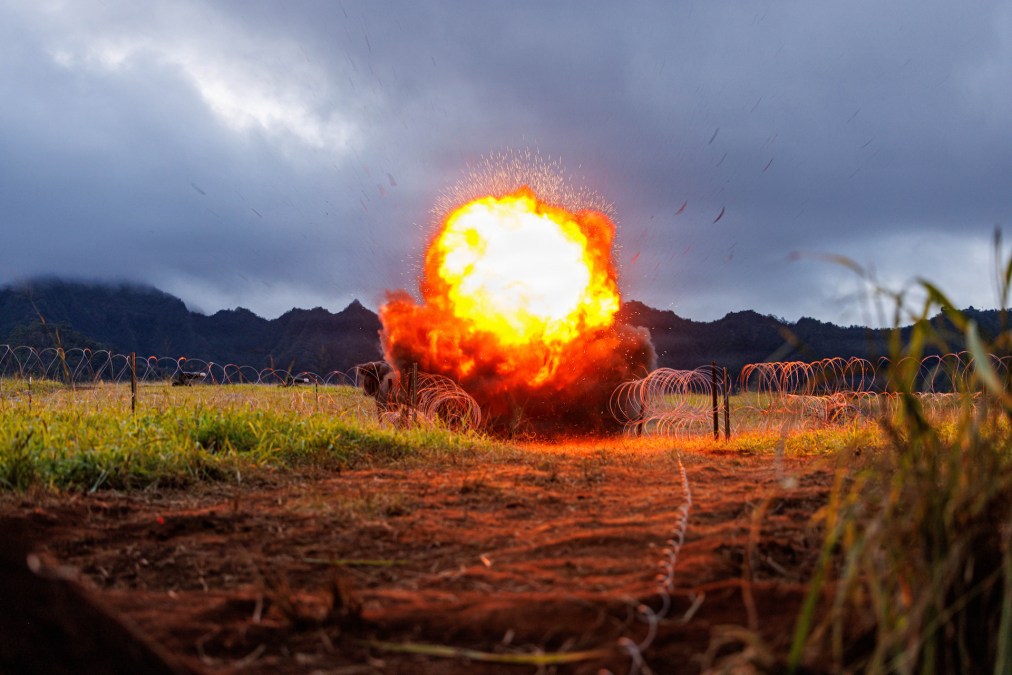
The Army is conducting market research for new algorithms and sensors that could help its forces detect hazardous objects on the front lines.
The service, led by the Capability Program Executive Ammunition and Energetics, issued a notice Tuesday requesting information from industry on their automatic target recognition tools.
“The purpose of ATR is to increase the Soldier’s ability to detect, classify, and identify threats in support of maneuver elements during autonomous breaching operations,” officials wrote.
The Army is eyeing solutions that will “significantly reduce operator workload while maintaining or exceeding the probability of detection and maintaining or lowering the false alarm rate of explosive hazards and complex obstacles by trained operators,” per the RFI.
The notice comes amid a broader push by the Army to acquire new AI technologies and unmanned systems that can lessen troops’ cognitive burden and mitigate their exposure to threats.
Explosive hazards could include anti-tank, anti-personnel, and “top and side-attack” mines; improvised explosive devices (IEDs); submunitions; and unexploded ordnance.
Complex obstacles of concern during breaching operations include a “combination of man-made objects used to impede maneuverability on the battlefield,” officials noted, such as tank ditches, concertina wire, hedgehogs, tetrahedrons and dragon’s teeth.
The RFI suggested that industry’s detection technologies need to be powerful enough to discern “clutter objects” when they’re put through their paces, such as frisbees, tires, wheels, foliage and vegetation.
The Army plans to hold a lab-based assessment event this year to test vendors’ algorithms. A separate “collection event” is slated for the fourth quarter of this fiscal year at Fort A.P. Hill in Virginia for companies offering both sensors and algorithms.
The service is soliciting white papers, which are due May 15. Officials want to know how respondents’ algorithms were trained and whether they can run in real-time on sensor data as it’s being collected, among other information. They’re also asking sensor providers where they would mount their systems, such as on drones or ground-based platforms.