
Trump taps former AWS exec for senior role in Pentagon’s research and engineering directorate
James Caggy has been nominated for assistant secretary of defense for mission capabilities.
James Caggy has been nominated for assistant secretary of defense for mission capabilities.

After nearly cancelling the program, Air Force is requesting $387.1 million in fiscal 2026 to start production of the Air-Launched Rapid Response Weapon (ARRW).
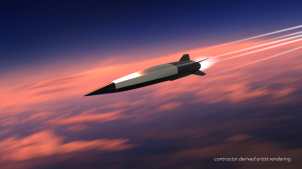
Program delays will force the Air Force to reduce the number of flight tests it can conduct for the Hypersonic Attack Cruise Missile, according to the GAO’s annual weapons assessment report.
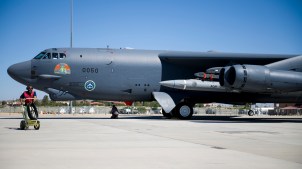
Gen. David Allvin said the Air Force has two hypersonic missile programs that are “getting into the procurement range in the very near future.”

The Senate on Wednesday voted 54-43 to confirm businessman Emil Michael as undersecretary of defense for research and engineering and the Pentagon’s CTO.

The $150 billion reconciliation bill includes funding to support development and fielding of Golden Dome technologies, such as space-based sensors and interceptors.

“We must have high-performing, mission-aligned programs at every level,” Defense Secretary Pete Hegseth said at the U.S. Army War College.

An experienced aerospace engineer, Joseph Jewell has spent decades in both academia and government working on hypersonics research and development.
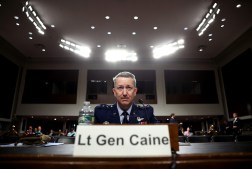
Retired Lt. Gen. Dan ‘Razin’ Caine touted his business background at his confirmation hearing Tuesday.

President Trump nominated Michael Dodd to be assistant secretary of defense for critical technologies.
