US military deploys 4 Army-built surveillance and reconnaissance systems for southern border mission
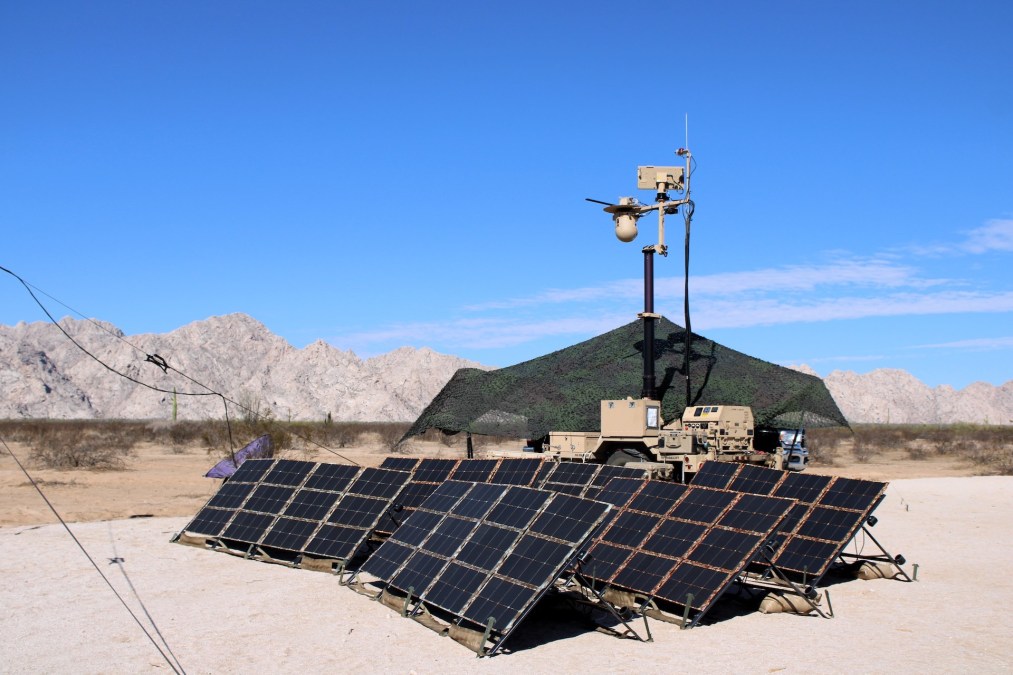
Four Army-developed surveillance and reconnaissance systems have been deployed to the southern border to support U.S. military activities there, according to the service’s capability program executive for intelligence, electronic warfare and sensors.
The Trump administration earlier this year surged troops to the area to help U.S. government agencies stop border crossings and address other activities of concern.
“Obviously, real-world operations are occurring down there. We have some capabilities down there that are helping with persistent surveillance, long-range detection and data integration,” Brig. Gen. Kevin Chaney, head of the Army’s IEW&S office, told reporters Thursday during a teleconference.
One such platform is the Ground Based Operational Surveillance System (Expeditionary), he noted.
G-BOSS(E) — which uses a fused video and sensor data display — is an expeditionary, self-contained, multi-spectral sensor system that enables users to observe, collect, detect, classify, identify, track, record and report on objects of interest and potential threats 24 hours a day. It can be integrated into the command-and-control network on the southern border, according to the Army.
Another platform dubbed Instrument Set, Reconnaissance and Surveying — or ENFIRE — is designed to aid engineers, Chaney noted.
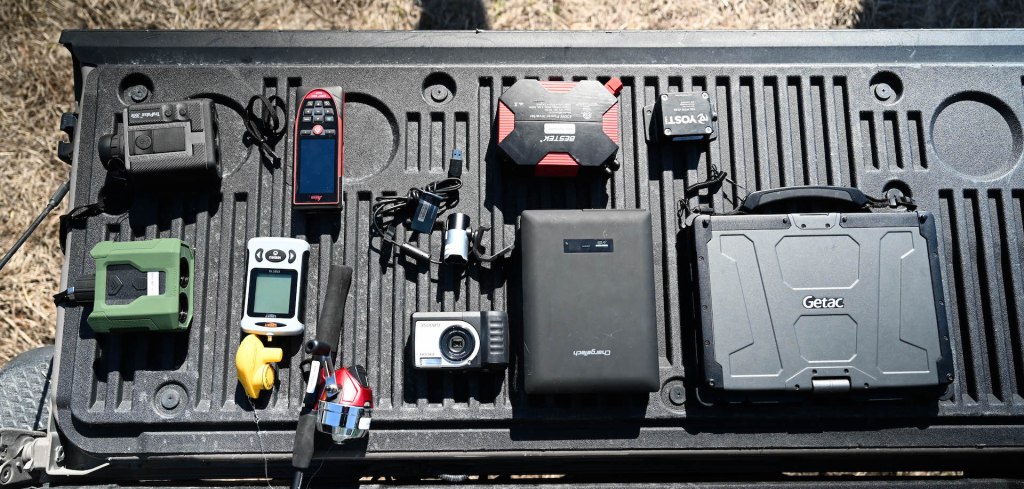
According to the Army, the technology integrates digital tools into a single platform to help expedite route, area and zone reconnaissance, route clearance, hazard identification, inventory and construction management efforts.
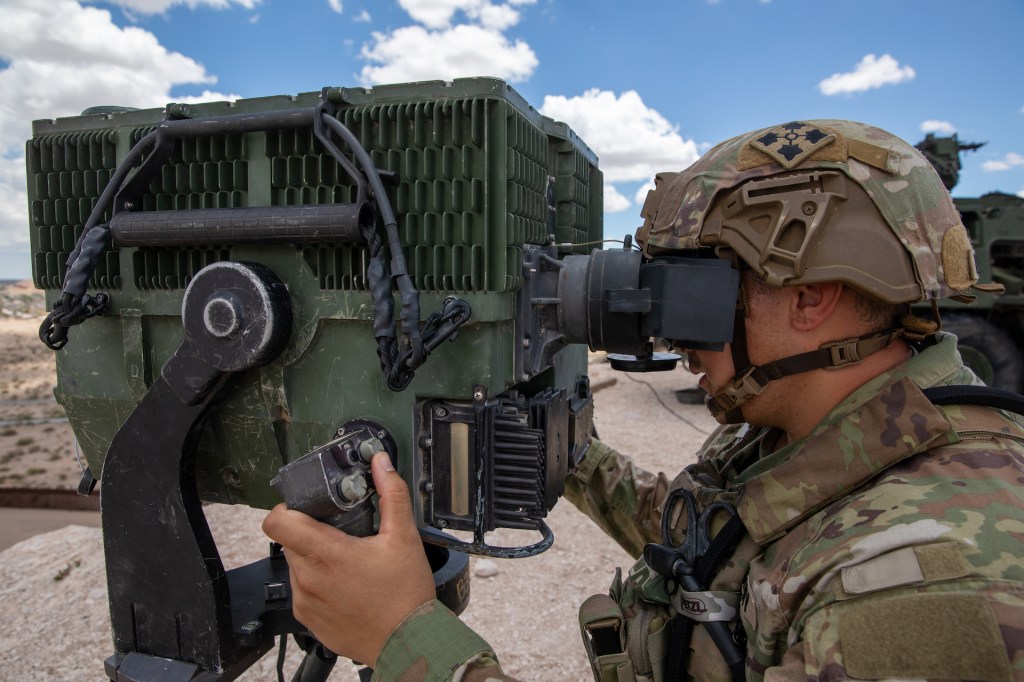
The Long-Range Advance Scout Surveillance System — which can operate in vehicle-mounted or dismounted configurations — has also been deployed to support the border mission, Chaney said.
The LRAS3 is a “multi-function line of sight target acquisition common sensor suite which provides real time target detection, recognition, and identification capability” that “automatically determines far target location coordinates for any target ranged by the operator,” per an IEW&S product description.
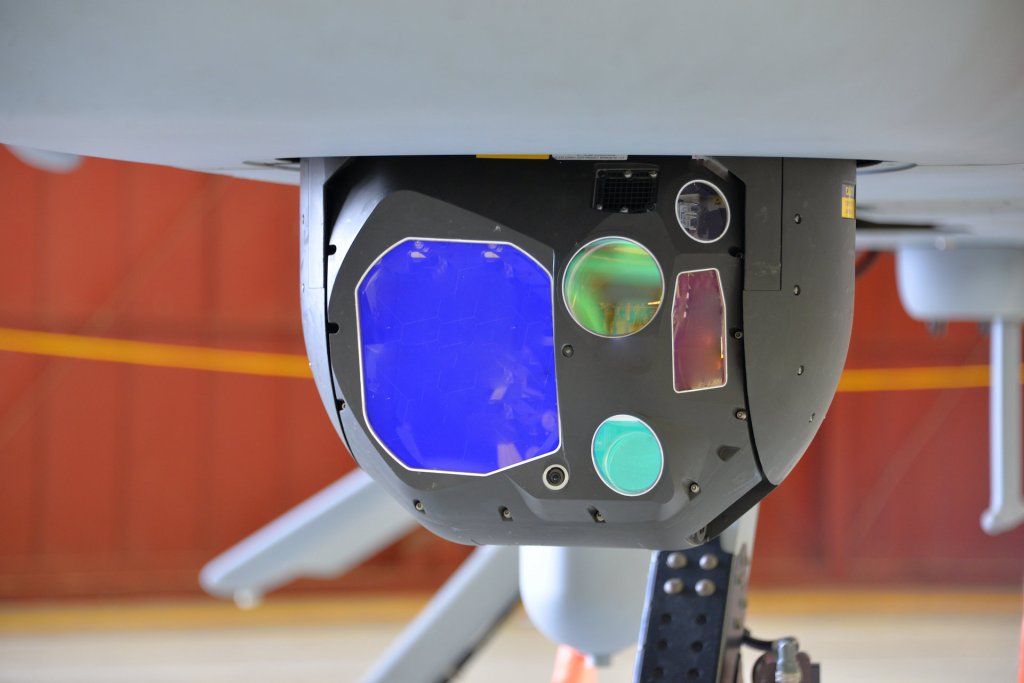
Another tool for troops is the Common Sensor Payload (CSP), which can be mounted on MQ-1C Gray Eagle drones.
“The CSP provides near real-time imagery for detection and classification of targets/threats for battlefield commanders with a day/night imaging sensor and laser designation, pointing, target marking, and spot tracking for aerial intelligence,” according to IEW&S.
“These four systems there are helping to cover gaps that others identify down there,” Chaney said. “They provide situational awareness, allowing us to see further and in multiple spectrums in order to assist on identifying potential threats and risks to our border.”
Chaney said he would defer to Joint Task Force-Southern Border for specific assessments of how well those technologies have been performing.
“I will just say that there’s been an increased demand for some of this capability, and what we’ve seen is that the commanders on the ground are requesting more and more of it, and we are trying our best to accommodate those missions and make sure that they get the capability they need so that they can do their job down there,” he told DefenseScoop during the teleconference.
DefenseScoop asked Chaney if there are plans to deploy additional systems to the border in the coming months to meet the needs of the task force.
“We’ve had ongoing discussions with them, and they’re looking at all our portfolio and our capabilities. But it also comes down to a financial aspect to it, too. So, you know, we try our best to make sure they have a good understanding of it, and then if we can work it and the funding works out, then we can make sure we can get that capability out on the border,” Chaney said. “But so far, they haven’t come over the top and said they need additional X, Y, Z systems yet. So I think it comes down to priorities funding, and then how good is the protection down there right now, and what are the gaps? And I think we’re in gaps analysis right now.”