NDAA pushes Pentagon to establish joint drone and counter-drone program with Taiwan
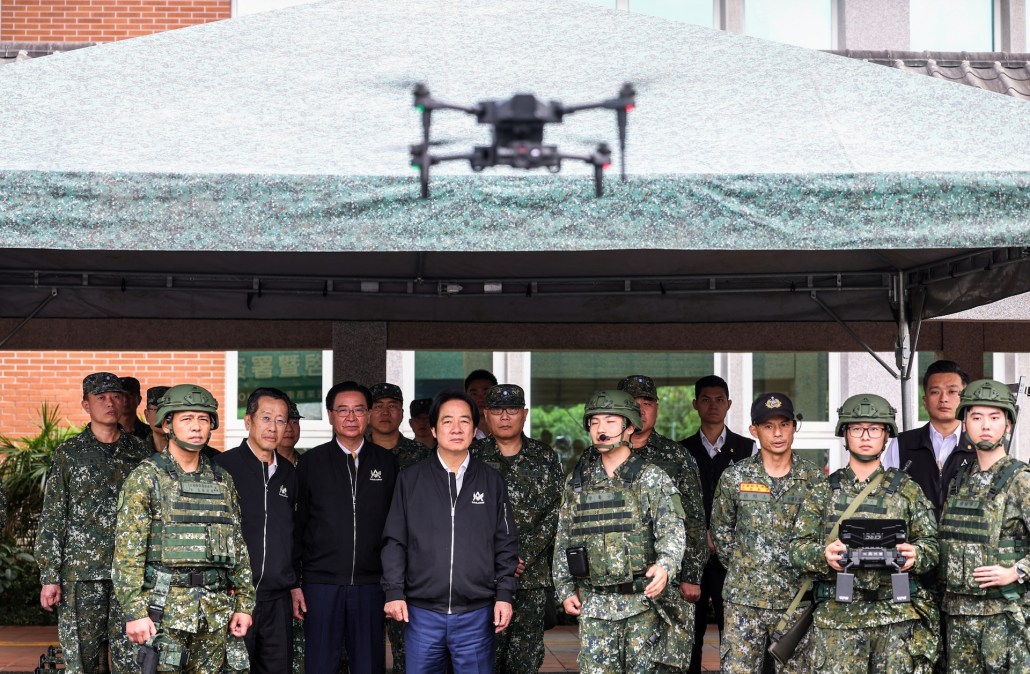
The conference version of the fiscal 2026 National Defense Authorization Act would require the Pentagon to try to set up a new joint program with Taiwanese officials, with the aim of fielding more drone and counter-drone technologies.
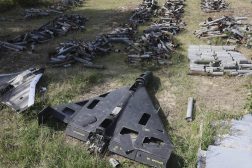
The legislation, released Sunday, comes amid concerns that China might try to invade the island of Taiwan. American officials envision robotic systems — including unmanned aerial vehicles and uncrewed maritime platforms — playing a major role in such a conflict, and U.S. lawmakers are taking steps to address the threat in the annual defense policy bill.
“Not later than March 1, 2026, the Secretary of Defense, in coordination with the Secretary of State and acting through the Director of the American Institute in Taiwan, shall seek to engage with appropriate officials of Taiwan in a joint program for the purpose of enabling the fielding of uncrewed systems and counter-uncrewed systems capabilities, including co-development and co-production of such capabilities, for the Armed Forces of the United States and the military forces of Taiwan, consistent with the Taiwan Relations Act (22 U.S.C. 4 3301 et seq.),” the text of the House-Senate compromise NDAA bill states.
“Not later than 180 days after the date of the enactment of this Act, and annually thereafter through 2029, the Secretary of Defense, in coordination with the Secretary of State, shall provide to the appropriate committees of Congress a briefing on the joint program,” officials added.
The briefings would have to include a summary of engagements; a description of activities undertaken by the SecDef and Taiwanese officials to “enable” the fielding of drones and counter-drone capabilities; a rundown of additional resources or authorities necessary to enable the fielding of those types of systems; and an update on progress made in finalizing defense trade “foundational agreements” between the U.S. and Taiwan — including a memorandum of understanding on reciprocal defense procurement, a security of supply agreement, an acquisition and cross-servicing agreement, a general security of military information agreement, and cyber maturity model certification.
The Trump administration’s new National Security Strategy, released last week, indicates that protecting American security interests in the Indo-Pacific and deterring a conflict with China — via military might and existing partnerships — are priorities for the second Trump administration.
“I thought that the [National Security] Strategy was quite clear on that, and it was quite clear also in stipulating a strategy of denial, a denial defense that focused first on the First Island Chain [in the Asia-Pacific that includes Taiwan] and then emanated to the homeland, making note of the requirement to be proactive versus reactive. And so I found all that very welcome,” Adm. Samuel Paparo, commander of U.S. Indo-Pacific Command, said Saturday at the annual Reagan National Defense Forum in Simi Valley, California.
As head of Indo-Pacom, Paparo is the combatant commander who oversees American forces in that region and plays a key role in managing the U.S. military response to China’s actions.
Unmanned technologies are a key element of the so-called “Hellscape” concept that Paparo previously laid out for potential operations to thwart an attempted Chinese takeover of Taiwan.
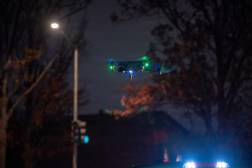
The Pentagon under Defense Secretary Pete Hegseth has already launched a “drone dominance” initiative aimed at accelerating the widespread fielding of small unmanned aerial systems across the U.S. military. The department is also moving to develop and build larger UAS known as Collaborative Combat Aircraft; uncrewed maritime systems for surface and subsurface operations; and a slew of counter-drone capabilities.
A “meta trend” in the changing character of warfare in the modern era is the “commoditization” of drones, Paparo said at the forum.
“The commoditization of drone warfare has made assault warfare — [where] one force takes another’s geography and subjugates it and its people — more costly. And so, who competes best in this meta domain is who is going to have an advantage. It mostly favors the defense. Drone warfare can be a vanguard for assault, but all other things being equal, if both sides have it … then our traditional ratios of 3-to-1 to assault look like 20-to-1, 100-to-1, and it becomes more costly. It doesn’t deny an actor’s desire to do it, but [the side] who masters that is who’s going to prevail,” Paparo said.
Both chambers of Congress must pass the same version of the NDAA and have it signed by the president before it becomes law.