Troops downed Customs and Border Protection drone in Texas after agency didn’t coordinate flight with military task force
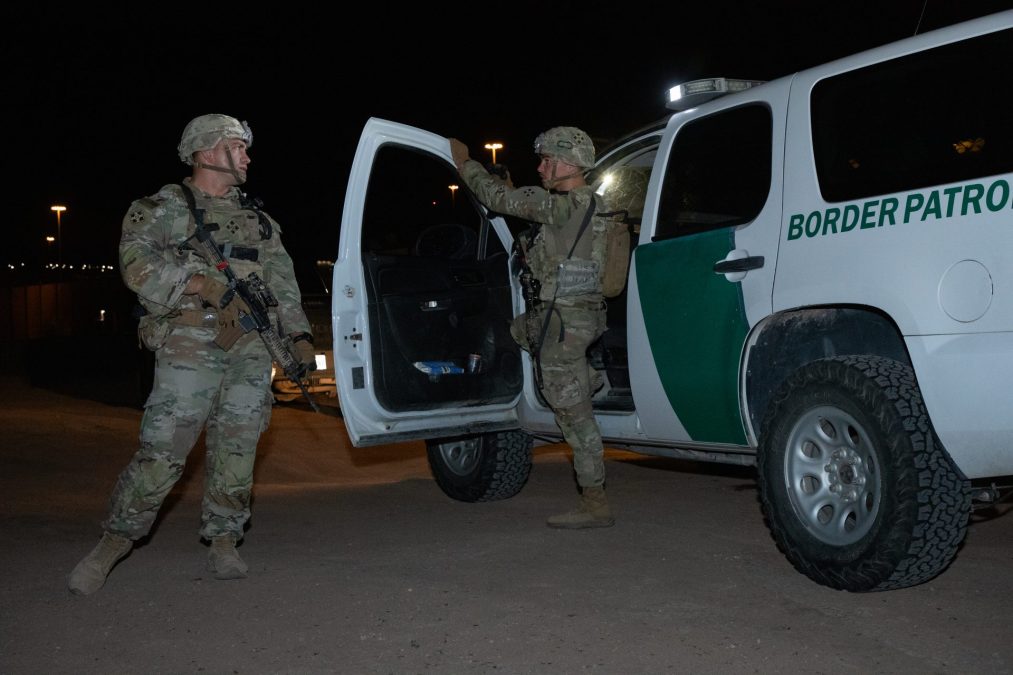
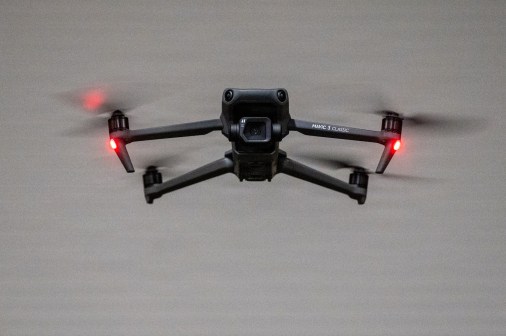
Near a small town in Texas Wednesday, troops used a counter-drone system to shoot down an unmanned aerial system operated by U.S. Customs and Border Protection which was launched without coordinating with the military task force assigned to the U.S.-Mexico border, according to multiple sources familiar with the situation.
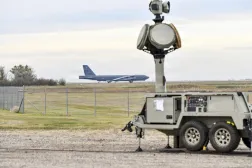
Joint Task Force-Southern Border, the military entity charged with carrying out the Trump administration’s immigration enforcement in that area, was authorized to employ the anti-drone capability, according to the sources. Troops mistakenly believed the government-operated drone was a threat.
This is the second counter-UAS incident in less than a month that has revealed interagency turmoil over the employment of stateside anti-drone capabilities.
Three Democratic lawmakers in the House Committee on Transportation and Infrastructure released a statement Thursday that said “our heads are exploding over the news that DoD reportedly shot down a Customs and Border Protection drone using a high risk counter-unmanned aircraft system.”
Sen. Tammy Duckworth, D-Ill., a member of the Senate Armed Services Committee, called for the Pentagon and Departments of Transportation and Homeland Security to launch a joint investigation into the “alarming” situation immediately, slamming interagency communication as a “failure.”
In a joint statement provided to DefenseScoop Friday, the Pentagon, CBP and the Federal Aviation Administration said that the “reported engagement occurred” when the Defense Department used the counter-drone system “to mitigate a seemingly threatening unmanned aerial system operating within military airspace.”
The statement did not say when the engagement happened and the Defense Department did not answer when asked about the counter-drone system being used to shoot down a CBP drone. When asked about the lack of coordination with JTF-SB, a CPB spokesperson reiterated the joint statement and did not provide additional information when asked over the phone Friday.
The FAA issued a temporary flight restriction near the shoot-down location Thursday night for “special security reasons.” One source familiar with the situation said that the military’s use of the counter-drone system was coordinated with the FAA.
The agencies said the “engagement took place far away from populated areas and there were no commercial aircraft in the vicinity.”
The statement did not disclose what type of counter-UAS weapon was employed.
“These agencies will continue to work on increased cooperation and communication to prevent such incidents in the future,” the joint statement said.
The incident — which occurred near Fort Hancock, a Texas town along the Mexican border — comes just weeks after a similar engagement temporarily shut down airspace near El Paso after CBP employed a laser system on loan from the Pentagon in the area, DefenseScoop first reported at the time.
Multiple news outlets reported the objects CBP shot at earlier this month were Mylar balloons. Reuters first reported that CBP used the LOCUST counter-drone laser that caused the brief airspace shutdown on Feb 11.
On Thursday, the day after the most recent drone shootdown, an official with the Pentagon’s counter-drone task force said the El Paso situation “definitely highlighted the importance of the interagency working together, coming together to the table to discuss how these things will be employed safely.”
“If the FAA sees a rogue drone as it were, and it’s in someone else’s space like Border Patrol, those things are going to be coordinated very tightly and things can be done quickly because the relationships have already been established, the procedures have already been established and we’re able to action that appropriately,” Marine Col. Scott Humr, deputy director of science and technology for Joint Interagency Task Force 401, said in response to a question from DefenseScoop about the El Paso airspace closure.
“It’s going to require everyone working together, which hasn’t happened in the past,” he added. “So things like the El Paso incident just highlight the importance of how interagency and the Department of War need to work together and work more closely to address these issues so we don’t have the issues like that again.”
(The Trump administration has rebranded the Department of Defense as the Department of War.)
A spokesperson for JIATF 401 referred DefenseScoop to U.S. Northern Command and JTF-SB for comment about the Fort Hancock shoot-down.