After first combat appearance, LUCAS drones ‘remain ready’ for future Epic Fury strikes against Iran
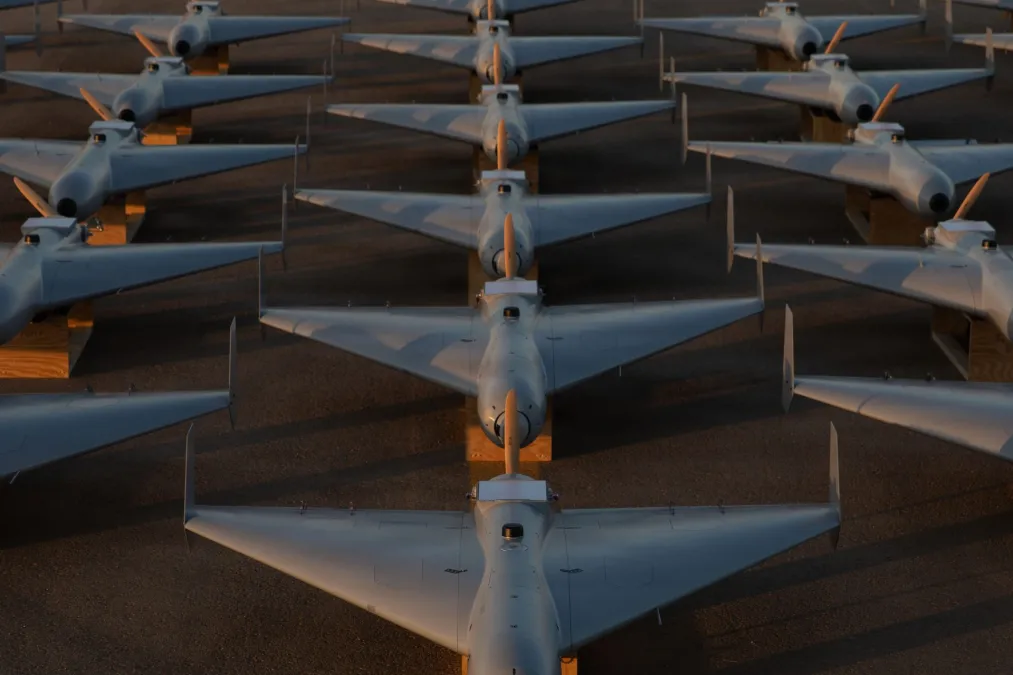
Flipping Iran’s playbook by launching reverse-engineered, Shahed-like weapons as part of a coordinated air campaign, the U.S. military’s initial wave of strikes in Operation Epic Fury marked the first confirmed deployment of American-made, long-range, one-way attack drones in real-world combat.
Capt. Tim Hawkins, a spokesperson for U.S. Central Command, told DefenseScoop on Monday that the operation demonstrates how warfighters are rapidly adopting low-cost drones “as part of the joint force effort to neutralize imminent threats” posed by Iran.
Although he declined to disclose how many Low-cost Uncrewed Combat Attack System (LUCAS) drones Centcom used in the first spate of attacks or currently has in its arsenal, Hawkins indicated that the military is prepared to use more of those loitering munitions as Epic Fury continues to unfold.
“LUCAS drones remain ready for employment,” he said.
The U.S. and Israel initiated Epic Fury as a joint operation on Saturday. Iranian Supreme Leader Ayatollah Ali Khamenei and other high-ranking officials were killed in the first surge.
Speaking alongside Chairman of the Joint Chiefs Gen. Dan Caine at the Pentagon Monday morning, Defense Secretary Pete Hegseth said the overarching aims of Epic Fury are to “destroy Iranian offensive missiles, destroy Iranian missile production, destroy their Navy and other security infrastructure,” and dismantle assets that could be used to build nuclear weapons.
Hegseth and Caine echoed President Donald Trump’s comments that Iran is in store for another “big wave” of attacks from U.S. forces.
Though the senior officials declined to share specifics regarding any possible plans to rush troops to the region, Caine suggested that “more tactical aviation [is] flowing into theater.”
U.S. Transportation Command “has and continues to move equipment and personnel in support of [U.S. Central Command] requirements, projecting power at times and places of our nation’s choosing,” Transcom’s public affairs chief Navy Capt. John Fage told DefenseScoop on Monday.
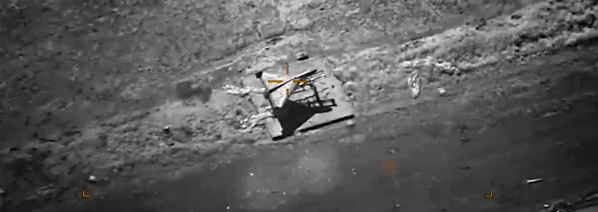
Iran’s drone arsenal and Shahid Bagheri drone carrier were reportedly among assets targeted so far in Epic Fury.
Major combat operations in the first round of strikes began Saturday at 1:15am Eastern time, and 9:45am local Tehran time.
According to Caine, the “first movers” were U.S. Cyber Command and U.S. Space Command, which layered “non-kinetic effects disrupting and degrading and blinding Iran’s ability to see, communicate and respond.”
“As dawn crept up across the [Centcom area of responsibility], the skies surged to life. More than 100 aircraft launched from land and sea,” Caine said. “Fighters, tankers, airborne early-warning, electronic attack, bombers from the states, and unmanned platforms — forming a single synchronized wave.”
In the wake of those attacks, Centcom confirmed in a fact sheet and social media post that LUCAS one-way attack drones produced by Arizona-based SpektreWorks were deployed “for the first time in history,” in Operation Epic Fury.
Those “suicide” drones are a major element in the U.S. military’s strategic pivot toward adopting so-called “affordable mass” in warfare.
The price point of the LUCAS family of systems is said to range from $10,000 to $55,000 per unit.
While they cost significantly less than many traditional missiles, LUCAS platforms are modular and offer extensive range, as well as autonomy, anti-jamming and swarming capabilities. They can be launched with catapults, rocket-assisted takeoff, and mobile ground and vehicle systems.
The platforms are designed to improve upon Iran’s Shahed-136, which Tehran has deployed against Israel and Russia has used against Ukraine.
Centcom set up Task Force Scorpion Strike in December, several months after Hegseth issued a mandate to “unleash U.S. military drone dominance” by speedily equipping forces with expendable systems. LUCAS drones were sent to the Middle East and put through the first test flight from a Navy ship in late 2025.
“The use of drones modeled on Iranian designs wasn’t accidental — it was intentional,” Brett Velicovich, a former U.S. Army intelligence and special operations soldier and founder of the drone company Powerus, told DefenseScoop in an email Monday.
In his post-military career, Velicovich has experienced attacks by Russia-launched Shahed drones on the ground in Ukraine.
“That’s the best part about it — these autonomous, expendable ‘kamikaze’ drones [used during Epic Fury] were modeled off Iranian designs that were stolen off of captured Iranian systems used in Ukraine. There’s a real strategic irony here — we took a weapon that Iran developed and fielded against our very forces and our allies, studied how it worked, and then turned that playbook into an American capability that was used in combat against Iran’s own military targets,” Velicovich said.
LUCAS drones were likely used to hit strategic Iranian targets, he noted, including Islamic Revolutionary Guard Corps’ Shahed drone manufacturing sites, and other weapons facilities.
“They were deployed for the initial strike wave, the shock and awe portion to hit strategic sites,” Velicovich said.
Shorter-range American-made systems such as Switchblades — or as he described, “one-way attack drones that shoot out of a small canister attached to a soldier’s kit” — have been deployed on the battlefield in places like Ukraine. “It is likely, though, [that this is] the first use of long-range, one-way attack drones” by the U.S. in combat, Velicovich noted.
At the Pentagon Monday, Caine confirmed that multiple U.S. service members were killed when a weapon bypassed layered air defenses and hit a tactical operations center in the first phase of Epic Fury.
“The military objectives that Centcom and the Joint Force have been tasked with will take some time to achieve — and in some cases, will be difficult and gritty work,” Caine said. “We expect to take additional losses.”
Centcom announced on Monday afternoon that six U.S. service members have been killed in action amid Epic Fury, to date.