DOD placing first Drone Dominance orders this week, with deliveries slated for 17 military units in March
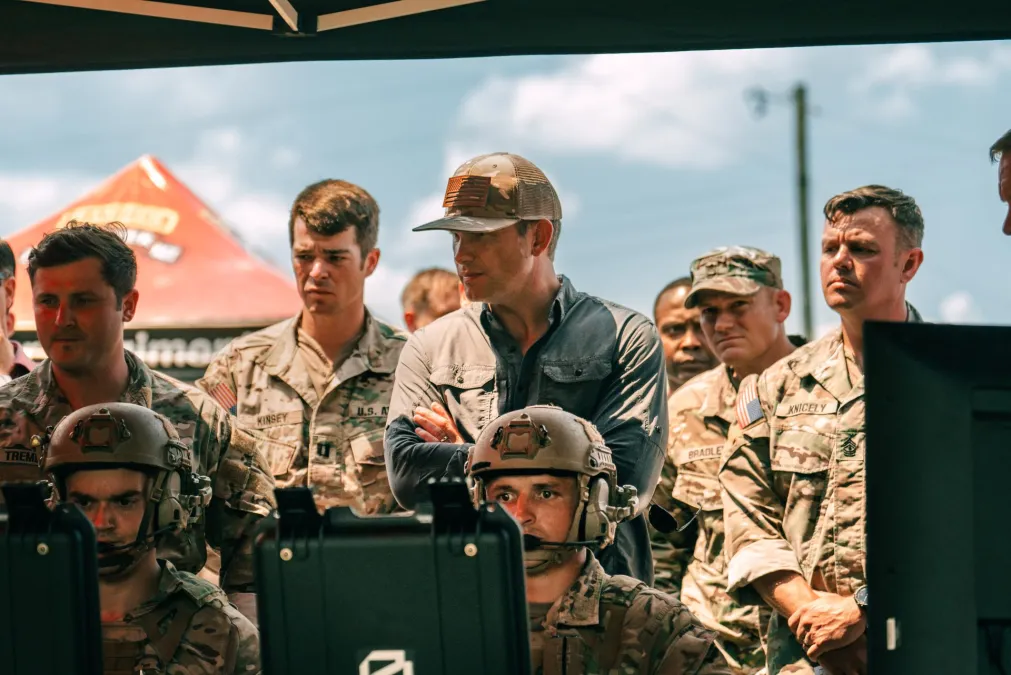
The Defense Department is kicking off plans this month to deliver batches of small drones to roughly 17 military units, and officials will soon begin coordinating their deployments in real-world training exercises.
At a Senate Armed Services Committee hearing on Thursday, senior defense officials shared new details about those and other pursuits to rapidly enhance the U.S. drone industry and associated weapons arsenal, and counteract China’s dominance in the global market.
“We’re using actual purchases and the entrepreneurial spirit and capital of American industry to drive unit prices down while scaling production volumes up, ensuring that our forces have the quantity of consumable drones required for modern conflict,” DOD’s Drone Dominance Program Manager Travis Metz said.
Strategic use of small unmanned aerial systems (sUAS) has emerged in recent years as a defining feature of modern warfare.
Lawmakers at the hearing noted that just in the last week, U.S. forces operating alongside Israel have conducted thousands of strikes against Iran, including with one-way “kamikaze” drones. In turn, Iran has retaliated with attacks across the region, including drone assaults that have killed American service members.
“Drones are the most significant battlefield innovation in generations in Ukraine,” said DOD’s Senior Advisor for Drone Dominance Owen West, who is also the new director of the Defense Innovation Unit. “Low-cost drones account for a staggering proportion of the casualties in Iran, Colombia, Israel, Thailand and Cambodia. This weapon system has altered the order of battle.”
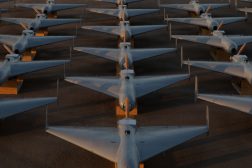
The Pentagon launched its $1.1 billion-dollar Drone Dominance Program in late 2025, setting a goal to buy and equip forces with more than 300,000 domestically-produced, weaponized sUAS by 2027.
The program is organized around a phased competition that culminates across a series of “Gauntlets,” where commercial options are put to the test and vie for DOD’s investments.
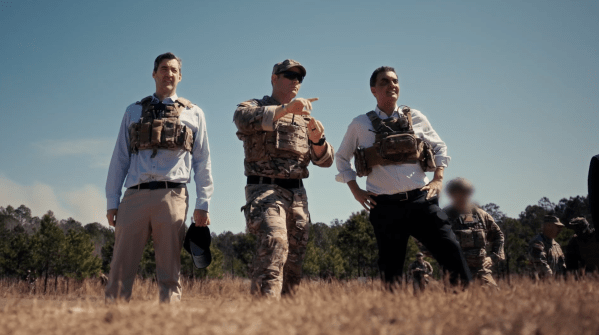
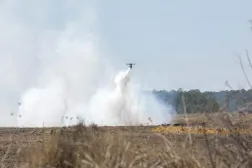
“I spent most of the last two weeks at Fort Benning, where we kicked off our four-phase program. We invited 25 drone vendors to compete with their drones in a test process that was executed and scored by military operators. That competition ended last Sunday, and we will be announcing and placing orders with the winning vendors over the next few days,” Metz said Thursday. “The winners will be given orders for a total of 30,000 small one-way attack drones, which will be delivered to military units over the next five months.”
DOD will then run three more cycles on a six-month calendar — “raising quantities, lowering prices, and evaluating against more difficult mission tests,” Metz noted.
A key aspect of the program, in his view, is that it is designed to incorporate a clear demand signal to America’s drone industry and ensure warfighters are at the center of the selection process.
Responding to lawmakers’ questions, Metz said he expects most of the small, one-way attack drones that DOD opts to procure in the near term will be used in actual live training exercises by the Army and Marines — though they could be deployed in actual conflicts if requested by military leadership.
“In the short term, we will be delivering drones starting this month, to roughly 17 different military units, and there is a plan in place across each of those for those drones to be used in realistic training exercises,” Metz said. “In the long term, those same military service departments will be developing their own [tactics, techniques, and procedures, or TTPs] and other doctrine to be able to sustain the drones. We don’t expect them to sit on the shelf for very long.”
Regarding pricing, he noted that DOD estimates Ukraine is spending “somewhere between” $500 per system on the low end and less than $1,500 on the high end for that nation’s first-person view drones.
The Pentagon’s Drone Dominance Program is structured over the six month cycles to lower its prices from $5,000 per drone in phase one — with orders set to be placed for those this week — down to a goal of less than $2,000 per system by the efforts’ conclusion.
While this program focuses on driving the production and adoption of smaller drones, the Pentagon’s Defense Autonomous Warfare Group (DAWG) is leading the acceleration of larger, long-range and AI-enabled attack drones for military operations.
Complementary to those initiatives, the Army-led Joint Interagency Task Force 401 is spearheading DOD’s counter-drone training, strategy and other activities.
“Many of the counter strategies that we’re seeing evolve across battlefields around the world are using small drones as a kinetic force. As a counter in our phase two in August — where we intend to buy another 50,000 or 60,000 drones — the Joint Interagency Task Force 401 … will be part of that Gauntlet, attempting to knock down all the drones that our vendors are actually putting up in the air,” Metz said. “And the ambition is to iterate jointly with them as we go forward with the program.”