Advertisement

Showing 10 of 119 results

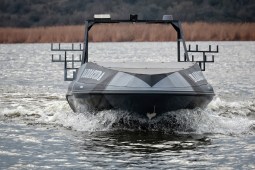
  • A Barracuda unmanned surface vessel undergoes testing in southern Ukraine, on March 30, 2026. The multifunctional drone boat is developed by the Barracuda unit of the 40th Separate Coastal Defense Brigade, part of the 30th Marine Corps of the Ukrainian Navy. It features a modern tracking system, remote control, and artificial intelligence elements. (Photo by Nina Liashonok/Ukrinform/NurPhoto via Getty Images)
    Op-Ed

    Unmanned warfare has now expanded to the high seas. Is the U.S. ready?

    The American military’s recent success with autonomous platforms — as well as the unmanned advances of partners like Israel, Ukraine and Taiwan — offers three main lessons for generating the Pentagon’s next unmanned leap forward.
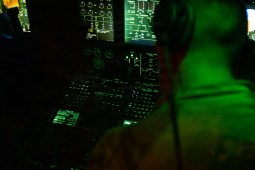
  • U.S. Air Force airmen, U.S. Space Force guardians, and industry partners participate in the Department of the Air Force’s Multi-Decision Advantage Sprint for Human-Machine Teaming experiment led by the Advanced Battle Management System Cross-Functional Team in partnership with the Air Force Research Lab, the U.S. Space Force, and the 805th Combat Training Squadron, in Las Vegas, Nev., May 13, 2026. This user-producer co-creation environment allows operators to provide immediate feedback to developers, significantly accelerating the software development cycle for the joint force. (The image has been cropped to focus on the subjects.) (U.S. Air Force photo by Deb Henley)
    AI

    Air Force, Space Force combine multiple AI tools in latest battle management experiment

    The Multi-Decision Advantage Sprint for Human-Machine Teaming wargame demonstrated that AI tools can significantly improve the Air Force’s command-and-control operations.

  • U.S. Army Capt. Zach Marise, a deliberate operations team with the National Guard Bureau, uses the Maven Smart System in Arlington, Virginia, Feb. 20, 2026. Marise teaches the MSS and its capability to process vast amounts of data from weather to troop locations. (U.S. Army Photo by Master Sgt. Whitney Hughes)
    AI

    DOD wants more than $2B in fiscal 2027 to move beyond ‘fragmented’ CJADC2 deployments

    Budget documents indicate that the department aims to swiftly consolidate “software-centric C2 onto a single pane of glass” in the next year.

  • U.S. Secretary of Defense Pete Hegseth arrives to testify before the House Armed Services Committee in the Rayburn House Office Building on April 29, 2026 in Washington, DC. Hegseth testified on the Department of Defense Fiscal Year 2027 Budget Request. (Photo by Kevin Dietsch/Getty Images)
    AI

    Hegseth: Autonomous warfare sub-unified command coming soon

    Pete Hegseth testified Wednesday at a House Armed Services Committee hearing on the Defense Department’s fiscal 2027 budget request.

  • U.S. East coast-based Naval Special Warfare Operators (SEALs) conduct dive operations to increase maritime lethality during training off the coast of Key Largo, Florida, Feb. 18, 2025. Naval Special Warfare Group TWO produces, supports, and deploys the world’s most lethal maritime special operation forces to ensure the United States will deter and win wars. (U.S. Navy photo by Mass Communication Specialist 1st Class Katie Cox)
    Tech

    SOCOM highlights 6 focus areas for naval capabilities modernization

    Officials released a source-sought notice for the ANCHOR initiative.

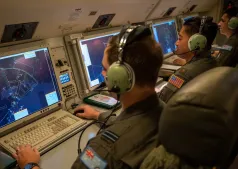
  • U.S. Air Force Maj. Oliver Ngayan, 2 Squadron E-7A Wedgetail air battle manager, performs a system check at Royal Australian Air Force Base Darwin, Australia, July 18, 2024. (U.S. Air Force photo by Tech. Sgt. Jimmie D. Pike)
    Emerging Tech

    DAF fuels up for ‘Ringleader’ exercises to test all-domain sensor fusion capabilities, tactics

    “Over the last few years, we’ve built out the necessary software, hardware and network infrastructure — now it’s time to test it,” Secretary of the Air Force Troy Meink said.

Advertisement
Advertisement