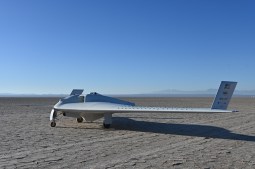
Along with vehicle designs, the Next Generation Hypersonic Cruise Missile effort is interested in emerging capabilities and innovative test-and-evaluation technologies.
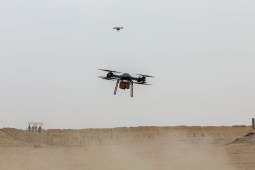
Tactical Resupply Vehicle-150s take flight during a Driving Innovation and Realistic Training event within the U.S. Central Command area of responsibility. (U.S. Army photo by Sgt. Alison Strout)
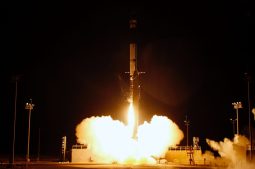
DARPA's new effort would build off of the Space Force's Tactically Responsive Space program aimed at improving the service's ability to quickly launch new systems.
Secretary of Defense Pete Hegseth operates a touch screen to remotely control a helicopter from the Defense Advanced Research Projects Agency in Arlington, Va., Nov. 14, 2025. (DoD photo by U.S. Navy Petty Officer 1st Class Alexander Kubitza)
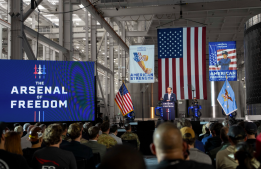
Undersecretary of Defense for Research and Engineering Emil Michael and Director, Department of Defense, Administrator Kelly Loeffler (Small Business Administration) attend a Defense Advanced Research Projects Agency event at DARPA Headquarters, Arlington, Va., April 29, 2026. (DoW photo by U.S. Air Force Staff Sgt. Milton Hamilton)
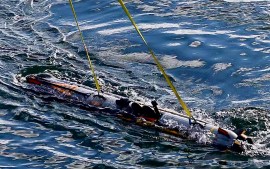
ATLANTIC OCEAN (Dec, 6, 2024) – An IVER4 900 autonomous-underwater vehicle (AUV) is deployed during the Australia, United Kingdom and U.S. (AUKUS) Pillar II Subsea and Seabed Warfare Event Two/Integrated Battle Problem 25.1. During the event, U.S. Navy, Royal Navy and Royal Australian Navy personnel launched, tested and provided demonstrations for several unmanned underwater vehicles, to include the Mission Specialist Defender Mark IV remotely-operated vehicle (ROV) and the IVER4 900 autonomous-underwater vehicle. (Image produced utilizing a screen capture from video.) (U.S. Navy photo by Mass Communication Specialist 1st Class Justin E. Yarborough)
Pete Hegseth’s speech and three accompanying memorandums released Monday reveal the Trump administration’s latest, fast-moving and multifaceted vision to overhaul the Pentagon's technology enterprise.