DARPA begins flying experimental hybrid-electric ISR drone
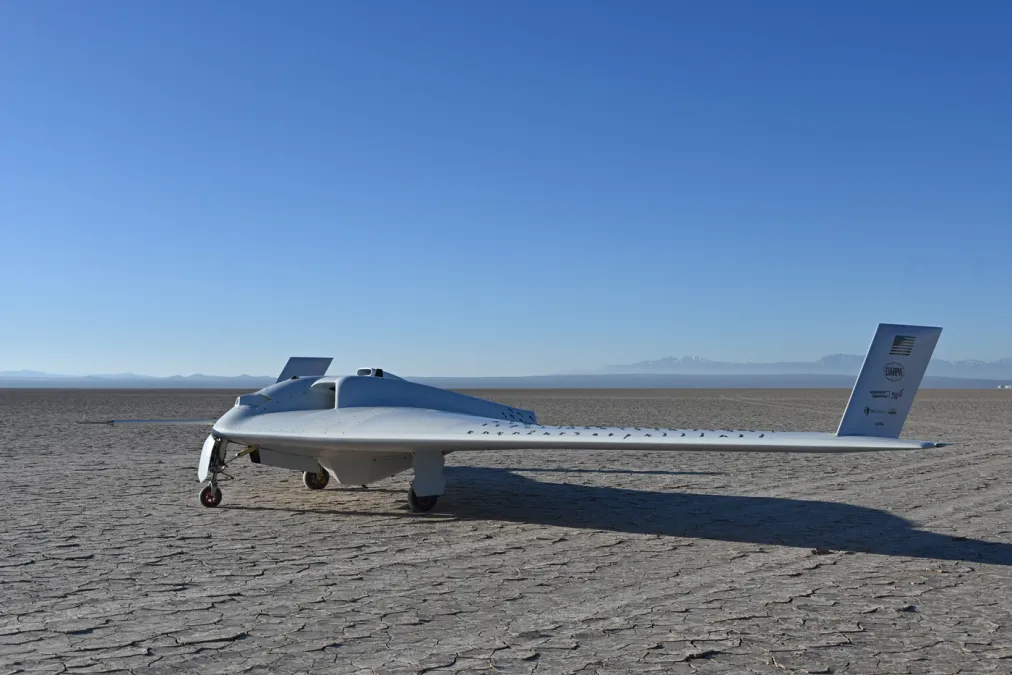
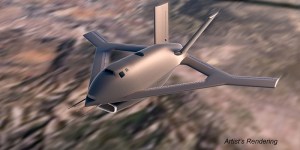
The Defense Advanced Research Projects Agency has notched the first flight of the XRQ-73, a reconnaissance drone designed to demonstrate hybrid-electric propulsion technologies for future autonomous systems.
The flight occurred in April at Edwards Air Force Base, California, in collaboration with the Air Force Research Laboratory and prime contractor Northrop Grumman, DARPA announced Wednesday. The drone is being developed under the agency’s Series Hybrid Electric Propulsion AiRcraft Demonstration (SHEPARD) program, which seeks to improve fuel efficiency and noise signatures for military aircraft.
“This milestone is not just about a single flight. The architecture proven by the XRQ-73 paves the way for new types of mission systems and delivered effects. We look forward to advancing this technology through the flight test program and delivering new capabilities for our warfighters,” Lt. Col. Clark McGhehee, SHEPARD program manager, said in a statement.
The X-plane is a lightweight Group 3 unmanned aerial vehicle that uses a hybrid-electric propulsion system that converts traditional fuel into electric power to run the drone. The technology could provide the military with novel propulsion options that are not only more efficient, but also quieter during flight.
“The XRQ-73’s innovative hybrid-electric propulsion system combines fuel efficiency, reduced emissions and enhanced operational flexibility — enabling new mission possibilities and supporting the evolution of new aircraft designs,” Northrop Grumman said in a statement. The company’s subsidiary, Scaled Composites, is also involved in the XRQ-73’s development.
The SHEPARD program builds upon previous work to advance hybrid-electric propulsion capabilities, as the XRQ-73 is a derivative of another unmanned aerial vehicle known as the XRQ-72 that was developed under an effort known as the Great Horned Owl (GHO) project.
Run by AFRL in partnership with the Intelligence Advanced Research Projects Activity (IARPA), the project broadly sought to develop technologies that could drastically reduce acoustic signatures of intelligence, surveillance and reconnaissance (ISR) drones without sacrificing a platform’s endurance and payload capacity.
According to DARPA, the XRQ-73 is larger than its predecessor but leverages the hybrid-electric architecture and other component technologies developed for the GHO project. Furthermore, the drone features “operationally representative fuel fraction and mission systems, while staying below the Group 3 UAS weight limit,” the agency noted.