The Pentagon is pursuing multiple initiatives to enhance its space posture, including the Proliferated Warfighter Space Architecture and the Space Data Network.
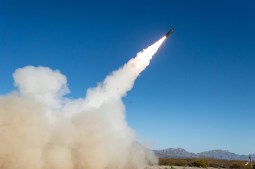
The Precision Strike Missile (PrSM) fired from a U.S. Army M270A2 and HIMARS at White Sands Missile Range, New Mexico. (Official U.S. Army photo by Christopher Bohn)
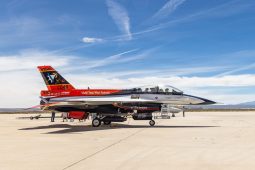
Rachel Kinard, Air Force Test Pilot School director of research, and Lt. Col. Philip Downing, 370th Flight Test Squadron commander, depart for a HAVE HEAT test mission at Edwards Air Force Base, California, April 16, 2026. Leveraging Lockheed Martin’s Infrared Search and Track Legion Pod, during the HAVE HEAT program, the X-62 VISTA platform demonstrated the ability of AI agents to ingest live infrared sensor data, directing the X-62 to autonomously intercept an airborne target in real time. (U.S. Air Force photo by Lindsey Iniguez)
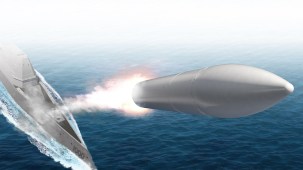
The watchdog found Lockheed Martin's production line is building roughly half the hypersonic missiles the Pentagon needs as manufacturing and quality issues persist.
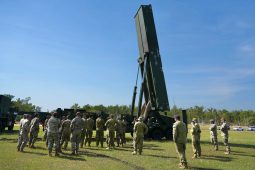
Soldiers from B Battery (Dark Eagle), 5th Battalion, 3d Field Artillery Regiment (LRFB), give a capabilities brief on the Long Range Hypersonic Weapon System in Northern Territory, Australia, July 9, 2025. The battery participated in Exercise Talisman Sabre 25. (U.S. Army photo by Sgt. Perla Alfaro)
The Government Accountability Office's annual assessment of major DOD programs details potential risks and delays for three high-profile hypersonic weapons.
The Boeing Company signage is displayed above the company’s booth at Special Operations Forces (SOF) Week at the Tampa Convention Center on May 19, 2026 in Tampa, Florida. (Photo by Luke Sharrett/Getty Images)
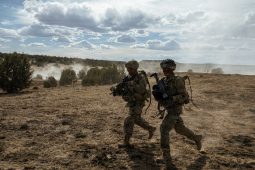
Soldiers assigned 4th Infantry Division maneuver to the objective during a Combined Arms Live-Fire Exercise as part of Ivy Mass at Piñon Canyon Maneuver Site, Colorado, May 17, 2026. (U.S. Army photo by Staff Sgt. Richard Stewart)
Now, as the Army looks to scale NGC2 across the force, it has settled on Anduril to help shepherd data, applications, AI models and other military systems…
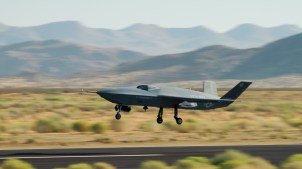
The Air Force has also selected Anduril, Shield AI and Collins Aerospace to compete for the contract to serve as CCA Increment 1's primary mission autonomy software…