Hegseth issues directive to bring back ‘psyop’ terminology
Secretary of Defense Pete Hegseth last week quietly ordered a name change to the military entity charged with influencing foreign audiences, reverting its title back to one used 15 years ago.
Since 2010, military activities designed to manipulate the behavior of foreign governments, combatants and even individuals have fallen under the unassuming title of “military information support operations,” or MISO. Now, those efforts will once again be part of “psychological operations,” or PSYOP, according to a memorandum Hegseth signed Dec. 2.
While the name change constitutes one of many Pentagon rebrandings under Hegseth, some services in recent years have updated their psychological operation or deception methods as the information environment becomes increasingly contested by both state and non-state actors.
“In 2010, DoW replaced the term PSYOP with MISO in an attempt to provide a more accurate description of the relevant operational activities and to disassociate such activities from misleading or negative connotations,” Hegseth wrote in the memo. “With fifteen years of additional perspective, it has become clear that the term PSYOP more closely align[s] functions with branding, eliminates confusion, and directly supports my priorities to reestablish deterrence and revive the warrior ethos.”
The directive also comes as the Trump administration continues its lethal campaign in the Caribbean targeting alleged drug smuggling boats while amassing an unprecedented military buildup against Venezuela.
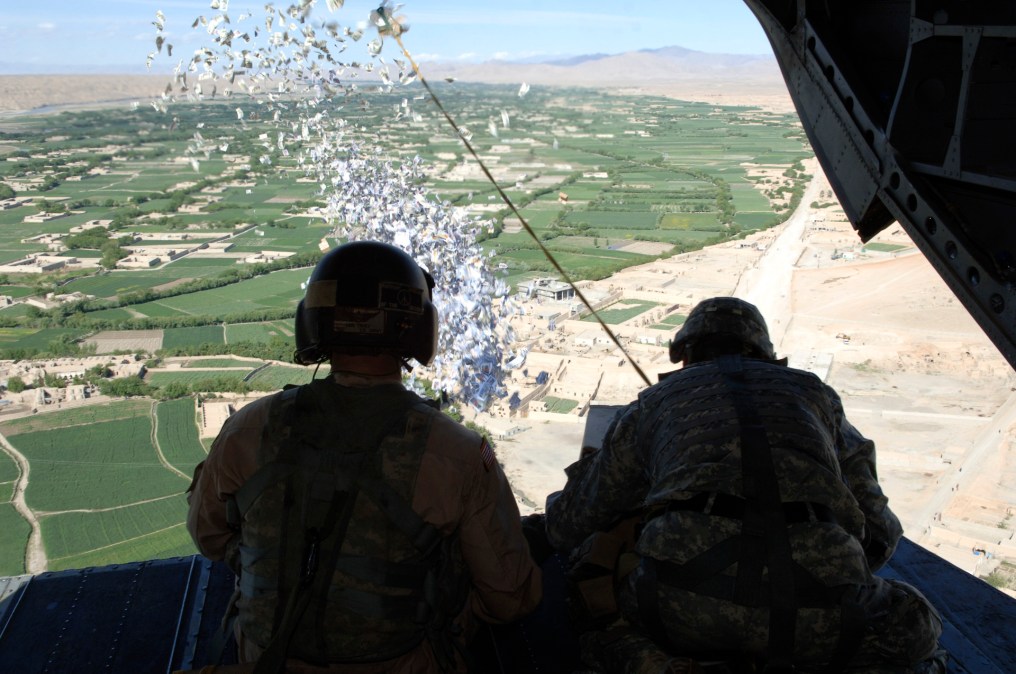
Late last month, the Washington Post reported the White House was considering dropping leaflets into Venezuela in its ongoing pressure campaign against the country’s president Nicolas Maduro, a common psychological operation used heavily in conflicts such as World War II. U.S. Southern Command, the entity overseeing operations in the region, says it employs “persistent” information operations in more than a dozen countries.
Hegseth tasked Undersecretary of Defense for Policy Elbridge Colby to change the MISO name by the end of fiscal 2026, revising a Pentagon instruction from 2016, according to the memo.
Then-head of U.S. Special Operations Command Gen. Bryan Fenton warned lawmakers earlier this year that the military needed to improve its information operations, adding that the broader national security apparatus should receive an “F” grade. Information ops is one of seven key joint warfighting functions the military has deemed critical to current and future strategic aims.
Psychological operations are often contentious and there are strict laws meant to prevent military information operations from targeting Americans. Last year, Reuters reported a controversial clandestine military operation started in 2020 under the first Trump administration and continued for months under former president Joe Biden aimed at the Philippines to discredit Chinese-made COVID-19 vaccines through fake social media accounts.
Some services have already tweaked their information operations, specifically when it comes to deception after years of stagnation and in an effort to keep up with technological advancements and the proliferation of social media. After more than a decade, the Marine Corps updated its deception doctrine to include mimicking the electronic signature of a unit, implementing fake networks to obscure force sizes and even releasing odors associated with a specific biological or chemical capability to dupe an enemy.