Marine Corps makes GenAI.mil its official enterprise AI platform as older systems get sidelined
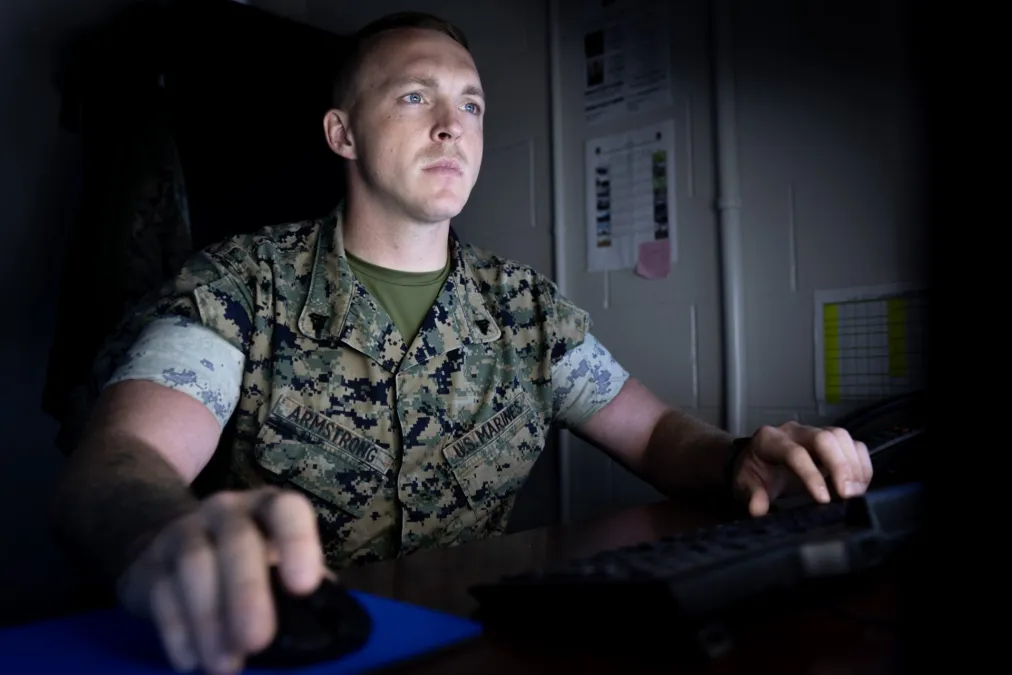
The Marine Corps officially designated GenAI.mil as its preferred large language model platform this week, a move that largely distances the service from older AI systems that are owned and operated by other branches of the military.
In a force-wide message published Wednesday, the Corps said GenAI.mil — the Pentagon’s recently launched hub for commercial large language models — is authorized for all Marines, civilians and contractors to use.
The service announcement follows the release of the Defense Department’s AI strategy, an aggressive push to proliferate LLMs across the military. It also comes as older military AI systems get sidelined to make way for GenAI.mil.
“Until this point, there was no enterprise solution for USMC users,” Capt. Christopher Clark, the service’s AI lead, told DefenseScoop in an emailed statement. “GenAI.mil is the first true enterprise solution for Marines to use generative AI.”
DefenseScoop reported last month that the Air Force was sidelining NIPRGPT, the LLM it owned and operated but could be used by other services. The Marine Corps message said its prioritization of GenAI.mil does not limit the use of other LLMs, such as the Army-managed CamoGPT.
Google’s Gemini was the first commercial AI model introduced to GenAI.mil. Defense Secretary Pete Hegseth said earlier this month that the GrokAI tool will join GenAI.mil, even as Elon Musk’s platform came under fire for allowing users to create and share nonconsensual, sexualized deepfakes.
Following the breakneck release of GenAI.mil early last month, DefenseScoop reported that the platform was being met by troops and department officials with mixed reviews. Some users who already had experience using older DOD systems or commercial AI models began using the platform for basic administrative tasks.
Others were more wary, especially in the absence of clear guidelines for use and the propensity for these nascent systems to produce incorrect information.
“GenAI tools are non-deterministic and may produce inaccurate, biased, or incomplete information,” the new Marine Corps message said under a “user responsibility and accountability” section.
“All personnel are responsible for critically evaluating and verifying any output from GenAI.mil before using it for official purposes” in accordance with guidance released by the service last year, it added.
The Marine Corps message said the service will consolidate all “duplicative, general-purpose” usage onto GenAI.mil. When asked about transferring data from NIPRGPT to GenAI.mil, Clark said the Corps “will work with users on an as-needed basis to handle high priority transition requirements.”
Last spring, the Marine Corps released an AI implementation plan which sought to “empower Marines with knowledge, skills and tools to rapidly implement AI” and accelerate the integration of these systems across the force, among other approaches described in the 56-page document.
The document also said that by this spring, key Corps leaders would “develop a use case process that captures, assesses, and prioritizes concepts for the application of AI from across the warfighting functions, and at all echelons, to implement targeted actions” as well as “identify major roadblocks in policy, workforce, and infrastructure that have a large impact on innovation and acceleration of AI implementation to mitigate through change.”