Space Force advances towards operationalizing commercial reserve fleet in 2026
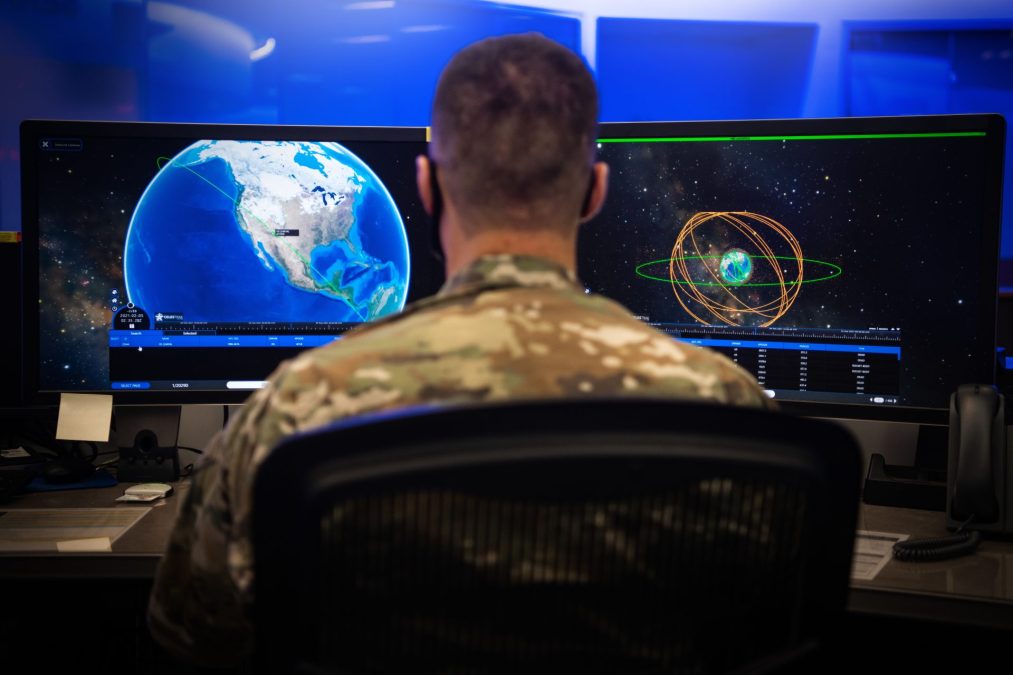
The Space Force has its eyes set on selecting which vendors will be part of the first Commercial Augmentation Space Reserve (CASR) cohort before the end of this fiscal year.
After wrapping up a successful pilot effort last year, the service’s Commercial Space Office is now entering the program’s next phase aimed at delivering a CASR minimal viable capability, Director Col. Tim Trimailo told reporters Thursday. If all goes to plan, the office will have the first batch of commercial companies contracted to provide additional space domain awareness capabilities no later than September 2026, he said.
“By the end of this year, we’re going to have CASR contracts for space domain awareness so that if we end up in a crisis or conflict, these are contracts we can turn on very quickly and actually support us shoulder-to-shoulder in the fight,” Trimailo said during a virtual media roundtable.
The initial deals would mark a significant milestone for the CASR effort, which seeks to establish a pool of commercial vendors offering space-based services during peacetime that could then be used to augment and support the military if hostilities break out. The program would be similar to the Air Force’s Civil Reserve Air Fleet and the Navy’s National Defense Reserve Fleet, both of which provide surge transport capacity in wartime.
Despite having other programs as examples, establishing CASR has been a complex process for the Commercial Space Office, also known as COSMO. Unlike the other services’ civil reserve fleets, the Space Force’s would provide different capabilities across multiple mission areas — including space domain awareness, launch and surveillance, reconnaissance and tracking.
Tackling those intricacies was a key focus for the program’s 2025 pilot, CASR division chief Lt. Col. Brandon Galindo told reporters. Using space domain awareness as a starting mission area, the office worked with commercial industry to understand the best contracting strategy and go over the readiness process, he said.
Vendors also participated in a two-day wargame to test how their services could be integrated into wartime operations, as well as different levels of surge capacity.
“The goal of that pilot was to figure out the process, go through the wargame [and] get an after-action report. We have lessons learned — what we need to tighten up, where in our process we need to change or we need to keep,” Galindo said.
With the pilot finished, COMSO is now looking for interested space domain awareness companies to participate in a live-fire demonstration that will last around three days as a way to test industry’s capacity limits, he said. Afterwards, the service plans to move to make a final contract decision by the end of the year.
The Space Force intends to use the same three-phased approach for other capabilities in the future — beginning with a pilot, scaling operations and then achieving full operational capability — while tailoring its framework for each mission area.
Another issue unique to CASR is that the offerings provided by commercial industry will be at greater risk of adversary interference when compared to the Air Force and Navy’s civil reserve fleets.
Considering additional risk factors has led COMSO to second-guess some of the mission areas it originally planned to include in the Space Force’s civil reserve fleet, such as commercial satellite communications.
“When you look at a mission area — like commercial SATCOM, for instance — that is a global business worth trillions of dollars,” Trimailo said. “Frankly, it is more complicated to go after that mission area than I think we initially thought.”