Iran’s one-way attack drone launches drop as U.S. prepares to rev up Operation Epic Fury
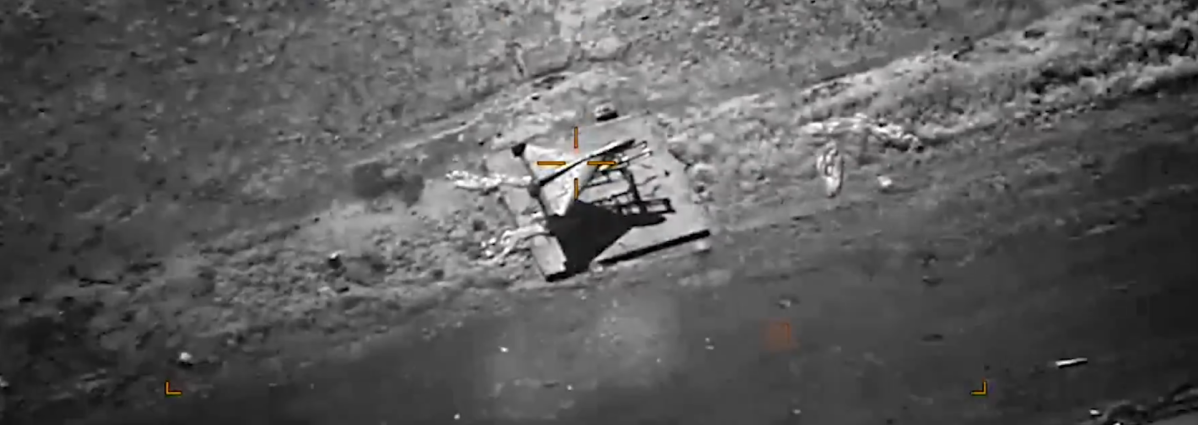
The U.S. and Israel have taken out a significant portion of Iran’s drone infrastructure and weapons launchers in Operation Epic Fury, resulting in what two top American defense officials said Wednesday is a noticeable reduction of deadly drone and missile deployments by Iranian military forces over a recent 24-hour timeframe.
Secretary of Defense Pete Hegseth and Chairman of the Joint Chiefs of Staff Gen. Dan Caine supplied updates at the Pentagon about the war against Iran and suggested that military activities will further intensify.
“When we say ‘the throttle is going up,’ the throttle is going up — and it’s going to stay on high,” Hegseth said.
Caine said that in the next 24 to 48 hours, U.S. Central Command “will continue to strike infrastructure and naval capability,” and that much of its intelligence, surveillance and reconnaissance assets are currently “hunting and killing ballistic missile launchers and one-way attack capability.”
Initiated by President Donald Trump on Feb. 28, he and other U.S. leaders have billed Epic Fury as a campaign to diminish Iran’s Revolutionary Guard Corps (IRGC) and eliminate missile facilities, air defenses, and military installations allegedly associated with imminent nuclear and regional threats to American and Israeli interests in the Middle East.
In a video posted online Tuesday evening, Centcom commander Adm. Brad Cooper said Iran had launched more than 2,000 drones and 500 ballistic missiles in retaliatory strikes against civilian and military targets in the Middle East.
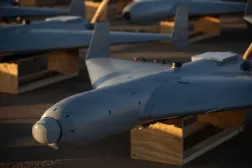
He also said that Centcom has “countless” Low-cost Uncrewed Combat Attack System (LUCAS) drones that could be deployed in future attack surges against Iran.
On Wednesday morning, Caine said that at “four days in, 103 hours into this campaign,” Centcom is shifting its focus to ensuring that Iran cannot rapidly rebuild or reconstitute its combat power.
“Those phases will begin as the campaign continues. As of this morning, U.S. Central Command is making steady progress. Iran’s theater ballistic missile shots fired are down 86% from the first day of fighting with a 23% decrease just in the last 24 hours — and their one-way attack drone shots are down 73% from the opening days,” Caine said. “This progress has allowed Centcom to establish localized air superiority across the southern flank of the Iranian coast and penetrate their defenses with overwhelming precision and firepower.”
The military will “begin to expand inland, striking progressively deeper into Iranian territory and creating additional freedom of maneuver for U.S. forces,” Caine added.
Over the last several weeks, Cooper and his team refined their operational approach to the region.
Planners identified “key centers of gravity that would allow Iran to project power outside of its borders,” Caine said, and determined how to isolate critical vulnerabilities so that “with precision, the greatest strategic effect could be achieved as a result.”
The commander added that the U.S. and Israel have at this point destroyed more than 20 Iranian naval vessels, including one submarine — effectively neutralizing Iran’s major naval presence in that region.
Centcom is now pivoting toward the next wave of combat.
“This is a point of munitions transition from stand-off munitions to stand-in munitions — like Joint Direct Attack Munitions, which are GPS-aided free-fall weapons and other things like Hellfires, etc. This will allow the joint force to deliver significantly increased precision effects on the target,” Caine explained. “The throttle is coming up, as the secretary said, as opposed to ramping down. This will allow us to maintain consistent pressure on the adversary over the coming days, disrupt their launch timelines and impose cost every day around the clock.”
Samuel Bendett, an adviser at CNA and an expert in robotic and autonomous military systems, told DefenseScoop that Iran’s drone attacks during the opening days of this war were much larger than Russian drone assaults against Ukraine once Russia received its first batches of Iranian Shaheds.
Bendett also noted that when Russia first started using Iranian-made Shahed drones and similar Iranian-designed, Russian-produced Geran drones against Ukraine, it did so in small numbers.
“Russia’s largest single Shahed/Geran strike later on in the conflict was a one-day attack and included no more than several hundred such [unmanned aerial systems] — so Russia did not and could not launch 2,000 — as it simply did not have that many in its arsenal,” Bendett said. “For Iran, that number is possible, but likely includes a significant share of their own Shaheds. If Iran intends for this to be a long-term conflict, it’s likely going to portion out its Shahed attacks and not launch that many at once, given that many can be intercepted.”
In his view, it is too soon to judge how America’s LUCAS arsenal compares to Iran’s Shahed lineup, since the latter drone variations have been in use for many years at this point.
But as Epic Fury moves into its next stage, Bendett told DefenseScoop that he expects the U.S. and Israel to place “a significant focus” on counter-UAS operations that include “not just intercepting Shaheds in-flight, but also the destruction of UAV launch sites and Shahed storage facilities.”
Six American troops were reportedly killed in Kuwait by an Iranian drone strike on a Shuaiba port facility, which also injured multiple other personnel.
“It’s still very early, as the secretary said, but the balance is shifting. We’ve always got to remember that these operations are complex, dangerous and far from over. Our soldiers, sailors, airmen, Marines, guardians and Coast Guardsmen remain in harm’s way — and we must be clear-eyed that the risk is still high. This is combat,” Caine said Wednesday.
“As President Trump said, more and larger waves are coming. We are just getting started,” Hegseth also noted. “We are accelerating, not decelerating.”