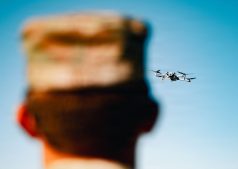
U.S. Air Force Senior Airman John Ives, 90th Ground Combat Training Squadron defender, pilots a drone during an X4 and SMASH 2000L Systems Firing Qualification at Camp Guernsey Joint Training Center’s North Training Area, Wyoming, May 15, 2026. The drone carried balloon targets to help operators practice acquiring, tracking and engaging simulated aerial threats. (U.S. Air Force photo by Staff Sgt. Michael A. Richmond)
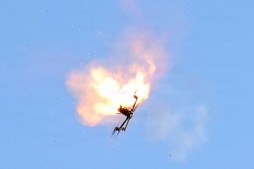
A drone shot down by Genesis Arms Gen-12 SBM during exercise Falcon Peak at Cibola Site 17, Yuma Proving Ground, Arizona, Sept. 22, 2026. (Dept. of Defense photo by SSgt. Colten Tessness)
Michael Dodd, assistant secretary of war for critical technologies, shakes hands with the newest members of the U.S. Air Force during a Joint Enlistment Ceremony at Indianapolis Motor Speedway at Speedway, Indiana, May 17, 2026. (U.S. Army National Guard photo by Sgt. Austin Goss)
“I’ll say it here, I’m going to knuckle roll the other services to do the same," said Michael Dodd, assistant secretary of defense for critical technologies.
U.S. Air Force Senior Airman John Ives, 90th Ground Combat Training Squadron defender, pilots a drone during an X4 and SMASH 2000L Systems Firing Qualification at Camp Guernsey Joint Training Center’s North Training Area, Wyoming, May 15, 2026. The drone carried balloon targets to help operators practice acquiring, tracking and engaging simulated aerial threats. (U.S. Air Force photo by Staff Sgt. Michael A. Richmond)
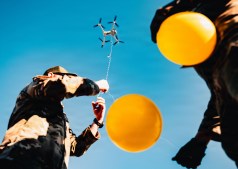
U.S. Air Force Airmen attach balloons to a drone during at Camp Guernsey Joint Training Center’s North Training Area, Wyoming, May 15, 2026. The balloons served as aerial targets, allowing defenders to simulate engagements against small unmanned aircraft systems. (U.S. Air Force photo by Staff Sgt. Michael A. Richmond)
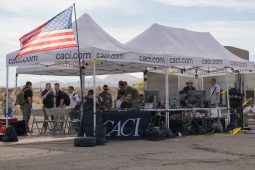
U.S. service members and civilian contractors with CACI work at the operations center during the SkyValor Operational Demonstration at Cannon Air Defense Complex in Yuma, Arizona, May 13, 2026. (U.S. Marine Corps photo by Lance Cpl. Sarah E. Foster)
The system will be deployed to “critical,” but unspecified sites, including as part of an initial task order for the Pentagon’s Domestic Shield initiative.
A team of Air Transportation Specialists assigned to the 101st Air Refueling Wing in Bangor, Maine, unloads cargo from a KC-135 Stratotanker, June 3, 2026. The team, reinforced by augmentees from multiple units, have efficiently processed critical MICAPs, morale pallets, and essential supplies bound for U.S. Central Command. (DOD Photo by Andrew Sinclair, DVIDS)
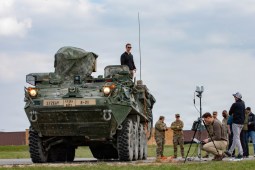
U.S. Army Soldiers assigned to the 2nd Platoon, 2d Cavalry Regiment, operate a new drone detection and jamming system during a validation exercise at Grafenwoehr Training Area, Germany, April 15, 2026. The validation exercise assessed the system’s ability to identify, jam, and counter unmanned aerial systems. Results will help determine the equipment’s readiness for integration during exercise Fly Trap 5.0 in May 2026. (U.S. Army Reserve photo by Sgt. Joseph Honce)
A major counter-drone exercise taking place in Europe this month has demonstrated U.S. soldiers’ additive manufacturing prowess, according to an officer involved in the experimentation and training…
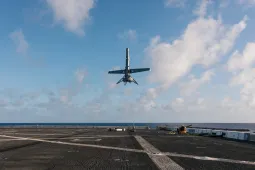
A VBAT unmanned aerial system takes off from the flight deck of San Antonio-class amphibious transport dock ship USS Portland (LPD 27) during counter-small UAS training in the Pacific Ocean, April 4, 2026. (U.S. Marine Corps photo by Lance Cpl. Luke Rodriguez)