Navy looking to emulate signals on maritime drones to train systems for Pacific Fleet
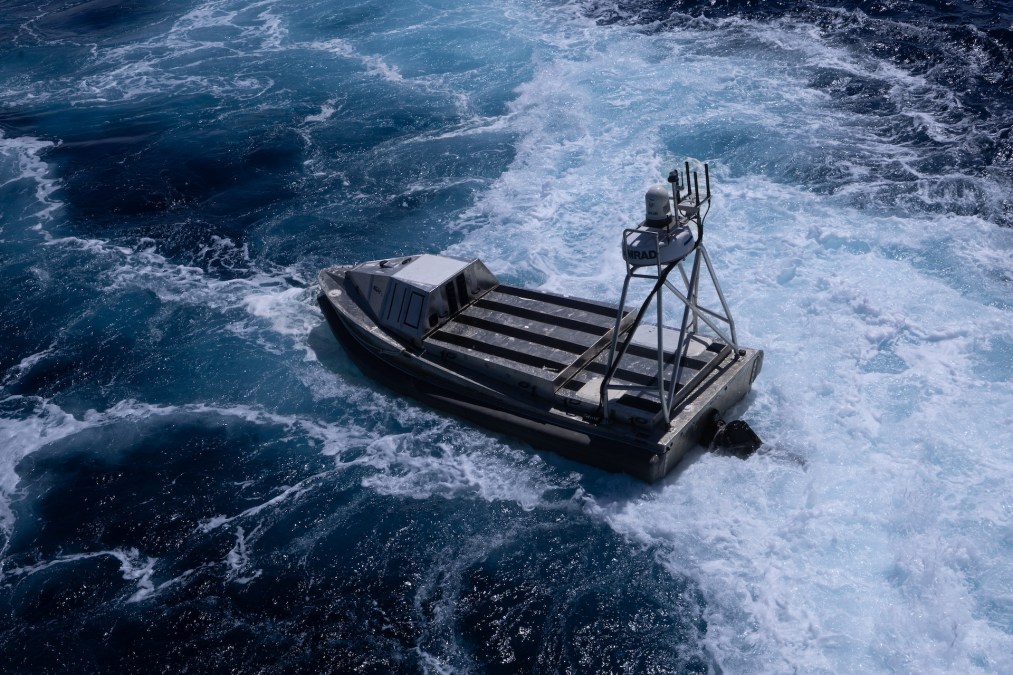
To help realize its vision for a hybrid fleet operating in the Pacific theater, the Navy is pursuing new technology to remotely and realistically emulate signals on uncrewed systems.
In January, Chief of Naval Operations Adm. Daryl Caudle officially announced his “Hedge Strategy,” which includes investing in a variety of robotic and autonomous platforms to supplement and complement the main battle force of manned vessels.
The concept includes “attritable and easily replenishable” uncrewed surface vessels, medium USVs designed for “scouting, screening, and striking,” and unmanned underwater vehicles for “area and water space denial” or counter-mine missions, he noted.
Such technology could be especially useful in the vast maritime domain of the Pacific, where the U.S. military is particularly concerned about China’s military buildup and aggressive behaviors.
The Pentagon’s Defense Innovation Unit is trying to aid the Navy’s modernization efforts via its Emulation Module for Unmanned Systems (EMU) program, which is using a commercial solutions opening contracting mechanism to solicit industry.
“To extend its presence more effectively, the Navy is developing a hybrid fleet that combines crewed ships with a network of unmanned and autonomous platforms. However, many new sensors and software feeding the maritime common operational picture (COP) must be trained and calibrated using realistic radio frequency signals produced by ships in diverse conditions. Using crewed ships for this work is costly and labor-intensive, while current unmanned vehicles (UxVs) cannot carry full sets of radar and communications equipment due to strict limits on size, weight, and power (SWaP),” officials wrote in a new solicitation.
They continued: “As a result, there is currently no practical way to create and control realistic ship signals remotely on unmanned platforms to train and test these tools at scale. This gap slows the integration of Blue sensor feeds into the COP, reduces confidence in automated detection, and delays reliable situational awareness. Pacific Fleet units need an effective means to produce and manage realistic ship signals on unmanned platforms (remotely, without onboard crews, and at acceptable cost) to maintain an accurate, shared picture of the maritime environment across the [U.S. Indo-Pacific Command area of responsibility].”
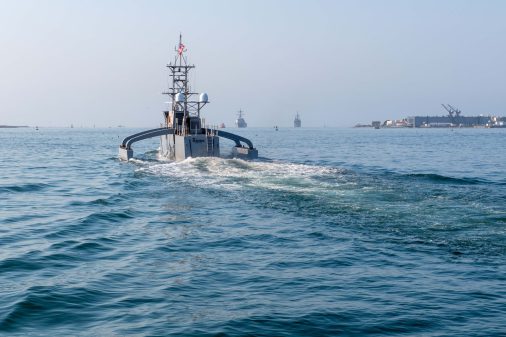
To tackle that challenge, the Navy seeks a signal-generation and control capability that can be remotely operated and integrated across a variety of robotic systems.
“The solution must produce extremely realistic ship-ship and ship-shore communications and/or radar signals to train and calibrate new sensors and software that are designed to suppress false positives, while fitting within the SWaP and environmental limits of unmanned platforms,” such as small USVs, per the solicitation.
Payloads may focus on a single band — such as S-band, X-band, Iridium or UHF / VHF waveforms — or multiple bands, but officials noted that high fidelity is the priority for the emulation technology.
Preferred solutions would be able to integrate with a variety of existing maritime drones and future platforms that come online, the solicitation noted, via integration kits for power, data and networking, command and control, and autonomy systems.
Officials seek the ability to “remotely select, schedule, and adjust signals in real-time, manage power use, monitor status, and tailor emissions without onboard crews,” per the solicitation.
The program schedule includes land-based emulation within 90 days of contract award and an on-water test within 180 days of contract award.
Industry responses to the solicitation are due April 8.