A first, Marines launch FPV drone at unmanned vessel while aboard naval craft
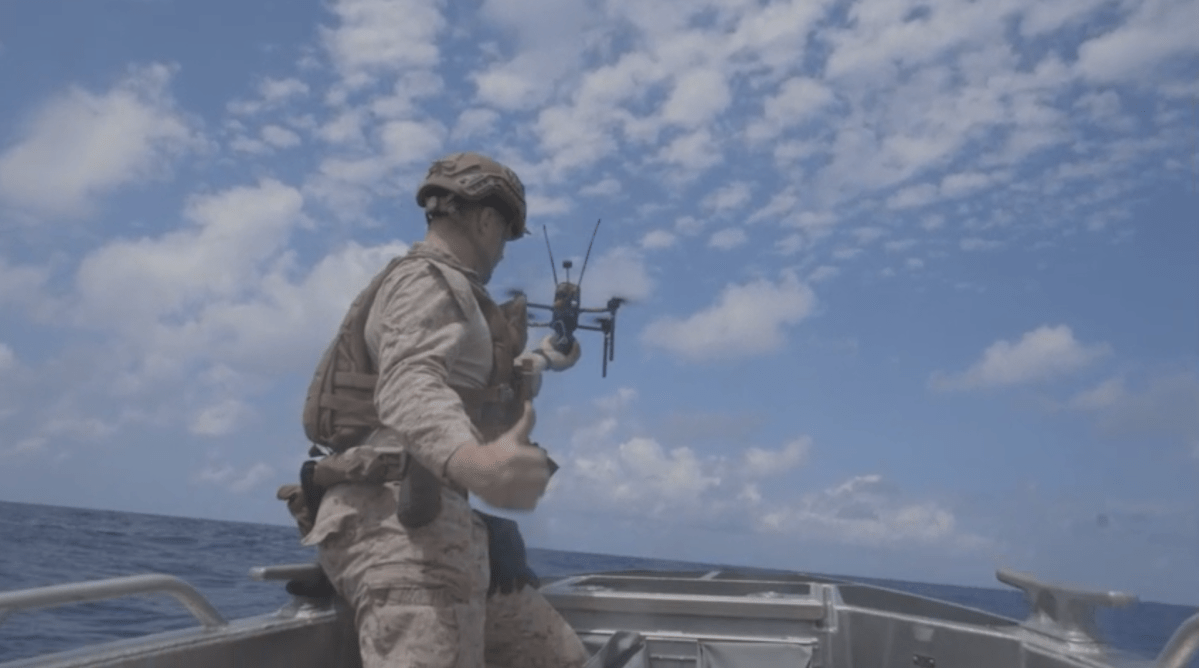
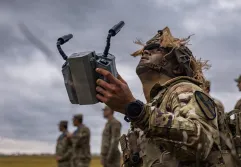
For the first time, Marines and Naval Special Warfare operators struck an unmanned vessel with a small first-person view drone they launched from a boat during a test in the Pacific, the service said, billing it as a new chapter for the amphibious branch.
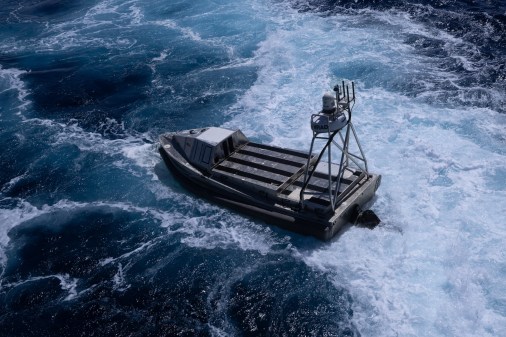
Marines with III Expeditionary Operations Training Group out of Okinawa, Japan, designed the unmanned surface vessel themselves, officials said, then blew it up with a drone while at sea alongside NSW personnel last month.
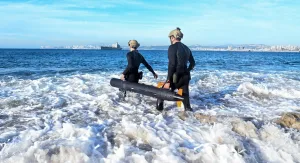
The service touted the test as proof of partnership between Marine and special operations units, a demonstration of the service’s ability to locate hostile maritime targets and destroy them with innovative tech.
“By training Marines in the construction and operation of these systems, [the training group] is building an arsenal of innovators ready to fabricate and deploy unmanned aerial, surface and ground systems tailored to specific battlefield needs,” Marine Corps Maj. Brant Wayson, unmanned systems branch officer in charge, said in the March 31 release.
“The threat from [the] III [Marine Expeditionary Force] to our adversaries can change from one day to the next,” he added. “We can create leave-behind sensors, build mesh networks, or develop unique systems across sea, air or land to deliver payloads.”
Early last year, the Marine Corps began building its small unmanned aerial systems stable in earnest, specifically with the establishment of the service’s attack drone team. Since then, it has poured significant resources into that effort by buying platforms, creating training pipelines and attempting to define its role in the U.S. military’s vast drone effort.
DefenseScoop previously reported the service was preparing to purchase thousands of FPV systems this year and that it had established small UAS certification programs across the fleet.
While the release did not disclose the drone that troops used or how Marines built the unmanned vessel, it promoted the test as relevant to contested environments. American military officials have long warned of trials in the Pacific should a war with China come to fruition, especially as supply lines and logistics nodes would likely be top targets for Beijing.
Last month, the Pentagon’s innovation center warned of “increasingly distributed operations in austere, contested littoral environments” as it looked for stealthy, autonomous vessels for sailors and Marines to use in a future conflict-ridden ocean.
Whether III MEF’s efforts are expected to be replicated across the fleet was unclear in the release.
Marines are “prepared to build their own unmanned systems from local economies during conflict,” according to the release, a sustainment concept echoed by other service officials in the past that would see troops relying on allied resources to survive in the Pacific.
Wayson said the capability displayed during the test “arms a platoon’s worth of Marines with the organic capability to deny a brigade-sized element from conducting an amphibious assault.”