Pentagon moving to modify its online portal for reporting U.S. military casualties
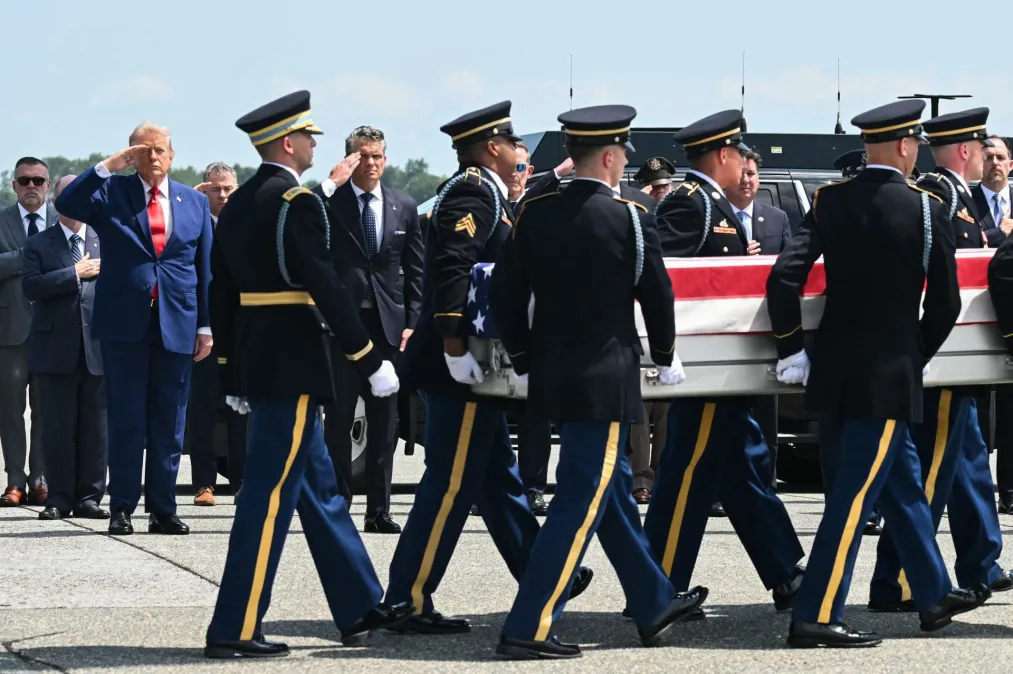
The Pentagon aims to change its public, online portal that provides data and statistics on U.S. military casualties, DefenseScoop has learned.
The Defense Casualty Analysis System currently includes information about personnel who have been classified as deceased, wounded, ill, or injured during their service.
Officials will be implementing “two key enhancements” to DCAS in a move to “make the data more easily understood,” according to a source familiar with the plans.
Defense Department officials will be briefing Congress about the matter as soon as Friday. The source did not clarify whether the entire website would be re-designed, but they confirmed that updates were expected to begin sometime after lawmakers are notified.
“All changes to data in DCAS are strictly administrative, and survivor benefits, entitlements, and family support remain completely unaffected,” said the source, who requested to be referred to as a War Department official.
(President Donald Trump issued an executive order rebranding DOD as the Department of War last year, though officially changing the agency’s name requires an act of Congress.)
Maintained by the department’s Defense Manpower Data Center, the DCAS web portal is a single, centralized public reporting system that tracks deaths, wounded-in-action stats, historical conflict casualties and other information. Figures are currently broken down across military contingencies and campaigns, such as the recent Operation Epic Fury.
DCAS has been at the center of significant controversy after an investigation by The Washington Post last month exposed serious data discrepancies in the Pentagon’s reporting of U.S. military casualties in the Middle East during Epic Fury and the ongoing conflict with Iran.
When asked what sparked these new, forthcoming changes to the portal, the War Department official told DefenseScoop it was triggered by “an internal audit of our reporting systems.”
As part of those planned modifications, the official said the DOD would be standardizing hostile and non-hostile casualty subcategories across DCAS.
“Establishing this single reporting framework ensures reporting consistency within the system, making casualty data significantly easier for the public to navigate and comprehend,” the source said.
DOD is also going to introduce a new “Pending Adjudication” category to track the status of active duty casualties pending final categorization and reporting in the system.
“This new category will allow the department to minimize reporting delays while completing a thorough verification process for all casualty reporting,” the War Department official said. “Before final casualty categorization is publicly reported in DCAS, the department must evaluate several critical factors: duty and deployment status; hostile versus non-hostile circumstances; accident, injury, or illness classifications; designated conflicts; and the precise location of each incident.”
The official added that, for complex cases, maintaining that pending status will enable “the department to complete this review while also allowing for transparency.”
To illustrate the process, they offered a hypothetical scenario.
The source said that in the event of 10 newly-identified casualties, the department may temporarily designate them as “Pending Adjudication” in DCAS. The records would remain in that status while DOD evaluates specific factors surrounding each incident.
Once this evaluation is completed, the final status of the casualties would be individually updated and moved to the appropriate category within DCAS.
“Because individual cases will move from the ‘Pending Adjudication’ category to the appropriate final reporting category, users should expect the “Pending Adjudication” category numbers to change regularly,” the War Department official said.
In a recent conversation with DefenseScoop via email, Virginia Burger, who served for nine years as an active-duty Marine Corps officer, raised concerns about the recent data inconsistencies in the Pentagon’s accounting for military casualties.
“Little else degrades the American people’s trust in the military more than the impression that the Pentagon is failing to adequately convey the true casualties of war,” said Burger, who is now a senior defense policy analyst at the Project on Government Oversight.
In her view, adequate systems already exist to handle this issue, and changing them “does nothing to increase transparency.”
“They just need to use them in the appropriate manner, as every administration before them has managed to do,” Burger said.