Director of GPS Innovation Alliance warns of risks to civilians from military testing of jamming and spoofing technologies
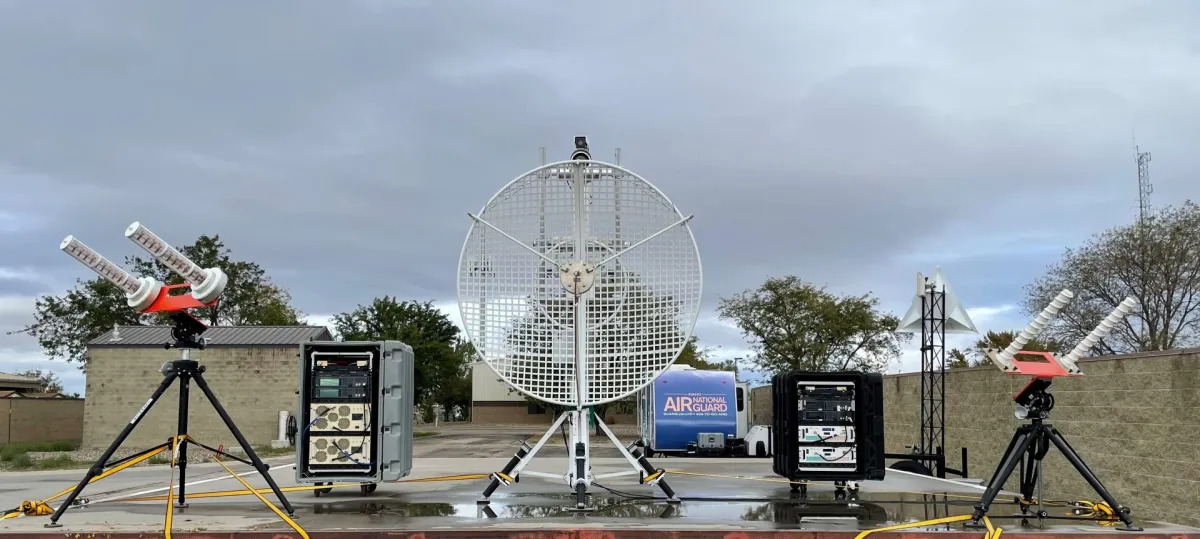
GRAPEVINE, Texas — The U.S. military has been ramping up efforts to assess and refine jamming and spoofing capabilities outside of conflict zones as troops hustle to counter unauthorized drone incursions threatening national security and prepare for what they expect will be highly-contested electromagnetic warfare environments of the future.
However, those activities risk interfering with platforms that rely on GPS.
“Government testing and operations in the United States are impacting the way that people live and work today,” said Lisa Dyer, executive director of the GPS Innovation Alliance.
During a presentation at the National Defense Transportation Association’s annual Fall Meeting in Texas last week, Dyer urged federal and military insiders to better confront existing and emerging interference risks and pursue safer coordination measures to ensure that this testing expansion does not increasingly endanger people and critical infrastructure.
“That jamming and spoofing, as you know, doesn’t just hit an adversary — it’s all of the systems that are operating in areas around it,” she warned.
Broadly, jamming and spoofing refer to distinct electronic warfare and cyber interference methods that can be used to disrupt satellite-enabled navigation assets.
The military is building out testbeds and leading demonstrations across America to integrate counter-drone defenses by fusing directed energy weapons like lasers and high-power microwaves with jamming and electronic defeat systems. Running these tests in controlled environments, the joint force can assess the technologies while simultaneously analyzing how commercial drones involved navigate autonomously when their GPS is jammed or spoofed.
The Federal Aviation Administration and the Department of Defense coordinate scheduled test windows via regular flight advisories and GPS Interference Notices to Airmen, or NOTAMs.
Earlier in her career, Dyer worked as a civil servant for 15 years in the State Department, and achieved the rank of captain in the Air Force, where she served as a program manager and systems integrator for satellite, drone and sensor technologies.
She noted that the FAA and NASA maintain a joint aviation safety database, which allows dispatchers, aircrew, air traffic controllers and other officials to report concerning incidents that take place during flights.
“And if you pull that up, you’ll find instances of government testing where NOTAMs, notices to airmen, were not actually issued and it caught the aviation community off guard,” Dyer said. “There are also instances where NOTAMs were issued and things still went wrong, where the commercial pilots hoped that the air traffic controllers would contact the folks who were doing the testing to turn it off because it was causing so many of their systems to go haywire.”
She further pointed to a preliminary report issued by the National Transportation Safety Board in August regarding a tragic incident that occurred in May, when a medical evacuation aircraft fatally crashed near Ruidoso, New Mexico, at the same time that the U.S. military was conducting high-powered GPS denial exercises nearby at the White Sands Missile Range.
“The pilot, as well as other pilots in the area, reported to air traffic control that jamming was affecting the air ambulance as well as other aircraft flying in the area,” Dyer said.
The NTSB’s preliminary report establishes the timeline of the disruptions leading up to the aircraft crashing into a 9,950-foot ridge in the Capitan Mountains on May 14, shortly after midnight. The report did not declare a definitive probable cause, and the board’s investigation remains ongoing.
Among other issues, the preliminary report indicates that the flight experienced an abrupt loss of GPS capability associated with active military electronic warfare testing out of White Sands Missile Range. All four occupants on board the medical plane were killed in the collision.
“A few of the recommendations that [the GPS Innovation Alliance] submitted [to the government] in the process of this is to think about finding a larger test range,” Dyer said. “Clearly, the testing that’s taking place at White Sands is greatly exceeding that area. It’s impacting the people who live and work around there in a highly mountainous region — one of the key areas that GPS has brought so many benefits to people that depend on aviation and emergency services.”
Pentagon spokespersons did not provide comment about those suggestions in response to requests from DefenseScoop on Thursday and Friday. An Air Force spokesperson referred the publication to the Army.
“As the incident remains under investigation, we cannot provide additional comment at this time,” an Army spokesperson said Friday.
Separately, during her NDTA presentation, Dyer also pointed to concerns around a proposal the Federal Communications Commission is considering that would allow officials to conduct jamming and spoofing around the nation’s correctional facilities.
“Currently, the Communications Act of 1934, as amended, prohibits jamming and spoofing of any sort of authorized radio frequency capabilities — your cell phones, your GPS, police radars — all of those things. It is illegal to do that, and the FCC is considering making a carve out,” she said.
It comes in response to a rise in unapproved cell phone use by individuals housed in correctional facilities and illicit drones being flown to deliver the devices.
“We, of course, as well as the cellular community, are very concerned about the proliferation of these jammers, Dyer said. “And we’re concerned about the sheer numbers of facilities in the United States.”
More than 6,000 correctional facilities span the nation, she noted. Many are situated near transportation hubs.
“So the spillover effect of jamming and spoofing in a correctional facility has a very significant opportunity to also spill over into our local communities,” Dyer said.