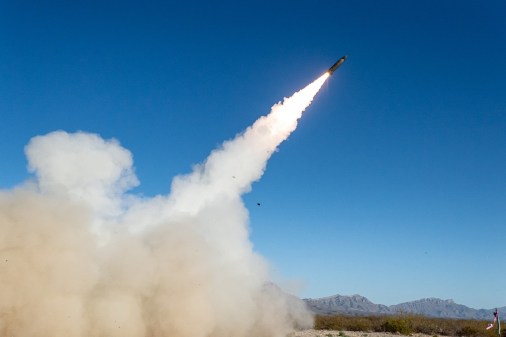
Army selects Lockheed Martin for billion-dollar Future Interceptor program
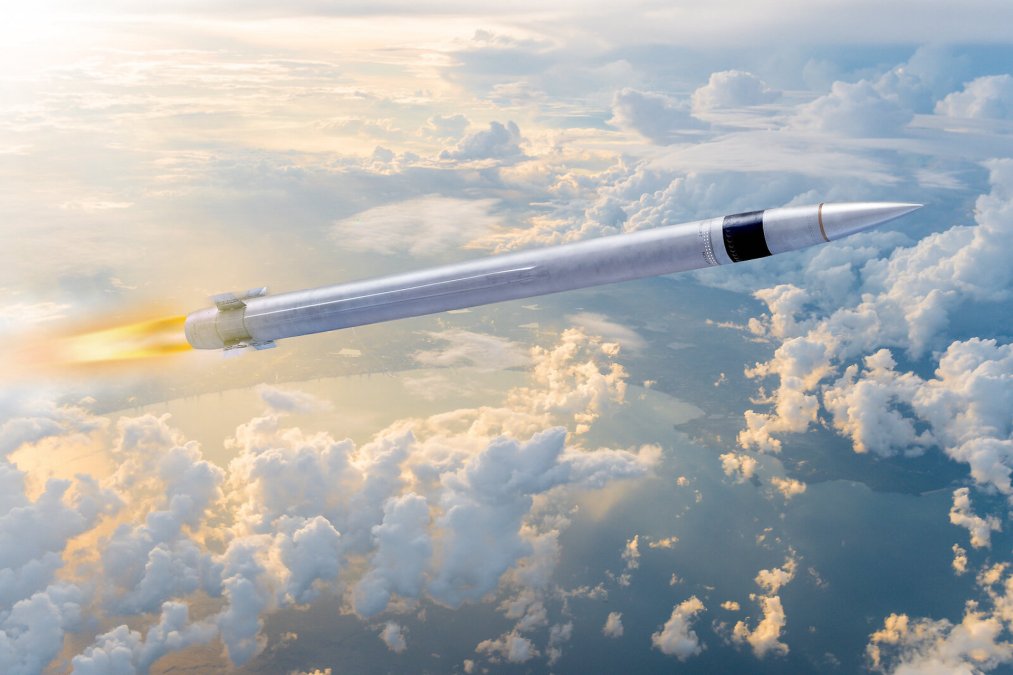
The Army gave the nod to Lockheed Martin to further develop a new missile interceptor that’s expected to have better engagement range, altitude, velocity and maneuverability than legacy systems, the service announced Thursday.
The contractor secured an Other Transaction agreement for the Future Interceptor program.
The total project value is estimated to exceed $1 billion. Under a cost-sharing arrangement, Lockheed is expected to kick in $423 million while Uncle Sam provides about $660 million, according to an Army press release.
The initiative comes as America’s adversaries are developing more capable missiles and unmanned aerial systems, including hypersonics, next-generation ballistic missiles and cruise missiles, and jet-powered attack drones. The Army, which provides much of the U.S. military’s ground-based air-and-missile defense systems, is pursuing new weapons that can defeat those types of threats.
“Developing advanced interceptor capabilities is essential to maintaining our nation’s defensive advantage against increasingly sophisticated threats,” Lt. Gen. Frank Lozano, portfolio acquisition executive for fires, said in a statement. “The Future Interceptor program reflects the Army’s commitment to accelerating innovation, leveraging proven technologies and strengthening the layered defenses that protect our forces and national interests at home and abroad.”
Brent Ingraham, the Army’s acquisition chief, said in a statement that the contract award announced Thursday was an important step in the service’s push to deliver new systems for integrated air-and-missile defense.
“Under the agreement, the Army will work with Lockheed Martin to advance prototype development and conduct testing and evaluation to assess system performance against established operational requirements,” officials wrote in an Army press release.
“Future development and production decisions will be informed by prototype performance, operational requirements, available resources and applicable acquisition processes,” per the release.
Lockheed Martin previously announced that it was offering its new PAC-3 Edge system for the Future Interceptor program, saying in a press release issued earlier this month that the company planned to begin testing the weapon in 2027 with the aim of having it ready for deployment by 2031.
The contractor’s Patriot Advanced Capability-3 (PAC-3) family of systems has been a cornerstone of the Army’s and international partners’ air-and-missile defense architectures for many years. Most recently, they’ve played a significant role in conflicts with Iran in the Middle East and the war in Ukraine.
According to a Lockheed Martin press release issued Oct. 9, the PAC-3 Edge is a next-generation system that will provide greater maneuverability, power, velocity and precision, and come with an advanced seeker, multi-pulse solid rocket motor, and control system upgrades.
“PAC-3 Edge is designed to be integrated with existing and future IAMD capabilities including the Integrated Battle Command System (IBCS), the M903 launcher, containerized launchers and HIMARS Flex,” per the Lockheed press release.