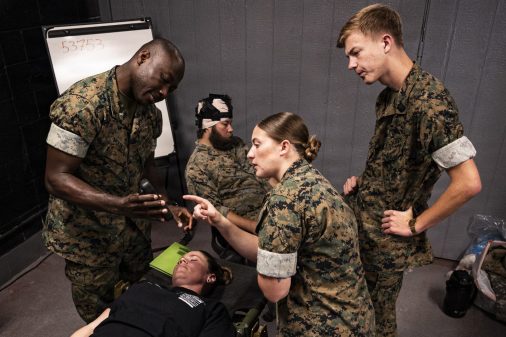
U.S. military trying to shed ‘paper-based’ triage systems to keep up with medical challenges in modern combat
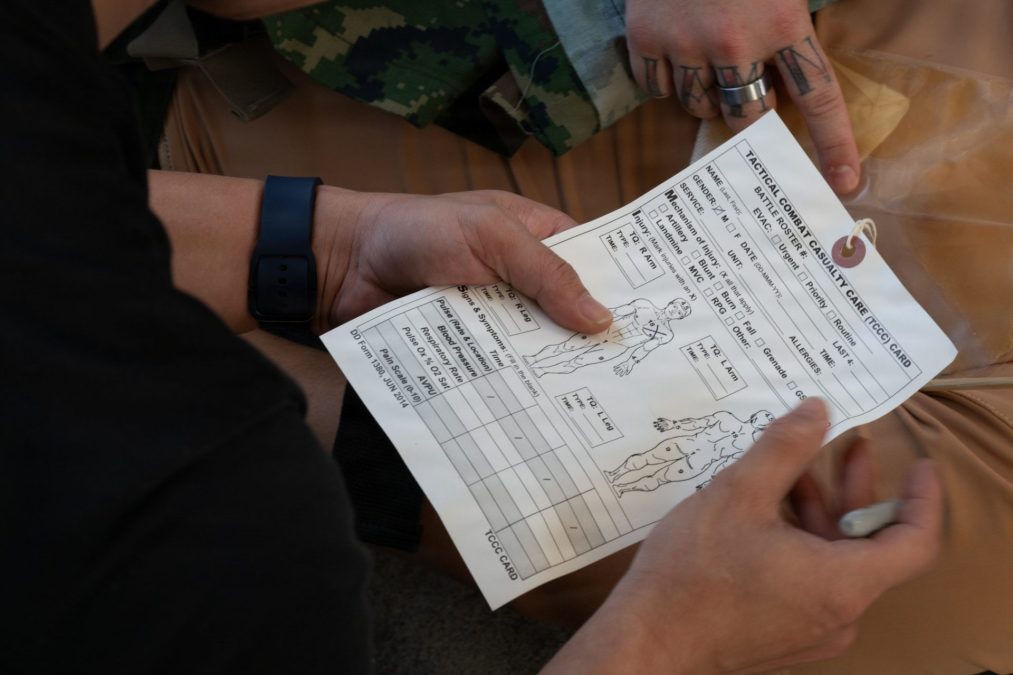
Even as modern conflicts show the vulnerabilities of traditional battlefield medical care, American medics are still relying on “analog, paper-based” triage systems to assess injured troops, according to the Defense Innovation Unit.
The DIU, along with military medical departments, is attempting to change that.
In a project announced earlier this week, the military’s hub for innovation is asking industry to compete for nearly $1 million if they develop a solution that would give combat medics (and rank-and-file troops should they need it) a portable, network-friendly tool to better assess casualties.
“This system is time consuming and severely limits real-time visibility for military care providers,” DIU said of antiquated triage methods. “This lack of a shared healthcare operating picture is inefficient and threatens force-wide survivability from point of injury to definitive care.”
The prize will be split among up to eight finalists, according to the DIU, and selected companies should expect to deliver up to 15,000 units in the first year of production. Finalists would demonstrate their solutions during an exercise scheduled for this spring and winners will be announced in June.
Military officials have said that the Russia-Ukraine war has demonstrated just how exposed traditional combat care processes are to modern battlefield tech such as drones and contested airspace. They’ve also said Ukraine has adapted its medical systems to these issues, including by establishing underground “stabilization points” toward the front line and working with private industry.
Gone are the days of stationary medical facilities and the “golden hour” common to the U.S. military in Iraq and Afghanistan — a “foregone luxury in a large-scale combat operation,” as some officials have said.
Now, the DIU is looking for an AI-assisted triage and treatment tool “to reduce and predict preventable deaths” and improve efficiency for medics, according to the project announcement.
Officials said that current triage methods rely on constant evaluation for changes in heart rate or blood pressure amid blood loss. Given the current manual approach, the DIU said constant reassessments prevent combat medical personnel from providing efficient triage, especially during a mass casualty event.
“These challenges are compounded with a loss of overall situational awareness and can result in delayed life-saving interventions and inappropriate resource allocation,” officials said in the announcement.
The new tool should show medics how many casualties there are and give commanders and medical professionals a better way to prioritize and treat injured troops in real time.
“The solution should enable rapid reusability, simplified sterilization, and field serviceability to support high patient turnover and prolonged field care,” the DIU said, adding that the tech should be rugged, lightweight, functional for at least 72 hours and able to predict warning signs of dangerous symptoms. “Additionally, information must be portrayed in a readily available and comprehensible way to users in the immediate vicinity.”
Integration into military and allied data systems were also listed as a desired feature.
The DIU is requesting submission responses by March 2, according to a LinkedIn post from the agency.