Army flexes additive manufacturing capabilities during Flytrap counter-drone exercise
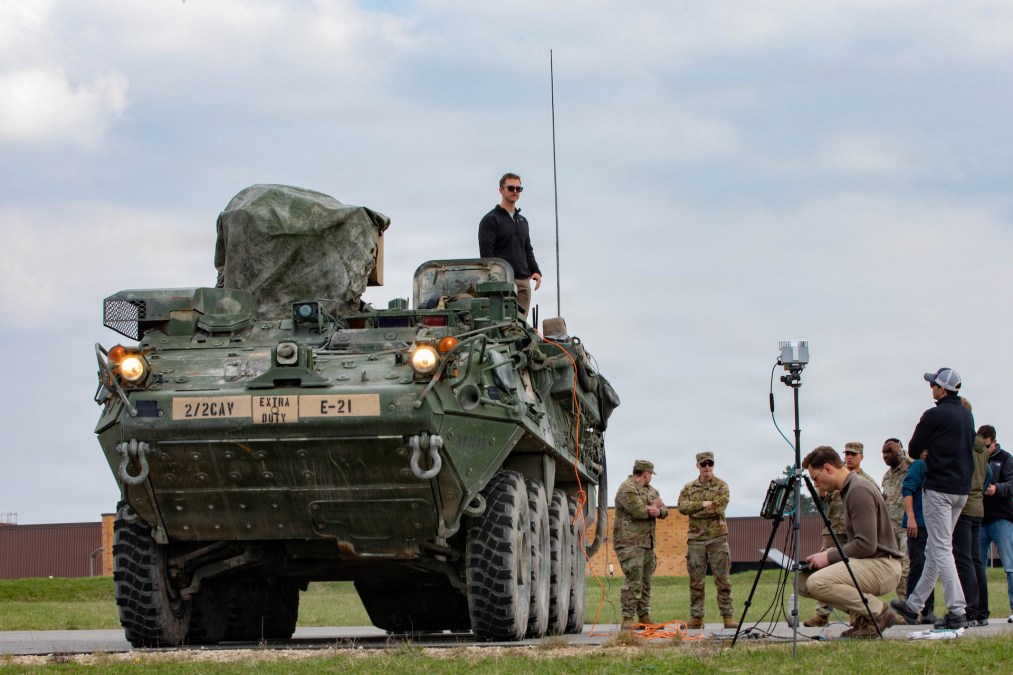
A major counter-drone exercise taking place in Europe this month has demonstrated U.S. soldiers’ additive manufacturing prowess, according to an officer involved in the experimentation and training event.
The effort, dubbed Flytrap 5.0, is being held at Pabradė Training Area in Lithuania, May 1-15. Led by the American Army’s V Corps, it involves the 2nd Cavalry Regiment; 10th Army Air and Missile Defense Command; 5th Battalion, 4th Air Defense Artillery Regiment; the United Kingdom’s 3rd Battalion, Parachute Regiment; and other allies and industry partners.
The live-fire exercise has given troops and maneuver forces the opportunity to evaluate and train with program-of-record and industry-provided counter-drone tools as they face off against small unmanned aerial systems, including swarms.
Additive manufacturing capabilities have also played a role, according to U.S. Army Maj. Galen King, executive officer with the 2nd Cavalry Regiment.
“One thing that I think that was kind of a highlight from this exercise that wasn’t necessarily related to counter-UAS or UAS, but I think is a feature of what we’re seeing across all of our soldiers right now, was with our regimental additive manufacturing platoon. We deployed this element up to Lithuania as part of the exercise. And with their team they have lathes, they have 3D printing machines, they have all sorts of additives and subtractive manufacturing kit. And throughout the exercise, not only were they fixing and repairing drones that would be used throughout training, but they were also fabricating several of the mounts, the brackets, and other kind of key pieces of equipment that we needed to install some of this vendor counter-UAS equipment onto our Strykers [combat vehicles],” King told reporters during a teleconference Thursday.
“And that’s something that we had, you know, a junior lieutenant and a sergeant doing, but I think it’s really emblematic of some of the broader innovation and kind of innovative spirit that we see across the regiment and across our soldiers who are applying themselves against these hard problems and coming up with solutions to things that I think are pretty impressive,” he added.
That platoon has been involved in previous iterations of Flytrap, King noted.
“They were also kind of some of the original plank holders for how we 3D printed some of our initial tranche of drones as well. So, this team has a significant amount of experience both building, fabricating, 3D printing, etc., UAS and then repairing the systems. The thing I think that was a real highlight during this experience was them being able to see a subcomponent of a counter-UAS system, or a mount or a bracket, be able to use a CAD [computer-aided design] program and then be able to fabricate, you know, an 80% solution that was able to take a piece of vendor kit and then integrate it onto our Stryker,” he explained.
“And this is something that we’ve kind of been experiencing for the last two years, is that expeditionary additive manufacturing is really just kind of an essential component of what the regiment does when it deploys,” he said.
The Army previously procured more than 30 3D printers, according to King, which can be sent to where they’re needed. Some of them have been moved around in Europe.
“They get deployed in kind of a modular shelter wherever the regiment deploys throughout Europe. So currently, we have a team here in Lithuania, and they’re currently supporting operations in Lithuania. And then about a week ago, they were supporting operations in Poland as well,” King noted.