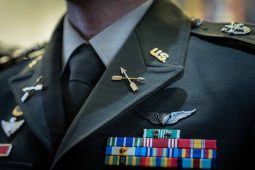
A 390A graduate dons their new Special Forces regimental distinctive insignia following the Activation and Induction ceremony at the U.S. Army John F. Kennedy Special Warfare Center and School, the Special Operations Center of Excellence, at the JFK Auditorium on Fort Bragg, N.C., Oct. 2, 2026. (U.S. Army photo by Sgt. 1st Class Alexis Washburn)
Ten warrant officers graduated from the Robotics Technician Integrator (390A) course in a ceremony at Fort Bragg, North Carolina on Friday, marking the official start of the…
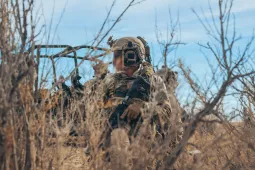
U.S. Army Green Berets assigned to the 3rd Battalion, 10th Special Forces Group (Airborne), survey the terrain during military mountaineering training as part of Exercise Diesel 26 at White Sands Missile Range, New Mexico, Feb. 24, 2026. (U.S. Army photo by Sgt. Rhianna Ballenger)
U.S. Marines with Marine Forces Special Operations Command take part in a live fire training exercise at an undisclosed location, March 30, 2026. (U.S. Marine Corps photo by Lance Cpl. Frank Sepulveda Torres)
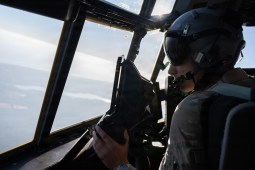
A pilot assigned to the 1st Special Operations Wing flies an AC-130J Ghostrider during a live fire training mission near Hurlburt Field, Florida, Dec. 12, 2025. (U.S. Air Force photo by Airman 1st Class Samantha Rossi)
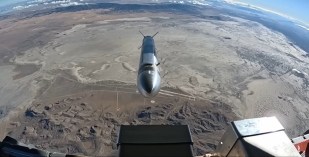
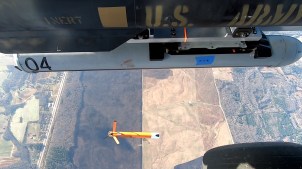
The Army Uncrewed Aircraft Systems Project Management Office, in collaboration with the U.S. Special Operations Command, executed a successful flight demonstration involving the first launch of the Air-Launched, Tube-Integrated Unmanned System (Altius) 700 air vehicle on Dec. 3, 2023, at Fort Campbell, Kentucky. (Army photo by Daniel Henke)
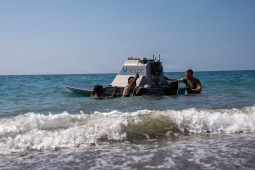
U.S. Soldiers assigned to the 125th Intelligence and Electronic Warfare Battalion, 25th Infantry Division, prepare and launch an unmanned surface vessel, during Exercise Balikatan 2026, in La Paz Sand Dunes, Laoag City, Philippines, Apr. 29, 2026. (U.S. Army photo by Sgt. Omarion Hall)
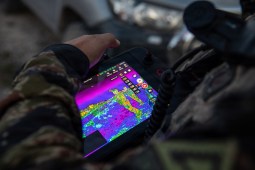
A U.S. Soldier acting as an opposing force, or OPFOR, demonstrates drone capabilities during Exercise Deep Strike at the Joint Multinational Readiness Center in Hohenfels, Germany, April 25, 2026. Deep Strike integrates cutting-edge technologies, such as advanced unmanned systems, to ensure SOF maintains an operations advantage in contested environments. (U.S. Army National Guard photo by Sgt. 1st Class Brandon Nelson)
A Soldier with 2nd Battalion, 20th Special Forces Group, 1st Special Forces Regiment, Mississippi Army National Guard, checks communications while conducting boat infiltration training during Southern Strike 2024 (SSTK), at NASA Stennis Space Center, Mississippi, April 17, 2024. SSTK is a large-scale, joint multinational combat exercise that allows soldiers across the United States and our international partners access to exceptional training. (U.S. Army photo by Sgt. Benjamin Tomlinson)
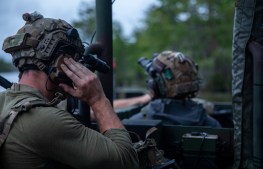
Marine Raiders with Fox Company, 2nd Marine Raider Battalion, Marine Forces Special Operations Command, provides perimeter security, at an undisclosed location Dec. 16, 2025. (U.S. Marine Corps photos by Lance Cpl. Jared Saul)
“The ability to quickly integrate autonomous behaviors on multiple different platforms in multiple different domains, without it having to be specifically built for that platform, is something…