Army Special Forces graduate first batch of Robotics Technician Integrators, a new job the rest of the service is eyeing
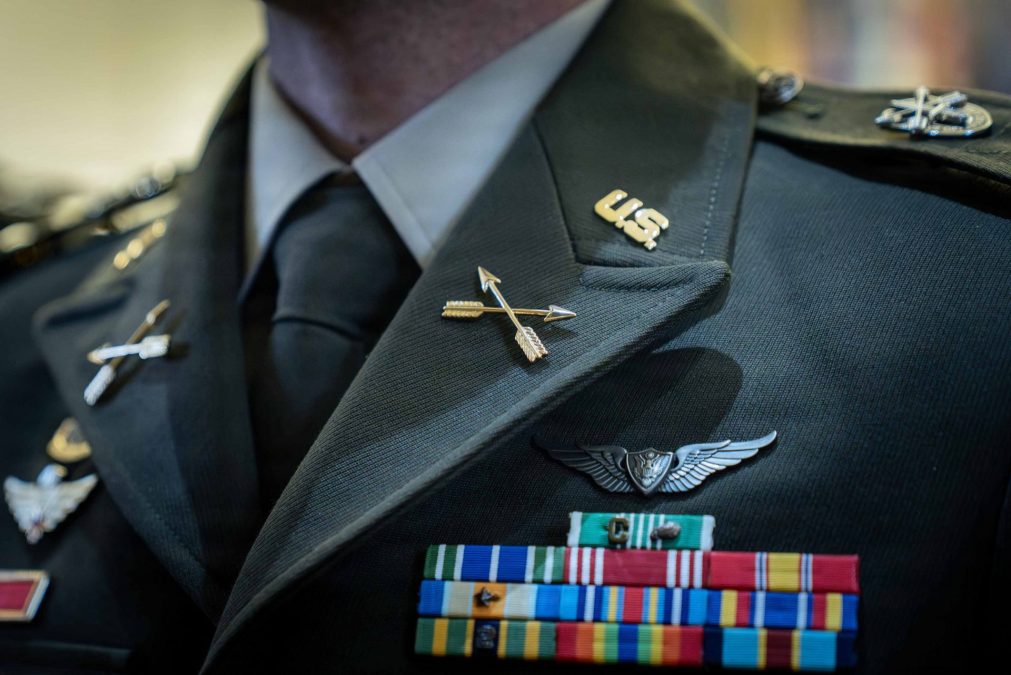
Army Special Forces graduated the first batch of a new military occupational specialty meant to help units, soon across the Army, employ an ever-evolving suite of military technology.
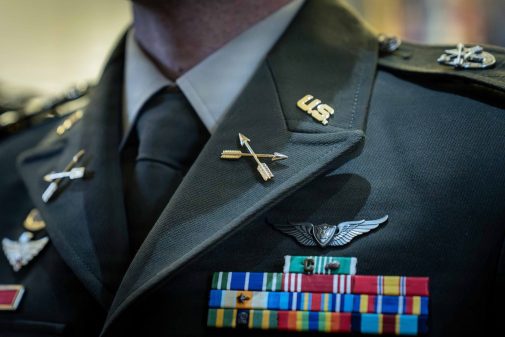
Ten warrant officers graduated from the Robotics Technician Integrator (390A) course in a ceremony at Fort Bragg, North Carolina on Friday, marking the official start of the new job skill and culmination of an initial pilot program the rest of the Army is eyeing, military officials told DefenseScoop.
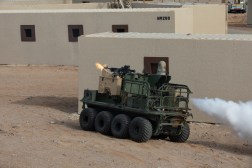
The U.S. military has been experimenting with a growing stable of aerial drones, unmanned ground vehicles, advanced electronic warfare systems and other technology that is fundamentally changing the modern battlefield, both in Ukraine’s yearslong fight against Russia and the Iran war.
Officials said turning that experimentation into actual adoption is where the new graduates are expected to help, having finished a 19-week course that saw warrant officers building artificial intelligence skills, developing code, and employing various robotics, including via mesh networks.
That hardware included UGVs, fixed-wing and quadcopter drones, sensors, EW systems and autonomous capabilities that warrant officers used between facilities at Fort Bragg and in Alabama.
“We noticed there was a gap in understanding at multiple echelons — from the brigade level and up — on how to integrate robotics into operations,” Chief Warrant Officer 5 Michael Updike, architect of the new program, told DefenseScoop in an interview. The Robotics Technician Integrator will help fill that gap by advising commanders on the use of robotics in operations and training, he said, especially as the military leans on commercial products and other technologies that are constantly changing.
That requires robotics integrators to not only understand the intricacies of the technology itself, according to officials, but the context in which commanders intend to use it.
“The 390A is the tactical integrator, but in order to do that job, he has to understand the tactical situations that he’s advising the commander on,” one of the graduates, whose leadership requested anonymity for operational security reasons, told DefenseScoop. The course “is designed to teach you the knowledge with the understanding that the technology will evolve.”
Updike said the idea for the MOS really started in 2022. It quickly became clear that fixing the integration gap the special operations community had identified required a dedicated technician, he noted, and the responsibility to fill it should fall under the warrant officer corps.
Armed with nearly two decades of drone experience and upon hearing about the pilot program, the graduate said he “began chasing it immediately,” citing the ARSOF’s burgeoning adoption of various technologies and how they were playing out in conflicts across the world. “Being at the forefront of that was something that I always wanted to do.”
Updike said screeners looked at problem-solving abilities and prior familiarity with technology in candidates, a process that included a psychological assessment, interviews, multiple levels of packet review, and a test on basic coding, software and robotics knowledge.
“Being such a small cohort, we had to make sure it was a deliberate process to make sure we were selecting the right people,” Updike said.
While the pilot remains within ARSOF for now, it may scale across the Army, which has “voiced their interest in doing so,” said spokesperson Maj. George Wasickanin.
“These technical experts will help command teams understand integration across the force,” Gen. Christopher LaNeve, the Army’s acting chief of staff, said of the new MOS, according to a press release. “We are scaling this across the Army.”
Having now graduated the course, those warrants are expected to advise commanders at the group and brigade levels.
“We were evaluated very heavily to the point … at the time of my interview, my assessment, I wasn’t sure if I was going to make it, to be completely honest,” said the graduate, who is now an instructor for the next group of integrators. “Even throughout the course, as passionate as all the guys I graduated with [are], it was always an unknown.”
But “that’s part of the driving force, we want to be here,” he said. “We want to be doing this. We want to be helping integrate these systems.”