SOCOM planning to test new mission autonomy software for unmanned systems program

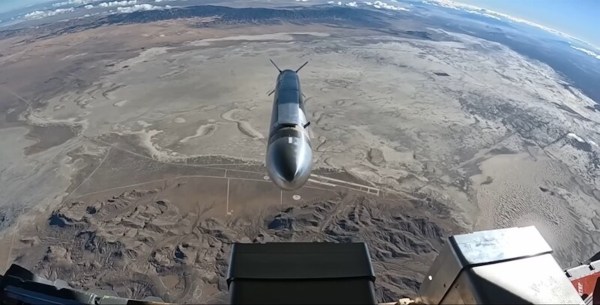
U.S. Special Operations Command’s program executive office for SOF digital applications is planning to test and evaluate new mission autonomy software that could boost drone operations.
The command is pursuing the effort in partnership with the SOFWERX innovation hub to support the Unmanned Systems Autonomy and Interoperability (UxSAI) program.
SOCOM will hold multiple events to assess industry capabilities in the coming months, according to a special notice released Monday.
Officials seek “decentralized and collaborative mission autonomy solutions for heterogeneous, multi-platform, multi-domain unmanned systems” that can “seamlessly integrate into the Collaborative Heterogeneous Autonomy Operations Software (CHAOS) baseline,” the notice states.
Looking ahead, program personnel need to be able to configure and sustain the technology “organically” and avoid “ongoing vendor dependency” for software development, the document added.
The latest outreach to industry comes amid a broader push by the Defense Department to integrate more drones and autonomous capabilities into its arsenals. Pentagon leaders and military commanders view uncrewed systems as tools that can add capability and potency to the force and keep troops out of harm’s way.
Software is a critical enabler of the tech employment concepts that the department and components like SOCOM are pursuing. Officials are looking for open, modular platforms to enhance interoperability and avoid vendor lock.
“Fielding and sustaining autonomy on unmanned systems requires mission autonomy software capable of executing diverse missions within complex, rapidly changing environments and traditional vertical-stack autonomy is constrained by proprietary, vendor-locked software architectures and is highly vulnerable to communications denial in contested electromagnetic environments. Decentralized mission autonomy addresses this gap by enabling peer-to-peer coordination, dynamic re-tasking, and localized planning without real-world communications or centralized command constraints,” officials wrote in the notice.
Vendor responses are due Sept. 8.
Following multiple solution assessments and downselects, SOCOM plans to make a final downselect in December and pick offerings for further development.
Awards could come in the form of other transaction agreements, FAR-based procurement contracts or other types of agreements, according to the notice.