AFSOC gunship launches new Havoc Spear cruise missiles at targets in Africa during combat operations
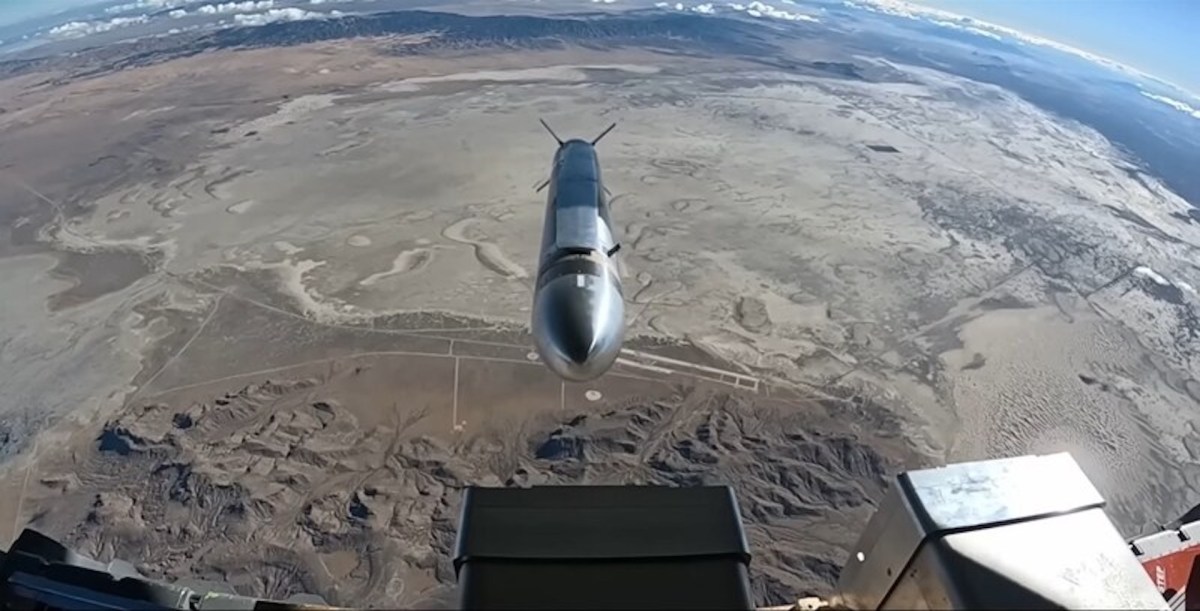
According to AFSOC, two AGM-190As were fired at two different ground targets. During a call with reporters, officials from the command declined to say what types of targets were struck or identify the adversary that was on the receiving end.
“We work every day to disrupt the networks that have made Africa the epicenter of global terrorism,” Africom Commander Gen. Dagvin Anderson said in a statement. “These successful operational assessments prove we will continue to bring the unique capabilities only the U.S. can provide in order to defend U.S. interests alongside our partners.”
The combat employment of the Leidos-built weapon occurred in spring 2026, according to a press release.
The strikes “confirmed that the Havoc Spear is both accurate, reliable, and operationally ready. Havoc Spear gives commanders the essential standoff capability to neutralize threats without putting our personnel or platforms in immediate danger. It’s also proving its tactical value on the battlefield well early in the acquisition process,” Col. Robert Johnston, AFSOC’s director of strategic plans, programs and requirements, told reporters during a call ahead of the official announcement.
The cruise missile is part of the command’s enhanced precision effects portfolio. The system was pursued via a U.S. Special Operations Command cooperative research and development agreement, or CRADA, with Leidos that was inked in 2022, according to Joshua Cantera, who works on AFSOC’s requirements staff.
“The initial employment was off the AC-130, but … our ultimate goal is to try to get this on every type of SOF platform as well as conventional platform possible in multiple launch modes. That I don’t think we can go into right now because we’re still under development, but the intent really is to have it wide scale as much as possible,” Johnston said.
Leidos earlier this year described the AGM-190A as a “200-pound class mission-adaptable weapon system” that has demonstrated a “standoff range” of more than 400 nautical miles during testing from a C-130 platform.
“Its modular hardware design and open system software enable the AGM-190A to rapidly evolve for changing mission requirements,” the company said in a February press release.
Although the Havoc Spear weapon was developed based on a SOCOM requirement, it could “nest very well” within the Air Force’s Family of Affordable Mass Missiles (FAMM) program, Johnston noted during the call with reporters.
The FAMM initiative is unfolding as the Air Force and other Defense Department components are trying to beef up and supplement their munitions arsenals with weapons that are less expensive than the multimillion-dollar missiles that often garner headlines.
The Air Force intends to purchase nearly 28,000 FAMM weapons over the next five years, according to fiscal 2027 budget documents.
In July, the Pentagon announced that Leidos was awarded a $27.2 million contract modification for the procurement of all-up rounds for SOCOM’s AGM-190A small cruise missile program.
According to Cantera, the cost per unit currently is around $600,000. “That is with a very low quantity purchased as of now,” he told reporters.
“In the short term, AFSOC’s going to continue training the crews on how to both mission plan and deploy the current Havoc Spear missile, and we’re going to work with our industry partner to increase production. And long term, the Havoc Spear is a very modular missile, and so we can go many different directions with new payloads and new missions. But we are not that far yet. We’re currently focusing on the current missile that is just ready to be fielded right now,” Cantera said.
AFSOC is preparing for Leidos to deliver the first tranche of missiles under the recent deal, which Cantera said could come “next fall.” The first delivery order included about 45 missiles, according to Cantera.
“We’re still doing further development on other platforms and other launch mechanisms, and so we’ll use that … to try to get after more development than, say, employment. But again, you know, if the requirement comes down that we need to employ in theater, then we have the confidence … that it does work and we can use it,” Johnston noted.
“Right now, the only thing we’ve employed it off of is the AC-130. The next developmental aspect we’re trying to get after really depends on what’s available. To be quite honest, with current operations, we have to piecemeal what assets we can actually employ and get test dates on. But … we’re trying for multiple aspects as any kind of aerial delivery, whether it be from the back of a 130 of any variant, or whether it be from a pylon of any variant. And so in that aspect, I think any AFSOC platform is eligible to do that, and then also propagates to the rest of the conventional side,” Johnston said.
Doug Jones, CTO for the defense systems sector at Leidos, told reporters on the sidelines of AFA’s annual Air, Space and Cyber Conference on Monday that the company has beefed up its manufacturing capacity in Huntsville, Alabama, to be able to produce up to 15,000 of those types of missiles per year.
When asked about the possibility of AGM-190As being included in the FAMM program, Jones said: “We really look forward to the conversation with the Air Force around how it could become a … common service munition and scale out” so that the benefits of the work that Leidos has been doing with AFSOC on the system can be reaped “by the entire Air Force.”
He noted that the weapon’s modular design enables it to carry kinetic or non-kinetic payloads.
Jones declined to disclose the missile’s maximum flight speed, but said it’s “subsonic.”
The company is aiming to bring down the unit cost of the system by the time it goes into full-rate production. “Right now, our target production units are between mid-200s and 350K, depending on the configuration,” he said. According to Jones, full-rate production could kick off in the 2028 timeframe.
He noted that Havoc Spear is a “close cousin” of the system that the company will be providing for the Pentagon’s Low-Cost Containerized Munitions program, which is intended to boost the U.S. military’s ground-launched missile arsenal.
If the Navy wanted a sea-launched variant of Leidos’ small cruise missile, a “containerized approach” might be the best option, he suggested.
Updated on Sept, 14, 2026, at 2:45 PM: This story has been updated to include comments from Doug Jones, CTO for the defense systems sector at Leidos.
Updated on Sept. 14, 2026, at 1:40 PM: A previous version of this story misstated the quantity of missiles that were included in a delivery order for the Havoc Spear. This story has been corrected to reflect that it included around 45 missiles.