Adm. Caudle appoints new executive director, senior advocate for Navy’s civilian workforce
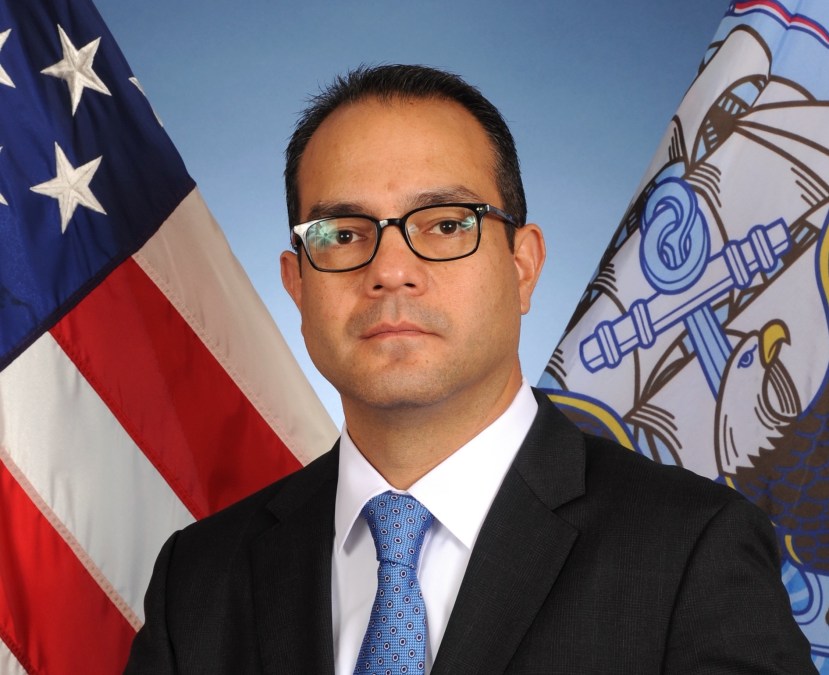
Chief of Naval Operations Adm. Daryl Caudle has selected Matthew Swartz to serve in a new executive director position on the CNO’s staff, the service announced this week.
Swartz’s duties will include overseeing “staff integration” and cross-functional coordination for the sea service and being the “senior advocate” for its civilian workforce, according to a Navy press release.
“Our Total Force, comprised of Sailors, civilians, and the industrial workforce, is our most decisive warfighting advantage,” Caudle said in a statement. “Investing in our people’s development and well-being is not separate from combat power — it is the very foundation of our Warrior Ethos, which is not exclusive to those in uniform.”
Swartz previously worked with Caudle when the latter was commander of U.S. Fleet Forces Command, where Swartz served as executive director and chief of staff and was tasked with helping optimize the allocation of resources and personnel under USFFC’s purview.
Prior to that, he held senior roles in the Navy’s cyber and information warfare community.
Swartz served as deputy commander of Naval Information Forces, which oversees the manning, training and equipping of the service’s IW elements as well as the fleet’s command, control, communications, computers, cyber, intelligence, surveillance and reconnaissance capabilities.
He was formerly chief information officer and executive director at the Navy’s Fleet Cyber Command. That organization’s role is to “plan, coordinate, integrate, synchronize, direct, and conduct the full spectrum of cyberspace operational activities required to ensure freedom of action across all of the Navy’s warfighting domains in, through, and from cyberspace, and to deny the same to the Navy’s adversaries,” according to the command.
Swartz’s resume also includes director of the communications and networks division for the deputy CNO for information dominance.
Additionally, he led Task Force Cyber Awakening. According to Swartz’s LinkedIn bio, that initiative was launched to “promote and extend the Navy’s approach and response to cyber security beyond traditional information technology to combat systems, control systems, and other information systems.”
In his new role as executive director on the CNO’s staff, he’ll be responsible for advancing the Navy’s strategic priorities and engagement with partner organizations, according to a press release.
“Coordination, continuity, and a unified vision across our total force are essential to delivering on the Navy’s priorities of Foundry, Fleet, and Fight. I’m committed to fostering the alignment, innovation, and enduring partnerships that will strengthen our warfighting advantage and ensure we are ready to meet any challenge — now and in the future,” Swartz said in a statement.
The Navy’s priorities outlined in Caudle’s “Foundry-Fleet-Fight” framework include strengthening workforce development, shore infrastructure, maintenance depots, schoolhouses and industrial base that are required to “generate, sustain and modernize” naval power; building up an “all-domain” fleet that “fuses maritime (surface, air and undersea), cyber, space and strategic” capabilities; and accelerating the integration of new technologies like AI, robotic and autonomous systems, and resilient command, control and communications tools to achieve “decision advantage” and “combat overmatch,” among others.