‘Rainman’ takes charge of DIA
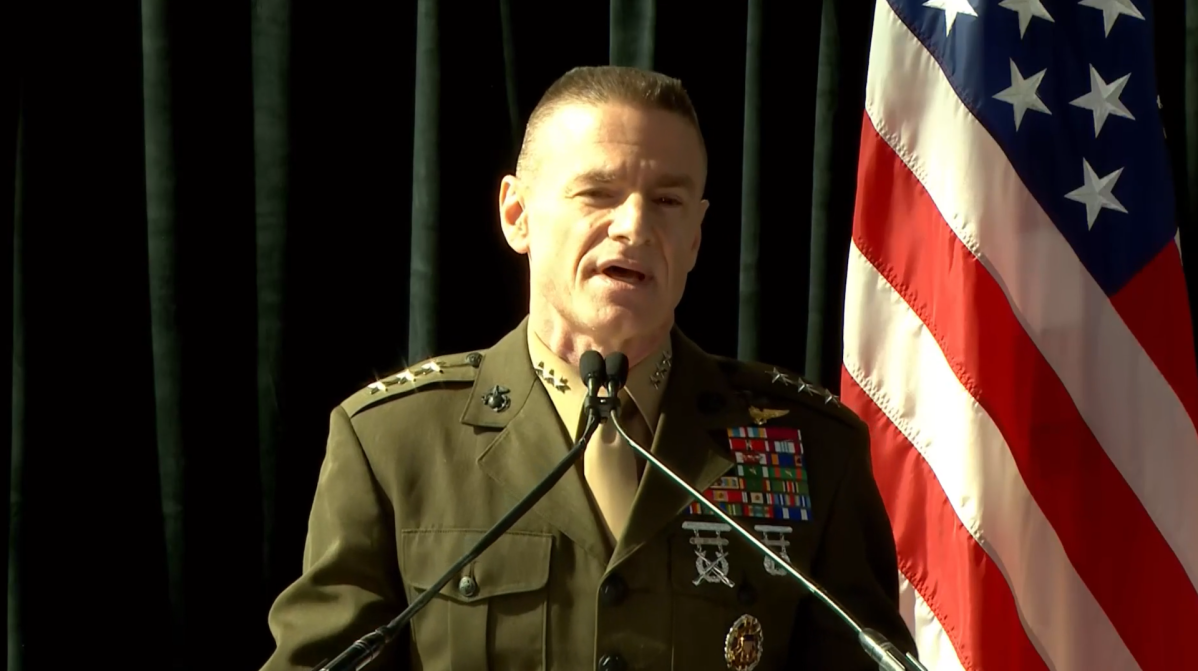
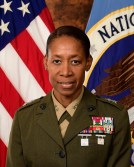
The Defense Intelligence Agency held an assumption of directorship ceremony Friday for its new boss, Marine Lt. Gen. James Adams.
Adams, also known as “Rainman” among colleagues, is a U.S. Naval Academy alumnus with a degree in computer science who has more than 300 combat flight hours under his belt as an AH-1W Super Cobra pilot.
He most recently served as deputy commandant for programs and resources, the top advisor to the commandant of the Marine Corps on issues related to resourcing, budgeting, financial execution and audit.
The Corps recently announced that it passed its third clean financial audit, the only military service under the Defense Department to do so thus far.
“For that alone, they should consider you a savant,” Bradley Hansell, undersecretary of defense for intelligence and security, told Adams during Friday’s ceremony.
Adams previously served as director of capability development at Marine Corps Headquarters and deputy director for requirements and capability development with the Joint Staff, J-8, according to his military bio. His field grade staff assignments included MAG operations officer; strategic assessments branch chief, HQMC Programs and Resources; air/sea branch chief, force application FCB, Joint Staff, J-8 directorate; aviation plans, policies, and budgets branch head, HQMC Aviation; and weapons and tactics instructor for Marine Aviation Weapons and Tactics Squadron One.
In his new role as DIA director, Adams will lead a workforce of more than 16,000 personnel serving in more than 140 countries who are tasked with providing intel support to warfighters, planners and policymakers in the DOD and Intelligence Community. He was nominated for the position by President Donald Trump in January and confirmed by the Senate.
He’s taking charge at a time when the agency is eyeing new technologies, such as AI, to support its mission.
Hansell highlighted the need for DIA to modernize and integrate more artificial intelligence capabilities, automate processes, fuse data and generate unique insights quickly with the technology. The agency also needs to bolster the workforce as it adopts new tools, he noted.
“This is an absolute no-fail mission,” he said.
“Additionally, I’ve asked General Adams to find novel, unique ways to scale our ability to collect against our toughest adversaries. This includes building bespoke collection capabilities here … and modernizing defense HUMINT,” Hansell said, using an abbreviation for human intelligence.
Adams, speaking at Friday’s ceremony, said the agency needs to transform.
“DIA must continue to evolve at the speed, scale and complexity of modern warfare. Currently, through initiatives focused on the modernization of our data systems and sharing that data through a common intelligence feed, DIA is transforming how we enable decision-making at the speed of relevance. Through artificial intelligence, advanced analytics and open source analysis, DIA is already accelerating our ability to generate new insights. But technology alone does not create advantage. Advantage is created when skilled professionals apply judgment, experience and tradecraft to information, delivering clarity to leaders making consequential decisions,” Adams said.
“It is my responsibility, our responsibility, to develop and empower our workforce to remove obstacles that detract from mission accomplishment and ensure every analyst, operator, technologist and support professional can focus on what matters most — delivering insight, credible warning and operational capability to the combatant commands, the services and policymakers on time and on target,” he added.
Adams’ selection for the job came as a surprise to some observers, given his lack of experience in the intelligence field, but his appointment has been applauded by many in the defense community.
“General Adams has extensive operational and tactical experience, including multiple combat tours in Iraq and Afghanistan … and so I have no doubt he understands firsthand the value of solid intelligence getting to the warfighter, and the cost of not doing so,” Hansell said. “As we face new challenges, though, and continue the necessary evolution at DIA, I have every confidence that General Adams’ executive leadership experience makes him the leader to … tackle the pending Herculean tasks ahead of us.”
DIA and other elements of the IC have experienced more leadership turnover and uncertainty than usual over the past year.
About six months ago, the Trump administration fired the head of DIA, Air Force Lt. Gen. Jeffrey Kruse, without offering an explanation for the move. Army Maj. Gen. Constantin Nicolet stepped in as acting director.
A few months prior, the administration also fired Air Force Gen. Timothy Haugh as director of the National Security Agency and commander of U.S. Cyber Command. Officials did not publicly provide a reason for his removal. Army Lt. Gen. William Hartman has been serving as acting NSA director and Cybercom chief, but the White House ultimately chose not to nominate him to fill those positions on a more permanent basis.
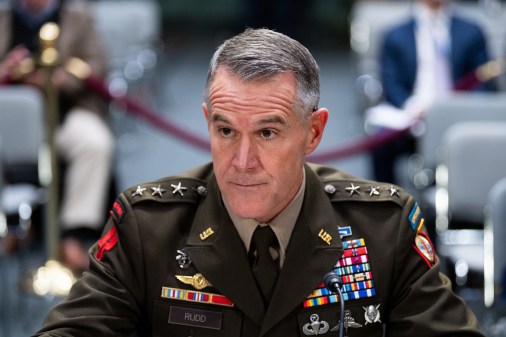
In December, President Donald Trump nominated Army Lt. Gen. Joshua Rudd for the dual-hatted leadership role at NSA and Cybercom. His nomination is expected to be confirmed by the Senate in the coming weeks. Like Adams, Rudd does not have a strong background in intelligence roles. He comes from the special operations community and has most recently been serving as deputy commander of U.S. Indo-Pacific Command.