DIU notches first launch of commercial hypersonic test platform
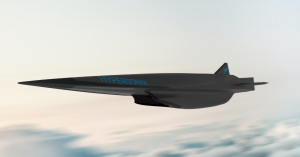
The Defense Innovation Unit successfully launched a 3D-printed hypersonic testbed manufactured by a commercial vendor on Friday as part of an effort to broaden the Pentagon’s ability to try out the complex, high-speed platforms.
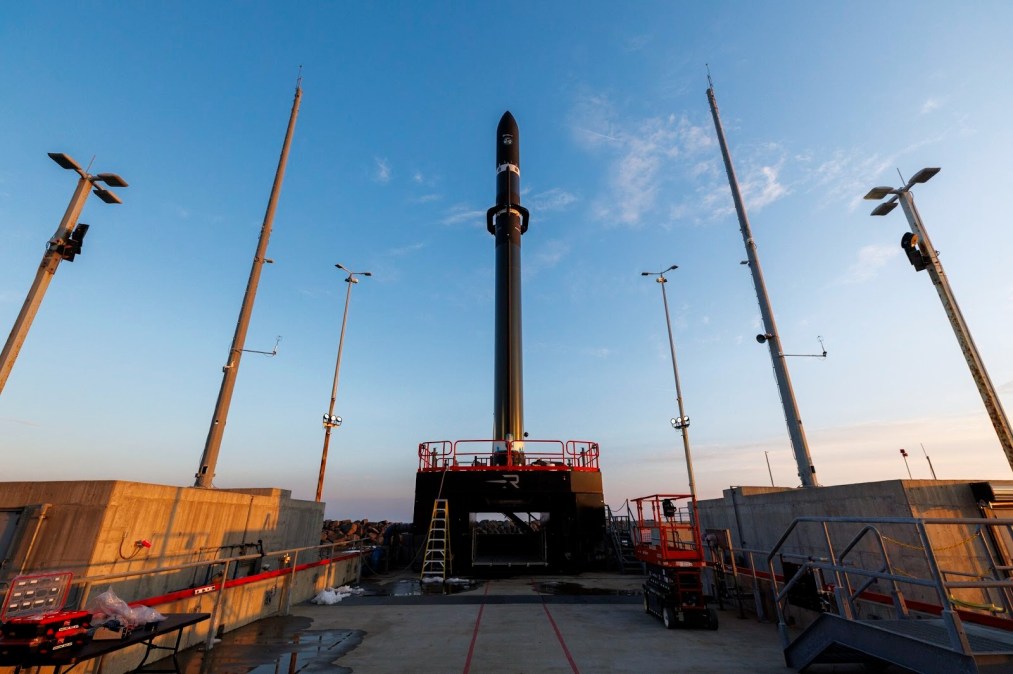
During the mission — dubbed Cassowary Vex — the DART AE technology demonstrator developed by Australian company Hypersonix was deployed into a suborbital environment via Rocket Lab’s Hypersonic Accelerator Suborbital Test Electron (HASTE) launch vehicle. According to DIU, the flight collected critical propulsion, trajectory and vehicle data that will be used to advance ongoing work to rapidly validate new systems.
Cassowary Vex marked the first deployment of a commercial testbed developed under the Hypersonic High-Cadence Advanced Testing (HyCAT) program, which aims to prototype a low-cost, reusable platform for flight tests.
“Accessing the commercial and non-traditional ecosystem is a key enabler to accelerating progress in the hypersonics community of interest, particularly for closing mission timelines and driving towards mass and affordability,” Lt. Col. Nicholas Estep, director of DIU’s emerging technologies portfolio, said in a statement.
Initiated in 2022, HyCAT is one of several ongoing programs at the Defense Department that is looking to create more options for putting hypersonic platforms through their paces. The Army, Navy and Air Force have dedicated years and billions of dollars toward creating and fielding the cutting-edge weapons, which can maneuver through the atmosphere at speeds of Mach 5 or greater and are difficult for traditional air-and-missile defense systems to intercept.
But building a system that can sustain hypersonic flight is extremely complex and requires rigorous testing in specialized environments. With only a handful of wind tunnels and high-speed tracks capable of replicating hypersonic conditions in operation, limited test infrastructure within the United States has created a bottleneck in development.
The Pentagon continues to focus on accelerating the development and the test cadence of these types of systems, as scaled hypersonics is one of six critical technology areas identified by DOD Chief Technology Officer Emil Michael.
DIU conducted the first mission for HyCAT in November, when the organization partnered with the Missile Defense Agency to deploy multiple government-provided payloads via Rocket Lab’s HASTE. The launch vehicle is a modified variation of its Electron rocket designed specifically for suborbital missions.
However, Friday’s launch was the first for the DART AE testbed — a single-use technology demonstrator powered by an air-breathing scramjet engine. The platform’s airframe is built entirely using additive manufacturing, potentially opening up the supply chain for test articles and increasing flight availability in the future.
“This mission allowed us to test propulsion, materials and control systems in real hypersonic conditions,” Michael Smart, Hypersonix co-founder, said in a statement. “At these speeds and temperatures, there is no substitute for flight data. The results from this mission will directly shape the design of future operational hypersonic aircraft.”