Pentagon’s counter-drone task force visited Kyiv before joint U.S.-Israeli strikes against Iran to see how Ukrainians fight UAS
Members of the Pentagon’s counter-drone task force were in Kyiv last week to understand how Ukraine’s military was protecting infrastructure and troops against Russian unmanned aerial systems — just before the start of joint U.S.-Israeli strikes against Iran.
The revelation — which was delivered by Joint Interagency Task Force 401 director Brig. Gen. Matt Ross at an industry event in Virginia on Thursday — came just hours before Ukrainian President Volodymyr Zelenskyy announced that he received a request from the U.S. to support counter-drone operations in the Middle East against Iranian one-way attack platforms Russia has also used.
The U.S. and Israel launched a campaign against Iran on Saturday, dubbed Operation Epic Fury. Six American troops were killed by an apparent Iranian drone attack in Kuwait the following day, the military said, and news outlets have since reported additional UAS attacks on U.S. infrastructure in the region.
JIATF 401, an Army-led entity within the Defense Department, was established late last summer to proliferate counter-drone capabilities across the military. Since then it has developed expanded authorities for stateside base commanders to defend against drones and signaled a widespread fielding of “low-collateral” interceptors for U.S. installations, among other efforts.
Now, its top official said the task force recently visited Ukraine to inform U.S. counter-UAS operations. His comments come as troops face drone threats from Iran and Kyiv leadership signals support for Americans in countering them amid the new Middle East conflict.
“I did go to Ukraine, and I went to understand the technology that they’re using to protect their sites and their people from the threat of unmanned systems,” Ross told reporters Thursday. “I did it to understand the TTPs — the tactics, techniques and procedures that they’re employing very effectively to protect their forces.”
A defense official, speaking on the condition of anonymity, told DefenseScoop Thursday that Ross and “several members of” JIATF 401 went to Ukraine for a visit that concluded last week in relation to a potential drone deal discussed by President Donald Trump and Zelenskyy last year.
The task force has regularly worked with the Ukrainians on counter-UAS, the defense official said.
Zelenskyy first publicly floated a possible agreement between Kyiv and Washington last July in which the two countries would exchange Ukrainian drone tech for buying U.S. weapons.
When asked about Zelenskyy’s post and whether the two presidents agreed to the deal, a White House spokesperson referred DefenseScoop to Trump’s comments to Reuters Thursday, which said that he would take assistance from any country in response to a question about the Ukrainian president’s recent offer.
“The visit, supported by the Security Assistance Group–Ukraine (SAG-U) and the U.S. Embassy in Kyiv, was aimed at leveraging Ukraine’s combat-tested drone expertise,” the defense official said.
The Pentagon declined to comment about Zelenskyy’s announcement and whether it was related to JIATF 401’s visit to Kyiv, saying “we’re not going to comment on social media posts from foreign political figures.”
Fielding a question from DefenseScoop about his visit to Kyiv, Ross said of taking lessons from modern conflicts and bringing them to the U.S. military that “we are the lead for that, for counter-UAS, so I wanted to see it firsthand.”
“What it did for me is it confirmed the direction we’re headed for counter-UAS,” he said of the visit. “It confirmed that we have to start with a network, and that’s what they have in Ukraine, is they have an integrated network of acoustic, passive and active sensing that allows them to see threats, whether they’re coming from the east, the north or the south, and they can see them in depth, and then array forces and effectors to be able to defeat those threats before they get to that target.”
“We need to do the same thing,” he added, reiterating the visit confirmed the U.S. direction for counter-UAS while noting that counter-drone needs are different for Ukrainians on the front lines than they are for those in Kyiv. “The same will be true for us.”
While Ross declined to comment specifically about ongoing operations in U.S. Central Command, he said Epic Fury has highlighted the need to quickly combat drone threats, to include stateside.
“What I would tell you is that I believe one of the reasons we stood up JIATF 401 to surge against this problem is because we didn’t want to wait for a 9/11 event inside the United States to address the threat of unmanned systems,” he said. “What has happened over the past week in the Middle East is we have elevated the sense of urgency, and it’s getting a lot of attention in terms of how we maintain the capability and capacity to deal with the threat of these systems.”
“We knew it was there, and we’ve been working against the problem,” he added. “This has just elevated the conversation nationally and here internally.”
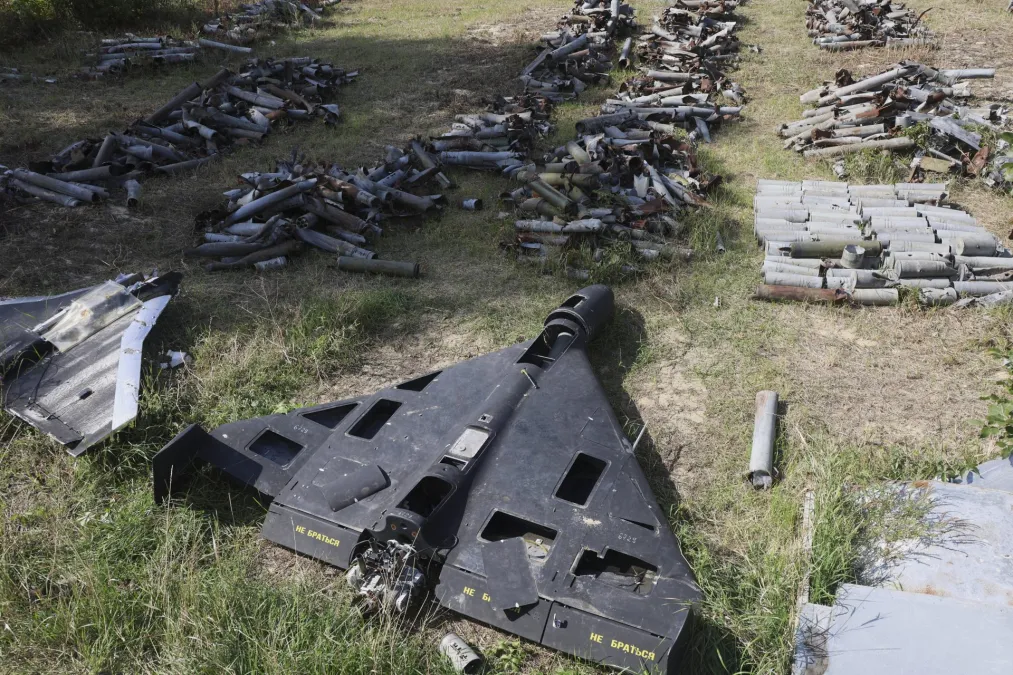
On the same day as Ross’s comments, Zelenskyy said Ukraine had received a request from the U.S. to support protection against Iranian Shahed drones in the Middle East.
“I gave instructions to provide the necessary means and ensure the presence of Ukrainian specialists who can guarantee the required security,” Zelenskyy said. “Ukraine helps partners who help ensure our security and protect the lives of our people.”
Ukraine has been defending against Russian versions of the Shahed drone during the war in Eastern Europe, which recently marked the fourth year of the renewed invasion into the sovereign country. On Thursday, lawmakers grilled Pentagon officials in a hearing about the military’s effort to proliferate its own systems, with several invoking drone attacks against U.S. personnel during current Middle East operations and significant UAS casualties from the war in Ukraine.
“It would make perfect sense for the commander of the task force to visit Kyiv to understand how the Ukrainians have been successful in defending against Shaheed drone attacks, and especially when combined with ballistic missile attacks, as Iran is using the same weapon systems and tactics [that] Russia is employing in Ukraine,” said Alex Plitsas, a senior fellow at the Atlantic Council and former chief of sensitive activities for special operations and combatting terrorism in the Office of the Deputy Assistant Secretary of Defense.
“Nobody has more experience in this particular type of warfare and to counter these particular systems than Ukraine,” he added.