Pentagon counter-drone task force issues guidance on testing, federal surveillance laws
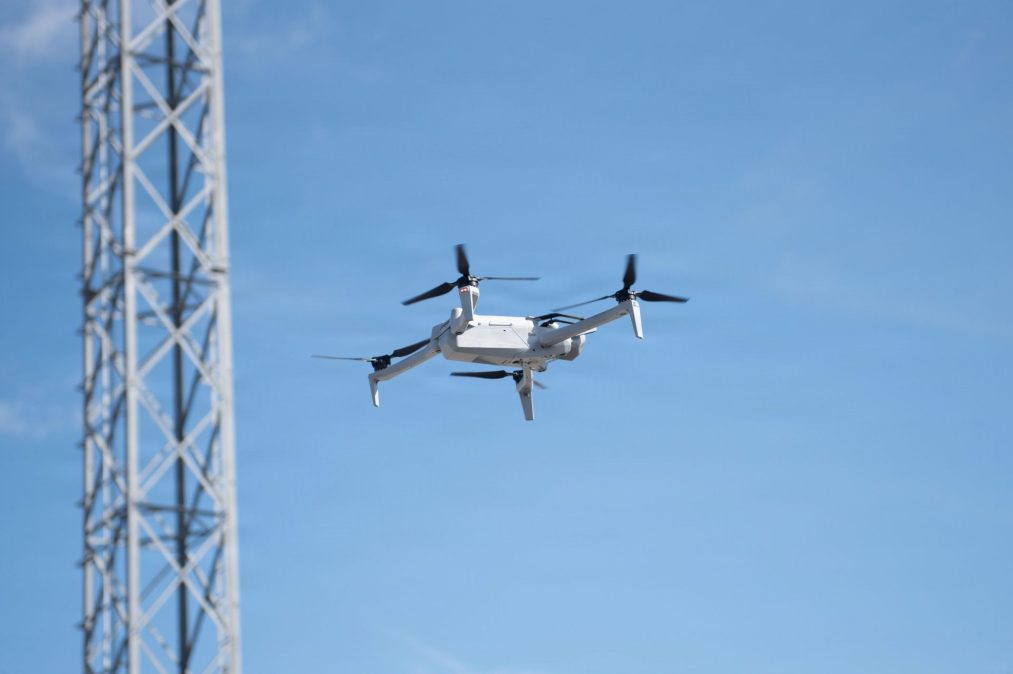
A Pentagon task force published back-to-back guidelines about anti-drone technology this week, illustrating the military’s attempt at quickly delivering such capabilities — following standardized testing — while heeding federal laws prohibiting domestic surveillance.
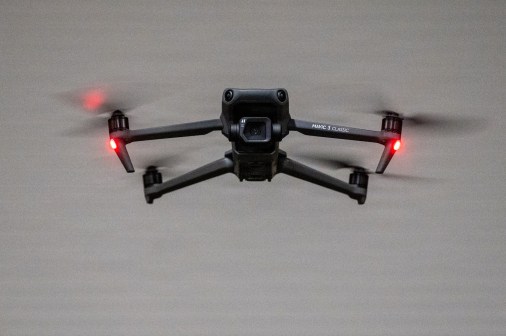
Joint Interagency Task Force 401, an Army-led entity established last year and tasked with boosting the military’s counter-unmanned aerial systems repertoire, has headed the Pentagon’s expansion of installation authorities to knock down drones in the U.S. while simultaneously trying to adopt defensive tactics from modern conflicts, among other initiatives.
Its guidance for uniform, data-backed testing and an acknowledgment of privacy protections related to UAS employment in the United States comes amid keen public interest over counter-drone systems, both at home and abroad.
The publications also show a push for streamlined testing to produce defenses against drone threats, but recognition that homeland use of UAS carries strict privacy guardrails — threads that demonstrate the urgent need for the technology without running afoul of federal laws meant to protect American civil liberties.
Meanwhile, lawmakers have criticized several agencies, including the Defense Department, for not coordinating the employment of c-UAS lasers in the U.S. after dual incidents caused airspace closures in Texas last month.
Over the weekend, JIATF 401 and several other federal organizations tested the Army Multi-Purpose High Energy Laser, or AMP-HEL, at White Sands Missile Range in New Mexico in an attempt to iron out interagency communication over the safe employment of counter-drone systems.
Days later, the task force said it standardized how the military tests and evaluates such technology in the name of “continuous improvement that translates promising technologies into operationally relevant solutions at scale,” according to its director, Brig. Gen. Matt Ross.
While the actual guidelines were not available for public release, a summary of the framework said it established baseline criteria for consistent, “repeatable” testing to prevent data from falling into “disparate silos of unknown provenance and inconsistent quality.”
That standardization aims to boost counter-UAS delivery, give private industry a better understanding about which capabilities to focus on, eliminate “redundant” testing, identify uniform operations for anti-drone system users and mesh interagency efforts, according to the release.
On Monday, JIATF 401 released “Counter-UAS Operations: Safeguarding Freedoms and Preserving Privacy,” which acknowledged federal laws that prohibit the “intentional interception” of private electronic communications.
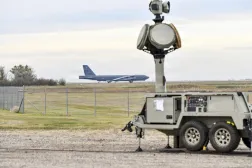
The task force said that it is complying with these regulations while employing c-UAS systems, which not only encompasses technology that can disable drones, but also intercepts electronic signals they produce. The guidance said counter-UAS systems are “explicitly designed to filter, truncate, or discard” communication content.
Notably, it said that c-UAS technology can identify that a signal is being transmitted, but does not decode its content or otherwise “read private communications.”
“Our approach is to safeguard privacy by design,” Col. Scott Humr, deputy director of science and technology for the task force, said in the release. “The technologies we are fielding are engineered to be effective while adhering to strict privacy principles.”
“By focusing on data minimization and secure handling processes, we collect only what is necessary to identify a potential threat,” he added. “This allows us to protect critical infrastructure and public safety without compromising the civil liberties that we are sworn to defend.”
DefenseScoop reported last week that members of JIATF 401 were in Kyiv the week before joint U.S.-Israeli strikes against Iran began in an effort to learn about the Ukrainian military’s defense against Russian drones, a variant of which Tehran is using against American troops in the Middle East. The visit came as Ross warned of homeland drone stakes.
“What I would tell you is that I believe one of the reasons we stood up JIATF 401 to surge against this problem is because we didn’t want to wait for a 9/11 event inside the United States to address the threat of unmanned systems,” Ross said at an industry event last week. “What has happened over the past week in the Middle East is we have elevated the sense of urgency, and it’s getting a lot of attention in terms of how we maintain the capability and capacity to deal with the threat of these systems.”