Army receives first optionally-piloted Black Hawk helicopter
The Army has taken delivery of a UH-60M Black Hawk that has been upgraded with autonomous flight capabilities, the service announced Friday.
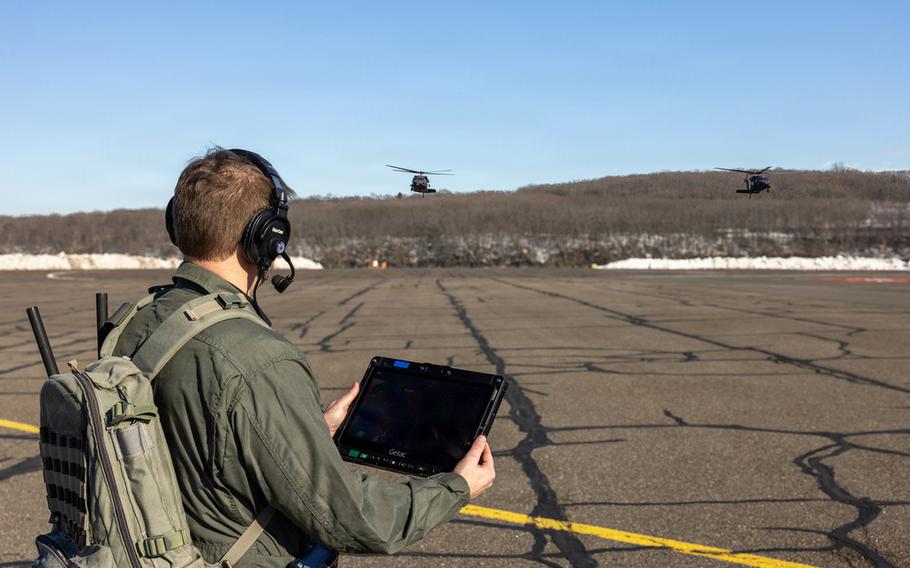
The optionally-piloted helicopter — which has been designated UH-60Mx — will move into a “rigorous testing phase” over the coming months, according to an Army news release. Upcoming tests are designed to validate the Black Hawk’s ability to be controlled by troops on the ground and perform in complex, real-world missions without a pilot in the cockpit.
“By proving out this technology, the Army aims to unlock a new era of aviation,” officials wrote in the news release. “The delivery of this first [‘optimally’ piloted vehicle] Black Hawk is more than just a hardware handover; it’s a tangible step toward a future where technology and soldiers work together in new and powerful ways to ensure mission success.”
The delivery comes after years of work between the Army, the Defense Advanced Research Projects Agency (DARPA) and Lockheed Martin-subsidiary Sikorsky, which has built the Black Hawk for decades.
Under an effort known as the Aircrew Labor In-Cockpit Automation System (ALIAS) program, DARPA and Sikorsky have been developing a customizable, removable kit that could be integrated onto the Army’s fleet of Black Hawks and enable autonomous flight.
Sikorsky first demonstrated an optionally-piloted Black Hawk without any crew onboard in 2022. DARPA later awarded the company a $6 million contract in 2024 to add its MATRIX Autonomy Mission Manager system onto the helicopter and begin testing its capabilities.
“After years of successful demonstrations on both commercial and military aircraft, the technology has matured. It is now a reliable system, ready for formal military evaluation,” the Army said in a statement.
Autonomous flight is made possible by the ALIAS optionally piloted vehicle kit, which essentially acts as the “brains” of the aircraft when conducting missions autonomously. Another key upgrade is replacing the Black Hawk’s traditional mechanical flight controls with a “fly-by-wire” electronic system.
The modernized capability makes the helicopter more stable — especially in low-visibility environments — while also automating difficult flight maneuvers. According to the Army, the system will reduce cognitive loads for pilots and allow crews to focus on more complex tasks while on missions.
The delivery marks a major step forward for Army Aviation’s work to modernize its fleet of aircraft. Along with integrating its manned platforms with autonomy and AI capabilities, the service is also developing new unmanned aerial vehicles.
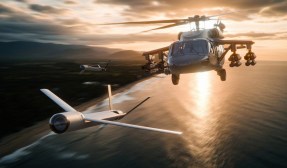
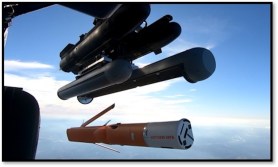
Those include platforms known as Launched Effects — smaller drones that can be deployed mid-flight from manned aircraft or ground launches and perform a range of functions. The Army is planning to field multiple versions of the UAVs that have different ranges, and has already experimented with both short- and medium-ranged variants.
On Thursday, the service announced that it has picked AEVEX, Griffon and Dragoon as the three vendors to provide initial long-range Launched Effects. According to an Army news release, the drones will provide “critical capabilities such as improved situational awareness, precision targeting and multi-domain interoperability.”
The Army intends to deliver the long-range systems to formations sometime in 2026, according to the service.