Space Force mitigating impacts to programs amid grounding of Vulcan rocket
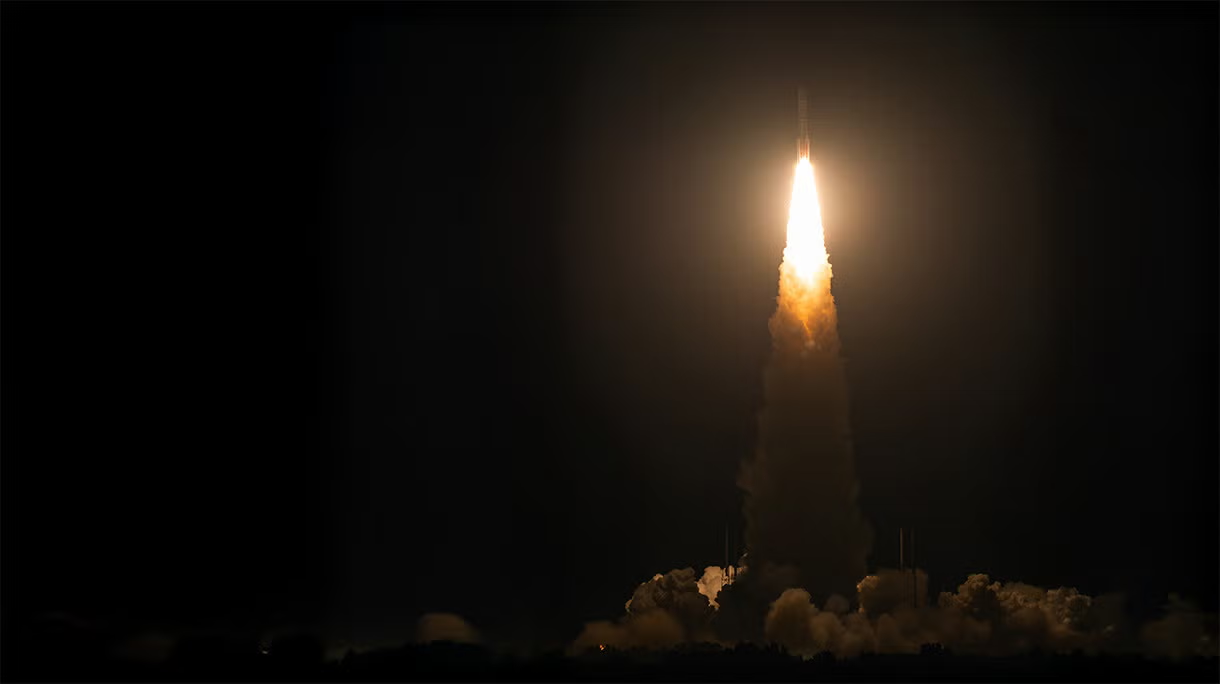
The Space Force is looking to revise launch plans for a number of upcoming national security missions following a recent issue with a United Launch Alliance rocket that could take months to resolve, according to a senior official.
During a Space Force mission last month, ULA’s Vulcan Centaur rocket experienced a “significant performance anomaly” with one of the vehicle’s four solid rocket motors during lift off, according to the company. Although the payloads were delivered to geosynchronous orbit as planned, the Space Force has since halted forthcoming national security launches involving Vulcan as it conducts an investigation of the issue.
It is unclear how long the Vulcan rocket will be grounded. As such, the Space Force is trying to reorganize its launch plans to avoid significant delays, Lt. Gen. Douglas Schiess, deputy chief of space operations, told lawmakers Wednesday.
“We are actively looking at several launches coming up to see what we can do,” Schiess said during a House Armed Services Subcommittee on Strategic Forces hearing. “What can we do to extend the current satellites on orbit and what we can do to maybe move other satellites to different providers?”
The service announced March 20 that it has moved the next GPS satellite launch slated for sometime in April from ULA to SpaceX’s Falcon 9 rocket. But Schiess noted that multiple other key programs could be affected, including Next-Generation Overhead Persistent Infrared GEO (Next-Gen OPIR GEO), Silent Barker, Wideband Global SATCOM (WGS) and other space domain awareness capabilities.
In addition, some intelligence satellites developed by the National Reconnaissance Office will likely need to be moved around, he added.
The Space Force has limited options for rockets that can lift key military payloads into orbit, as SpaceX and ULA are currently the only two companies certified under the National Security Space Launch (NSSL) program. While working to get other vehicles — such as Blue Origin’s New Glenn rocket — approved, the service has also been exploring how to diversify its launch capacity.
To prevent any significant near-term disruptions, the Space Force is exploring options such as rideshare launches and redistributing upcoming missions to other providers, according to Thomas Ainsworth, who is performing the duties of assistant secretary of the Air Force for space acquisition and integration.
“We are looking at different options,” Ainsworth said during the hearing. “As far as how we’re handling this, I’ve given the action to all of the [program acquisition executives] and [program executive officers] to examine what launches we may be able to distribute.”
As the Vulcan rocket remains grounded, the Space Force and NRO are working with ULA and its parent companies — Boeing and Lockheed Martin — to investigate and fix the issue.