Army Special Forces leaders see promise, high demand for new robotics technician integrator job
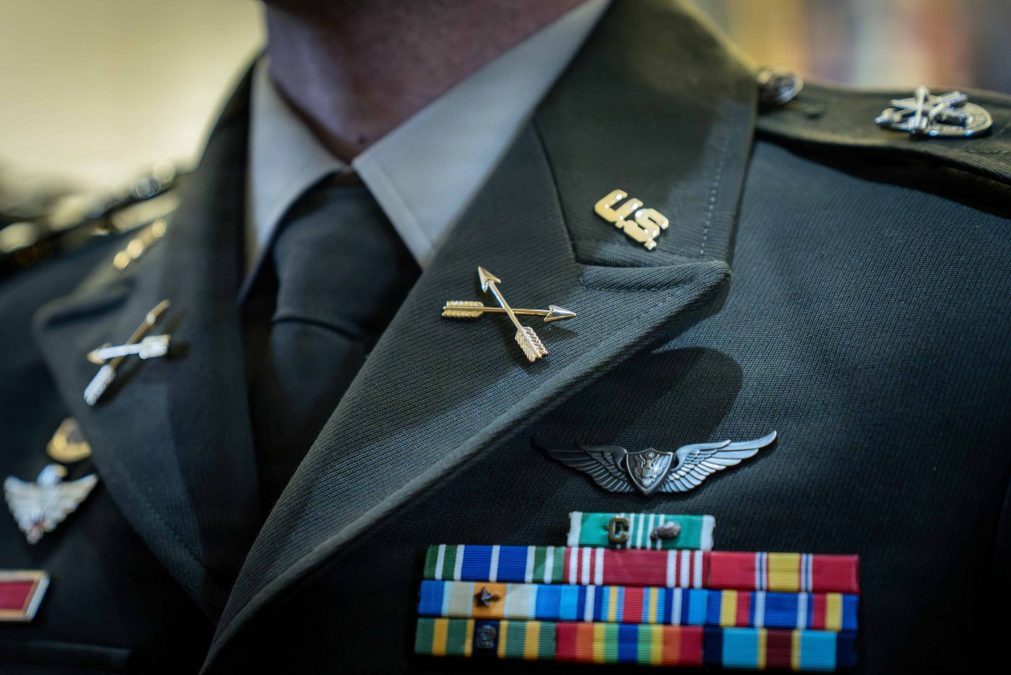
After Army Special Forces graduated the first batch of robotics-focused warrant officers earlier this month, hopes — and demand — for the new job are high.
Ten warrant officers became Robotics Technician Integrators on Oct. 2, heralding a new class of experts charged with galvanizing the Army’s technological crusade by embedding with units and guiding commanders on how to effectively employ an ever-evolving stable of systems.
Nearly two weeks later, top Army leaders called for an expansion of the role and tasked the new robotics technicians with helping drive the service’s autonomy push. At the same time, Special Forces leaders told DefenseScoop they believed the technicians will bring foundational change, but recognized high demand for the new role as the service charts the program’s path.
“The demand just inside of our formation is huge,” Brig. Gen. Joseph Wortham, the head of 1st Special Forces Command, said in an interview at the annual AUSA conference in Washington last week. The leaders called the Army-wide adoption of the role a boon for the force, while acknowledging that the nascent program was akin to “building a plane in flight.”
The Army’s top two acting leaders, Adam Telle and Gen. Christopher LaNeve, offered some details at AUSA about the service’s new Futures and Autonomous Systems Command (FASCOM). Part of that effort will see robotics integrators, also known by their military occupational specialty code 390A, going to experimental units focused on autonomy efforts.
While course throughput is managed by the Special Operations Center of Excellence, Wortham said the center was working to meet the increasing need for integrators and that it was “doing that math right now.”
“It’s an example of something, a capability or a requirement being identified, an initial idea to meet that requirement, and now it’s being adapted by the entire Army,” said 1st Special Forces Command Chief Warrant Officer 5 Jerimiah Brown. “That’s a win for all of us. How we get there, the throughput, how do we produce the numbers that are required? To the [commanding general’s] point, we’ll figure that part out, but the fact that this will be integrated throughout the Army, it’s a great news story.”
Underpinning the initiative was a recognition that Army units needed to better understand how to integrate unmanned platforms into their operations, a realization informed by technological developments in the Ukraine-Russia war. A technician whose full-time job was robotics integration — who could also keep up with technological advancements — was the answer.
Throughout the 19-week course, held between facilities in North Carolina and Alabama, prospective 390A troops learn the ins-and-outs of various uncrewed systems that have wrought deadly change on modern battlefields.
Not only do the candidates learn how to operate and program the systems, which include aerial drones, unmanned ground vehicles and sensors, but where they fit into mission planning, so they can advise commanders on operational use cases upon graduation.
The Special Forces leaders said that the pilot course is already changing, with the second cohort building off of the “growing pains” of the first and completing tasks quicker than before, according to Brown, the command chief warrant officer.
“This started on a napkin to where we are right now with the first class that just graduated,” said Command Sgt. Maj. Joshua King, the senior enlisted advisor for the command. “I think it’s going to grow, but it’s always going to evolve. It’s almost evolving as fast as tech.”
The Special Forces leaders said the integrators also play a crucial role in reducing work load for operators who are now being handed a bevy of new, technical kit, the adoption of which DefenseScoop previously reported was stretching thin certain specialty jobs.
“When you look at our detachments and our units of action, they’re already pretty task saturated with all the things they have to do in a modern environment,” Wormath said. But the integrators are meant to alleviate some of that pressure. The general likened the new integrator job to existing Special Forces technicians who know how to maintain, update, fix and employ dive equipment, freeing up combat divers to focus on their missions.
“That resident knowledge sits so that the tasks aren’t kept at the lower level,” he said. “We took that same model that we do for our combat divers, we applied it to robotics.”
In various exercises and events over the last few years, Army leaders have recognized an overreliance on civilian-contracted field service representatives employed by the companies selling products to the service. They want an “open architecture” approach to tech.
The integrators, according to Wormath, will give Army leaders an organic technician for fixes without relying on FSRs “that we can’t take into modern combat.” A fundamental part of the course is teaching integrators the basics of coding and constructions so that when they get a new system from the defense industry, they know how to build it.
“One of the things that we’re asking industry for is that open architecture,” he said. “It’s truly system dependent and company dependent on what they give us access to, and not.”
King added: “It’s almost like a pre-req that we have the ability to adjust the software or at least [have] access to it immediately because the enemy is doing the same thing. So if we can’t overmatch them, then we’re missing out.”