Air Force bans Meta AI glasses over OPSEC concerns, while other services’ policies vary
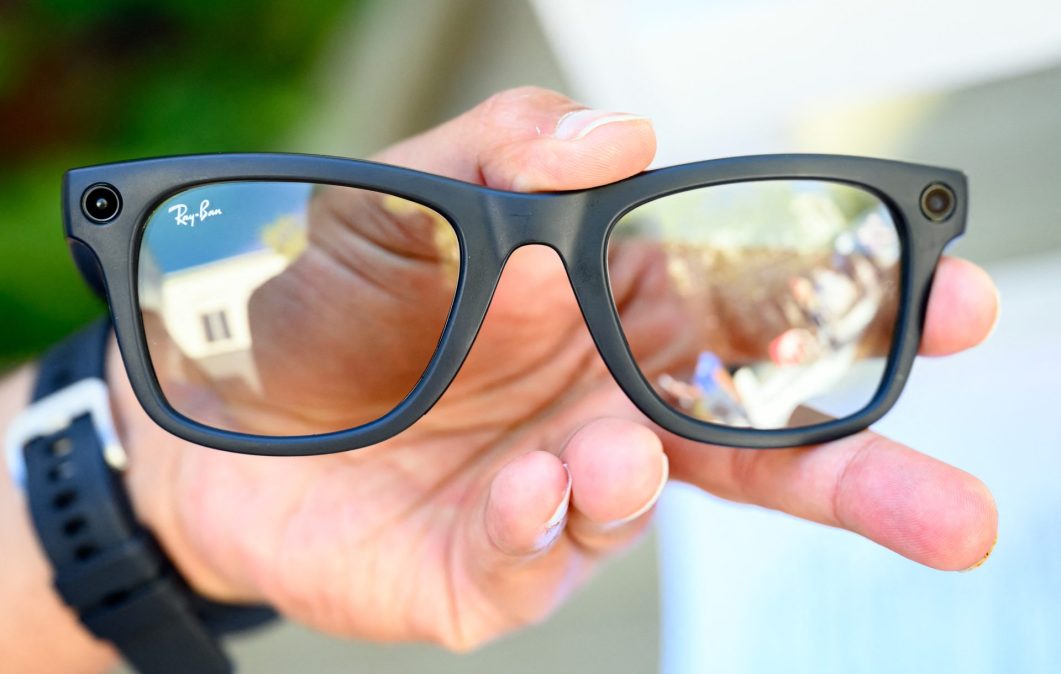
The Air Force now prohibits airmen from wearing Meta AI glasses and similar devices in uniform due to operational security risks. However, guidelines across the Defense Department regarding their use varies, with some services even experimenting with how smart glasses can improve certain missions.
A uniform regulation update posted by the Air Force on Jan. 9 explicitly states that airmen are not authorized to wear Meta AI glasses while in uniform — a change made “for operational security purposes,” a Department of the Air Force spokesperson told DefenseScoop.
The decision comes as the Air Force contends with potential vulnerabilities created by advancements in commercial electronic devices, said Dana Thayer, chief of information protection at the 104th Fighter Wing out of Barnes Air National Guard Base in Massachusetts.
“We’re really looking at, from a security perspective, what are our vulnerabilities or what are ways to reduce vulnerabilities? And personal electronic devices are one of them,” Thayer told DefenseScoop on Thursday. Part of the impetus for the 104th’s warning, which was first publicized in an article written by Thayer this week, was the unit’s conversion to the F-35 Lightning II — a stealth fighter jet with sensitive components.
“With cameras and Apple Watches, what are the vulnerabilities with people wearing them? And then Meta AI brings that to a whole new level of concern for the government essentially, or at least for us at Barnes,” he said. Thayer’s article said the Wing Commander, “directed the ban on AI glasses to be extended to include our civilian force as well as military members not in uniform.”
Meta did not respond to a request for comment from DefenseScoop. A spokesperson for the Defense Department acknowledged the publication’s questions about whether the Pentagon was considering a force-wide ban and if it shared the Air Force’s operational security concerns, but did not answer them by deadline.
Broadly across the military, personal electronic devices such as cell-phones, smart watches and fitness trackers are prohibited in classified spaces to prevent data breaches via their cameras, microphones or GPS capabilities. Outside of secure areas, the devices can be used by personnel and civilians with some varying restrictions between the military services.
But Thayer emphasized the risks posed by Meta’s smart glasses are unique, as wearable AI devices are constantly recording audio and video data while worn. That data is sent to and stored in external cloud-based computing environments where it is used to improve the technology’s artificial intelligence.
“Where is that data being stored? Who has access to it? How is the device safeguarded against hacking? Who’s watching?” Thayer said. “You just really never know where that information is going.”
While the Air Force is doubling down on its ban, some of the other services are looking for ways to leverage industry’s AI-wearables for its own operations.
An Army spokesperson told DefenseScoop the service does not have a ban on Meta smart glasses “as long as they are compliant with” its aesthetic standards and personal electronic device policies.
Last month, Army Secretary Dan Driscoll said the service was experimenting with Meta smart glasses to help soldiers maintain Humvees, using AI to walk them through repairs to the vehicle. In an unnamed equipment development, he said the Army previously tried and failed to build something similar.
“We lit on fire a billion dollars, and the product was awful. It was heavy. It just pulled down on people’s necks. And it was a catastrophe,” Driscoll said in mid-January.
In a statement to DefenseScoop, Army Spokesperson Maj. Pete Nguyen added the service was looking to tap into existing commercial technology to solve soldier-specific problems. Various units across the Army have already hosted Meta representatives or experimented with the company’s smart glasses, he said.
“The experiment focuses on the Infantry Squad Vehicle (ISV) and examines whether AI systems trained on real maintenance tasks can eventually provide reliable, step-by-step assistance comparable to a human expert,” Nguyen said. “The long-term intent is to reduce training time, improve accuracy, and get emerging capabilities into soldiers’ hands faster.”
No other military service has explicitly banned Meta AI glasses, but individual policies around wearable devices and other electronics are varied. In most cases, commanding officers must use their discretion when deciding whether or not to allow their use.
The Navy’s current uniform regulations — last updated in July 2025 — do not specifically contain references to Meta AI glasses. They do, however, prohibit the use of bluetooth, headsets or other hands-off devices while in uniform unless they have been officially approved by commanding officers.
Wearables like Meta AI glasses are covered by the Marine Corps’ uniform policies for personal devices, defined as any electronic that stores, records or transmits data. Like within the Navy, commanders are in charge of regulating these devices within individual commands to ensure operational security standards.
As for the Space Force, guardians are allowed to wear bluetooth devices while in uniform during official duties “or as determined by installation commanders,” according to the service’s policies, which were last updated Jan. 9.