Africom, Morocco to establish new tech-focused training and experimentation center for counterterrorism operations
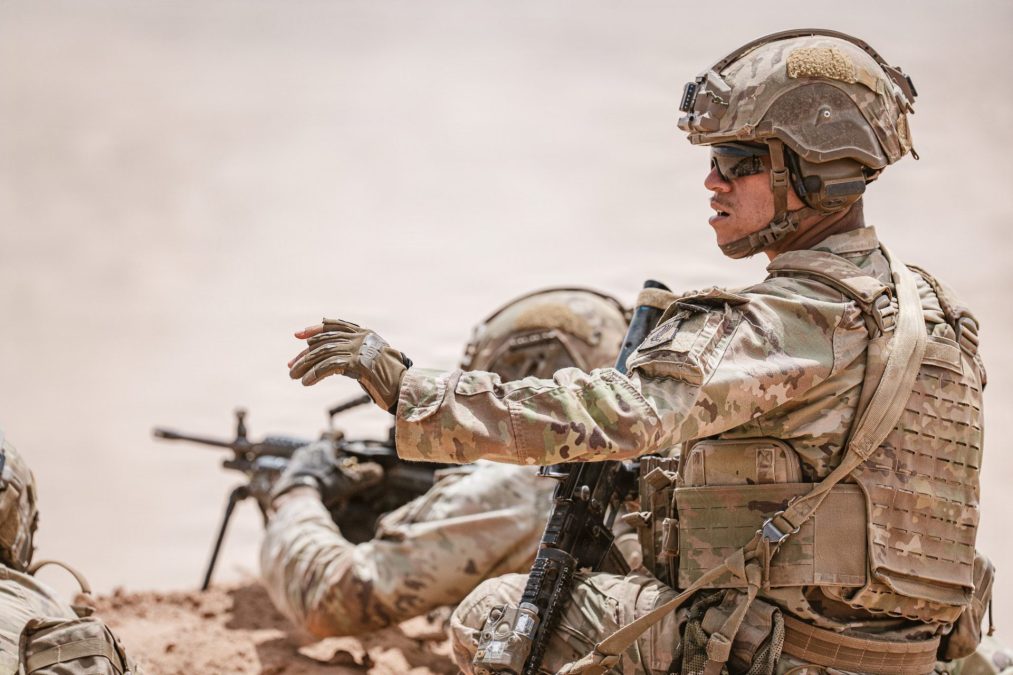
U.S. Africa Command plans to set up a new training and technology testing center in Morocco over the next few years that officials said will help African military partners combat terrorism, including through the use of drones and emerging systems.
The Africa Multidomain Training and Experimentation Center, or AMTEC, will open in Tan-Tan on the southwestern coast of Morocco by 2030, according to an Africom press release, which announced that Morocco and the command had signed a memorandum of understanding to establish the new facility.
Officials said it will include a range complex, “drone academy” and technology center to develop, test and evaluate new capabilities, specifically low-cost, scalable equipment.
U.S. military leaders and experts have recently warned of expanding terrorist networks in parts of Africa, such as Mali and Somalia, the latter of which has seen an increase in strikes against al-Shabab and local ISIS affiliates during the second Trump administration.
In May, Air Force Gen. Dagvin R.M. Anderson, commander of Africom, told lawmakers that while Africa was home to some of the world’s fastest-growing economies, it also encompasses the “epicenter” of global terrorism.
“ISIS leadership is African; al-Qaida’s economic engine is in Africa,” Anderson said. “Both of these groups share the will and intent to strike our homeland. Their affiliates, once isolated nodes, now show increased connectivity.” The command is prioritizing the support of “willing and capable” African partners to help combat those threats, he said.
However, Anderson also said that with a 75% reduction in the command’s posture over the last 10 years and “the draw-down of our allies, we struggle with an intelligence black hole,” which risks Africom “being blind to the gathering dangers and threats in the region.”
Some terrorist groups in the region have also been leveraging new technology, according to recent research from the University of Cambridge which said that members of Boko Haram — operating in Nigeria where the U.S. recently withdrew forces from after a counterterrorism operation — were using frontier, commercial AI models to troubleshoot weapons, plan attacks and design explosives.
The AMTEC includes three elements, parts of which will focus on combatting threats in West Africa, where multiple militant groups have expanded their influence amid a “collapse” of international counterterrorism support, according to the Council on Foreign Relations.
“AMTEC is part of a broader effort to unleash the power of innovation on the continent. This MOU is one step in expanding the U.S’s security and economic development in Morocco and offering industry low-cost opportunities for testing and experimentation,” an Africom spokesperson told DefenseScoop. “We are committed to collaborating with Morocco to increase development and integration of emerging technologies through this MOU.”
The new center will feature a multidomain training area — a range complex where partner forces can train and will have “the ability to operate in the full electromagnetic spectrum as well as contested environments,” according to the Africom release.
The AMTEC will also host a drone academy, where students will learn to use small unmanned aerial systems, deconflict airspace and incorporate sUAS into broader counterterrorism operations.
Notably, Africom will also establish an Innovation and Experimentation Center at the AMTEC to develop and test new technology, specifically “low-cost, scalable solutions,” officials said, embedding members of academia and other institutions into the process. The release did not specify what other low-cost tech the center was hoping to proliferate, but noted it will offer U.S. and Moroccan industry teams an opportunity to test their equipment.
“The Africa Multidomain Training and Experimentation Center will increase readiness and advance capabilities of both nations,” Anderson said in the release. “This partnership represents a great opportunity for U.S. and African defense industrial bases as well as academic institutions to experiment, innovate and develop scalable, adaptable solutions across emerging technologies.”
The Army has also eyed an expansion of its overseas technology testing footprint. At the inaugural low-cost interceptor industry day last month, Secretary Dan Driscoll said the Army is planning to establish a range abroad where the service and defense industry “can start to do much more aggressive testing.”
At the time, he declined to say where the service was planning to create such a range. When asked whether the upcoming Morocco facility will be part of the overseas range, an Army official familiar with the matter did not answer the question, but said the service “is actively looking at ways to modernize and optimize its test and evaluation ranges to keep pace with emerging threats.”
“This is ongoing work, and any decisions on specific capabilities, locations, or timelines will be announced through formal channels once finalized,” the official added. A spokesperson for Africom declined to comment on Driscoll’s announcement.
The press release said that next year’s African Lion exercise — Africom’s largest annual joint exercise — will “serve as proof of concept” for the AMTEC. Headed by U.S. Army Southern European Task Force, Africa (SETAF-AF), African Lion 2026 concluded this spring, including more than 40 countries and focusing heavily on sensor, drone, cyber, autonomous ground vehicle and long-range precision munition capabilities.
Updated on July 15, 2026, at 11:50 AM: This story has been updated to include additional comment from an Africom spokesperson.