Army attempting to cut tech-testing wait times down to 30 days through base access, scheduling website
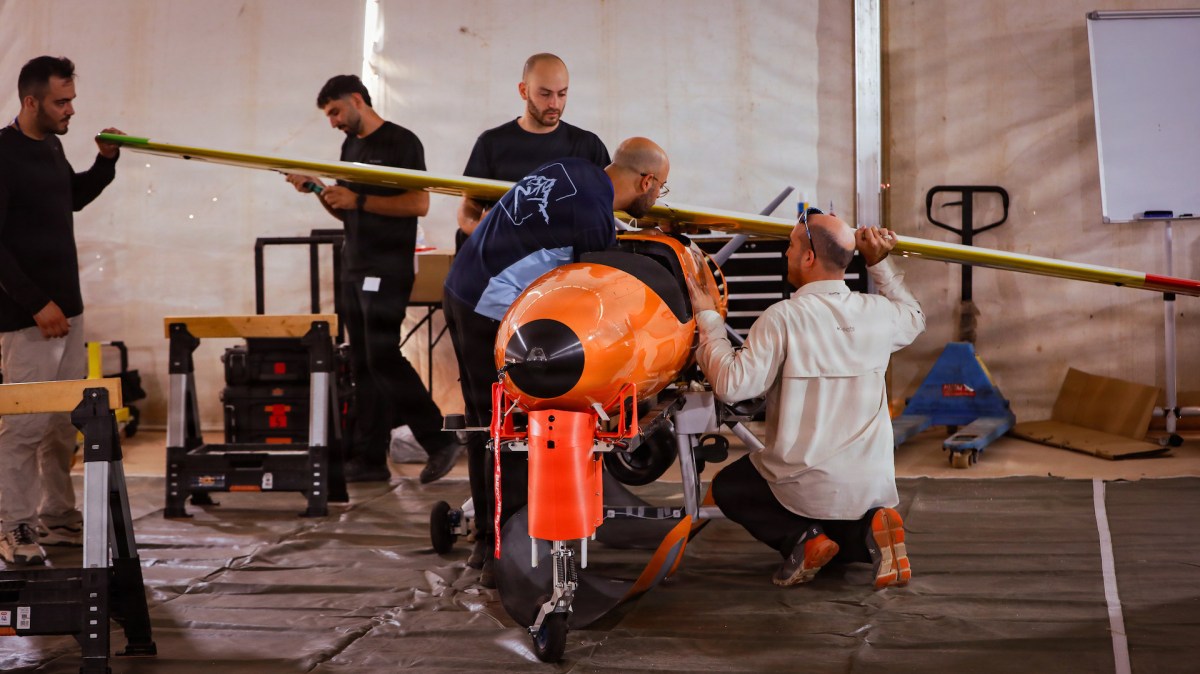
It takes defense companies up to 18 months to book an Army range to test new military technology. Now, the service is trying to cut that wait time to 30 days by opening up multiple bases to industry and launching a “concierge” website for vendors to reserve ranges.
Alongside officials from Michigan, Army Secretary Dan Driscoll on Friday detailed an ambitious plan that he teased in June to boost defense vendor access to the service’s domestic bases and establish a new range overseas, an effort intended to develop equipment faster.
The service is starting with four domestic ranges, one being Camp Grayling in Michigan. The overseas range is located in Morocco, according to Driscoll, who said a start-up recently launched a missile there with less than two weeks notice from the service.
Drone, counter-drone, missile and interceptor technology will be tested at these sites, according to officials and its new scheduling portal, systems the service urgently wants as the Russia-Ukraine conflict has shown that those capabilities are critical for modern conflict and amid the Iran war’s drain on costly, hard-to-make U.S. weapons.
“Sometimes it can take 12 to 18 months for a company that wants to go test the thing that can make a soldier’s life better, that can increase their lethality, and that can keep them safer,” Driscol said, citing feedback from vendors. “That is not sufficient.”
In a new portal, companies can request range reservations and will be paired with a “dedicated concierge” to walk them through scheduling, according to a service press release. Driscoll suggested reservations will open up to additional ranges eventually.
“While submitting a request does not guarantee a vendor’s desired location or timeline due to capacity limits, the Army concierge team will work closely with all applicants to find suitable testing locations and windows,” officials wrote in the release.
The website lists five total ranges and which capabilities can be tested there: Camp Grayling, Michigan, Dugway Proving Ground in Utah, Arizona’s West Cibola Range — a new addition to the Yuma complex — Camp Shelby in Mississippi and the Africa Multidomain Training and Experimentation Center (AMTEC) in Morocco, which the country recently established in partnership with U.S. Africa Command.
“Our goal and what we will publicly hold ourselves accountable to is within 30 days of a request, a company that is capable of getting to a range will get access to either one of our domestic ranges or one of our international ranges abroad,” Driscoll said.
Officials described the initiative as cutting through decades of built-up military bureaucracy. In reference to newly established drone and counter-drone marketplaces, Driscoll said the service was “redoing” the foreign military sales process, but did not detail old hurdles to range access.
“It used to be you [had] to fight through the bureaucracy again and again and again and again, just to get to the range to try to build a thing that can help soldiers,” he added, touting the commercial-like portal. “That is what we are holding ourselves accountable to.”
Driscoll and other military officials have said these ranges will mimic electromagnetic warfare environments, such as those playing out in Ukraine, which are costly for industry to replicate. The Army will host a “special electromagnetic unreliability test” for industry at Camp Grayling in September, hoping to recreate those conditions. It expects the event to repeat quarterly.
Governor Gretchen Whitmer, as well as congressmen Jack Bergman and Tom Barrett, all officials from Michigan, said the initiative would benefit the state’s manufacturing economy.
One company that has benefited from the initiative already is start-up Covenant Industries, which launched its Anthem missile system at ATEC on Thursday. A company executive said the missile was live-fire tested at the Army’s Project Convergence Capstone 6 exercise last month.
“Modeling and simulation are important, but they can’t replace the engineering knowledge gained from flying real hardware,” said Abby Denburg, president of Covenant. “Covenant is preparing to begin delivering production-ready assets for our manufacturing line at the beginning of 2027 and put Anthem into the hands of the operators that need it.”