Michael Coulter, then-CEO of Hanwha Global Defense, speaks during the Warsaw Security Forum 2025 in Warsaw, Poland, on September 30, 2025. (Photo by Marek Antoni Iwanczuk/NurPhoto via Getty Images).
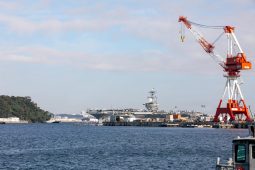
Nimitz-class aircraft carrier USS Theodore Roosevelt (CVN 71) pulls into Commander, Fleet Activities Yokosuka, Japan Oct. 16, 2026. U.S. 7th Fleet, the Navy’s largest forward-deployed numbered fleet, routinely interacts and operates with allies and partners in preserving a free and open Indo-Pacific. (U.S. Navy photo by Mass Communication Specialist 1st Class Hannah Fry)
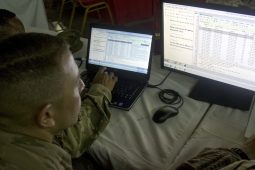
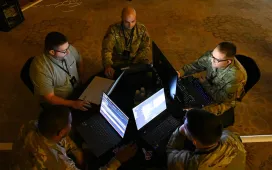
U.S. service members and Kuwaiti Land Forces participate in the game operation cyber justice, an event of the Best Cyber Warrior Challenge at Camp Arifjan, Kuwait, May 15, 2019. (Army Reserve photo by Sgt. Christopher Lindborg)
After the services scrambled to prepare for the new program and leaders warned subordinates about looming pay cuts, the Pentagon authorized the military branches to preserve their…
U.S. Undersecretary of Defense for Policy Elbridge Colby attends an International commemorative ceremony for the 82nd anniversary of the World War II “D-Day” Normandy landings in Langrune-sur-Mer, northwestern France, of June 6, 2026. (Photo by LOU BENOIST / AFP via Getty Images)
The COPA initiative allows for the issuance of cash bonuses up to $2,500 to eligible troops to “recognize exceptional contributions rooted in novel actions, inventions, or technical…
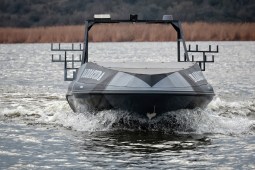
A Barracuda unmanned surface vessel undergoes testing in southern Ukraine, on March 30, 2026. The multifunctional drone boat is developed by the Barracuda unit of the 40th Separate Coastal Defense Brigade, part of the 30th Marine Corps of the Ukrainian Navy. It features a modern tracking system, remote control, and artificial intelligence elements. (Photo by Nina Liashonok/Ukrinform/NurPhoto via Getty Images)
The American military’s recent success with autonomous platforms — as well as the unmanned advances of partners like Israel, Ukraine and Taiwan — offers three main lessons…
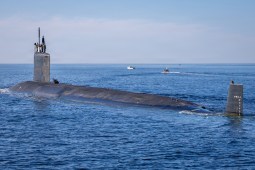
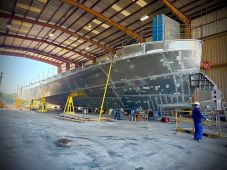
The Virginia-class attack submarine USS North Dakota (SSN 784) has been delivered back to the fleet battle ready, completing a historic first-ever Virginia-class Block III availability at Portsmouth Naval Shipyard, Kittery, Maine Aug. 20, 2026. (U.S. Navy photo by Neil Boorjian)
U.S. Army Soldiers and a DOD contractor assigned to the Regional Cyber Center-Southwest Asia, attempt to win a challenge for points at the 10th annual Best Cyber Warrior Competition in the CENTCOM area of responsibility, Oct. 29, 2024. (U.S. Army photo by Spc. Dean John Kd De Dios)
While the new program is meant to galvanize cyber skill development through escalating pay rates, the initiative is expected to bring significant pay cuts for cyber troops…
The announcement comes less than a week after the service established a Robotic and Autonomous Systems Warfighting Development Center that’s expected to play a major role in…
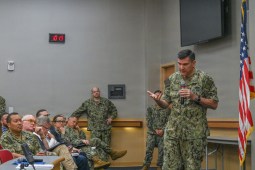
U.S. Navy Deputy Chief of Naval Operations for Integration of Capabilities and Resources Vice Adm. John Skillman leads a town hall meeting onboard NSA Mechanicsburg, Pennsylvania, July 14, 2026. (U.S. Navy photo by Mass Communication Specialist 3rd Class Brendan McCormack)