Navy eyes a ‘mothership’ with drones for future oceanographic survey missions
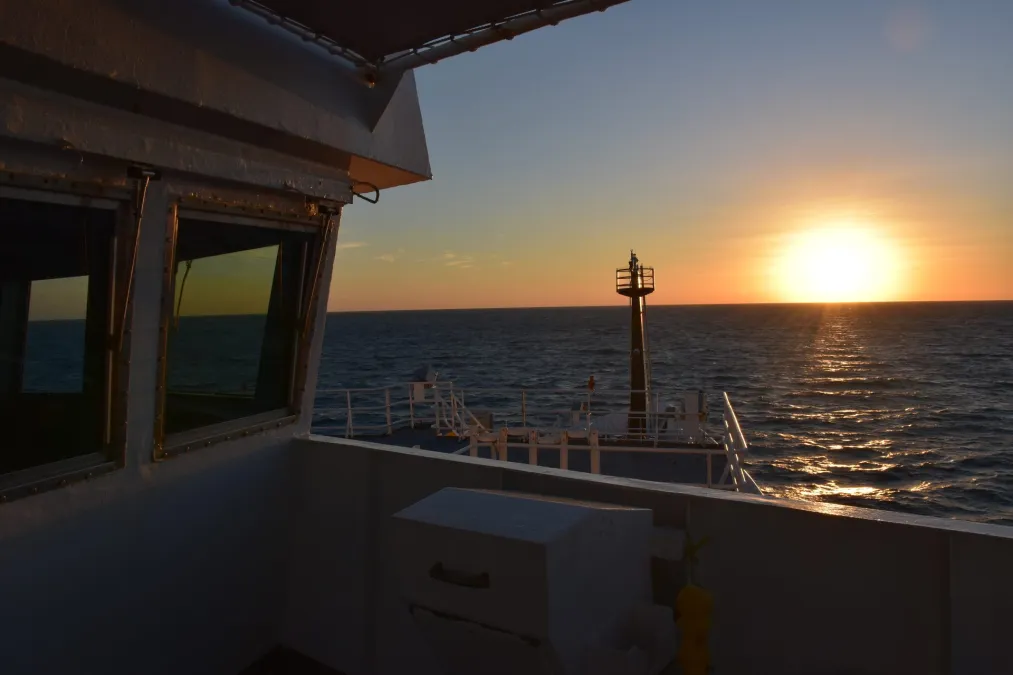
Tucked into the Navy’s budget request for fiscal 2027 is a new plan to identify commercially available vessels and “mothership” designs, existing oceanographic survey platforms, and other mature technologies that map the ocean floor, analyze the marine environment, and maximize undersea warfare capabilities.
The Next Generation Oceanographic Survey Ship — T-AGS(X), or T-AGS Next — is envisioned to replace the aging T-AGS 60 Pathfinder class of ocean-surveying vessels that will reach the end of their service lives in the 2030s, according to recently released budget documents.
“The new capability will be designed to operate worldwide and will integrate manned and unmanned survey systems to increase survey speed, coverage, and persistence,” officials wrote. “The ship will function as a mothership for unmanned underwater, surface, and airborne survey vehicles and will support rapid data processing and dissemination to fleet and joint users.”
The Navy deploys oceanographic survey ships to capture crucial information on the physical, biological, acoustic, and geophysical properties of the world’s oceans — and maritime threats that lurk in them.
The Next Generation Oceanographic Survey Ship, the budget request states, would provide personnel with “persistent, globally deployable” technologies that are “required to support undersea warfare, mine warfare, seabed warfare, safe navigation, and environmental intelligence.”
Broadly, Pathfinder-class ships have underpinned the Navy’s deep-ocean and littoral mapping initiatives since the mid-1990s.
With T-AGS Next, the sea service is shifting away from traditional, manual mapping capabilities toward more automated and uncrewed assets.
“The platform will collect, process, and disseminate high-resolution bathymetric, hydrographic, geophysical, acoustic, and oceanographic data in support of fleet operations and joint force requirements,” officials wrote in the budget request. “Activities will assess unmanned system integration, sensor suites, mission system architectures, and hull design options using commercially available solutions wherever feasible.”
The Navy is pursuing various mothership-type vessels to deploy, command, and recover drone swarms, aerial drones, and underwater craft, as part of its major modernization campaign under the second Trump administration to create a hybrid, “Golden Fleet” of manned and unmanned vessels to extend the U.S. military’s reach and capacity.
This global market research analysis effort for “T-AGS Design and Total Ship Integration” is listed as a new start in the fiscal 2027 budget documents. The Navy proposes $45 million as base funding for the next fiscal year.
“Results of these studies will inform the acquisition strategy and support transition to detail design and construction funded in the Shipbuilding and Conversion, Navy appropriation,” officials wrote.