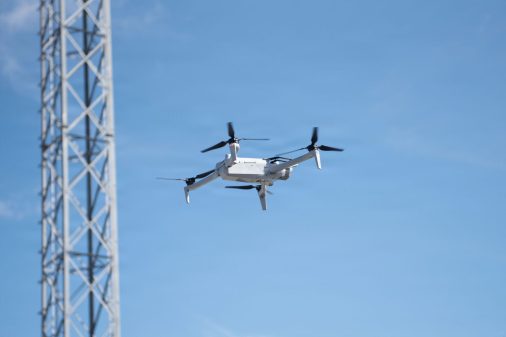
Pentagon unveils Drone Dominance Program with ‘Gauntlets’ to rapidly expand its small UAS arsenal

The Pentagon plans to purchase more than 200,000 industry-made drones by 2027 — with forthcoming orders for 30,000 of those unmanned assets to be delivered by July 2026 — via its new Drone Dominance Program.
This initiative builds on policies and guidance that President Donald Trump and Defense Secretary Pete Hegseth issued this summer to spark growth across the U.S. industrial base and rapidly equip the military with a trusted arsenal of cheap and lethal options for small uncrewed aerial systems.
“Every warfighter must have access to low-cost/attritable sUAS to conduct [One-Way Attack missions, or] OWA,” defense officials wrote in a request for information released Tuesday. “The Drone Dominance Program (DDP) is designed to help industry organize around the need for low-cost, supply-chain secure sUAS manufacturing at scale, urgently.”
In that RFI and on a new website, the Defense Department supplied a first look at its iterative, high-dollar plan to signal demand and propel industry competition by testing and buying a range of small commercial drones over the next two years.
The Pentagon aims to place $1 billion in fixed-price orders through the program, utilizing an authority that enables it to carry out certain prototype projects.
Notably, the DDP will unfold over four phases. Each will start with a “Gauntlet challenge” and end with completed deliveries of production-quality drones from the winners of those events, where military operators will fly and evaluate select, commercial drones in various scenarios.
The highest performing vendors will subsequently receive orders from DOD for 1,000 or more units.
“Scoring will be primarily related to achievement of two missions, likely to include [a] 10.0KM strike across open territory and a 1.0KM strike in simulated urban territory, both with minimum 2KG dummy payload,” the RFI states. “Drone Dominance will focus on overall system performance at cost, production scalability, and ease of use.”
The number of systems purchased by DOD is set to increase with each phase — while the number of chosen contractors is expected to steadily decrease, and the price per unit is anticipated to go down after Phase II. Dates are subject to change, but a table outlining the Pentagon’s initial timeline, prices and plan for purchasing the drones across the four phases is included in the RFI.
“Vendors will bear development and manufacturing risk,” officials wrote in the request. “Payment for sUAS will be made at each delivery.”
The DOD asks companies and stakeholders to respond to this RFI by Dec. 10, with specific feedback regarding “the concerns and challenges industry will face in producing large scale numbers of low cost OWA drones.”
Separately, the department intends to post a request for solutions (RFS) on Dec. 17 that will formally invite companies from the U.S. and allied “Five Eyes” nations to apply for an invitation to the Phase I Gauntlet that’s slated to kick off in February.
The DDP’s launch comes at a time when weaponized, disposable drones are increasingly disrupting contemporary warfare.
The mass deployment of cheap unmanned systems has marked a defining feature of the war in Ukraine, since Russia invaded its smaller neighbor in 2022. The Iran-backed Houthis have also disturbed global shipping routes with armed drones in the Red Sea.
Pentagon officials moved to accelerate the military’s adoption of so-called attritable UAS platforms under the former Biden administration’s Replicator initiative, but it’s unclear how that program is informing the new DDP. And despite significant focus and investments in recent years, the services are confronting serious hurdles as they hustle to deploy different-sized, affordable drones for widespread use.
Further, questions have swirled about how the government will incentivize the commercial industry to surge U.S. production capacity to meet the objectives since Trump and Hegseth unveiled their vision for American “drone dominance.”
In the view of the Association for Uncrewed Vehicle Systems International’s President and CEO Michael Robbins, the DDP demonstrates that the Pentagon is using “smart, tangible incentives to help American industry deliver capability to our warfighters with speed.”
Among other pursuits, DOD officials worked directly with AUVSI and its member companies to shape the RFI and new drone-buying approach.
“By combining fast, pay on delivery contracts with a competitive, merit-based Gauntlet process, the [department] is giving U.S. innovators concrete opportunities to scale production, enhance resiliency in supply chains, accelerate drone delivery to warfighters, and secure America’s drone dominance,” Robbins told DefenseScoop on Tuesday.
A Pentagon spokesperson acknowledged but did not immediately respond to DefenseScoop’s request for more information about the new program.