The Army is hoping for a big new drone by 2028
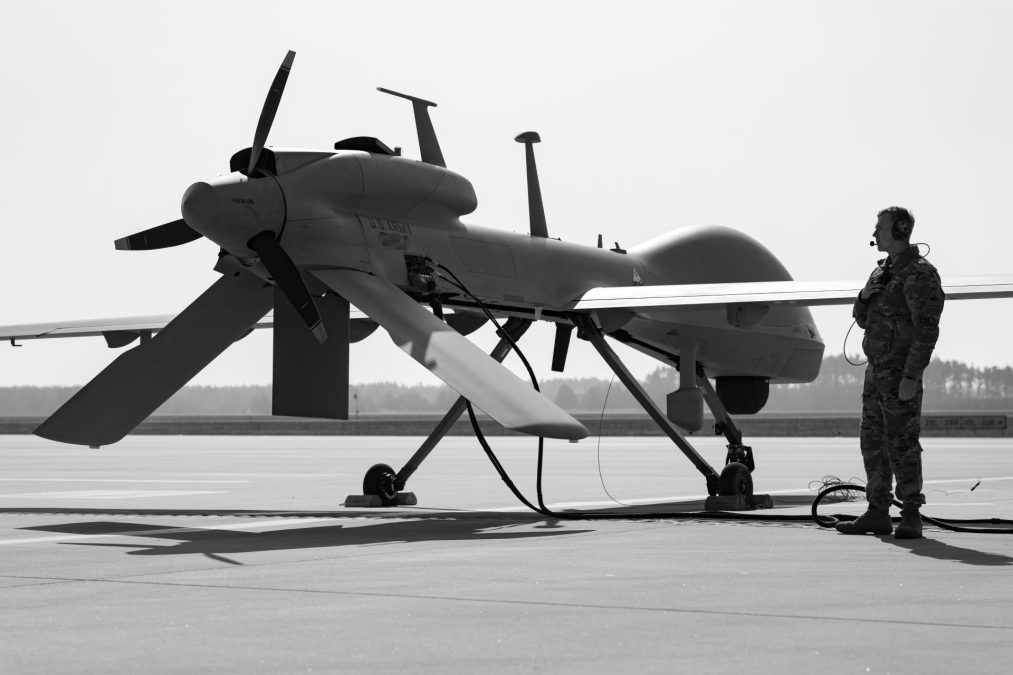
The Army is on the hunt for a new, large drone it hopes to equip its first unit with by fiscal 2028, according to government contracting documents and a service official, an ambitious effort that may replace a more than decade-old platform.
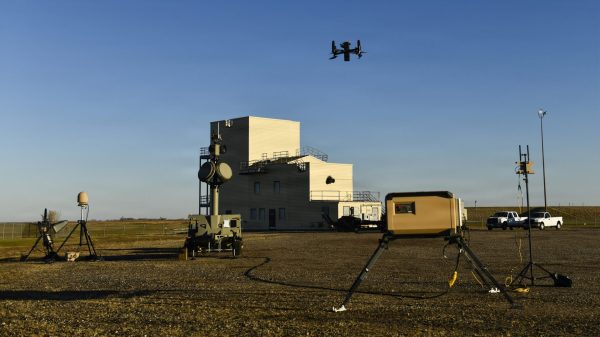
The Army posted a request for information on Friday outlining half a dozen “desired characteristics” for a short/vertical takeoff and landing (S/VTOL) drone. The RFI acknowledged a “pressing need” for a new platform that doesn’t need to take off from a runway, infrastructure that is likely to be an early target for an adversary during a large-scale combat operation.
For years, the MQ-1C Gray Eagle has occupied the skies for division-sized formations, but it requires a runway to launch. As battlefields become more complex, autonomized and rife with contested airspace, the Army wants a more advanced drone that isn’t tied to a runway and can finish the mission even if it loses connection with its operator.
Secretary of the Army Dan Driscoll specifically cited the Gray Eagle as “obsolete” in a public letter announcing the service’s Army Transformation Initiative in May. Breaking Defense also reported that the Army stopped future purchases of the platform.
The aim of the service’s new effort “is taking the division platform, which is currently the Gray Eagle, and greatly expanding the capability, that technology [and] what it provides to our force,” Col. Nicholas Ryan, director and manager for the Army’s Aviation Unmanned Transformation and Lessons Learned portfolio, told DefenseScoop.
The Army posed the RFI as a “challenge” to industry as part of a new push from service leadership intended to quickly adopt technology and avoid the lengthy acquisition processes that have plagued the military for years.
That could mean this new S/VTOL drone might not initially have every characteristic the service is looking for, but it would start getting to soldiers faster. It also means that “we are going to maintain the ability to upgrade and change any part of this platform, including the air vehicle itself” as newer or better technologies become available, Ryan said.
“We don’t need a solution that has everything on the first delivery. If it does, that’s great, but it’s not necessary,” he said. “What we’re kind of starting to realize is some capability right now is better than no capability and waiting 10 years for the gold-plated capability.”
The desired characteristics outlined in the RFI include various sensors, onboard mission software, cyber security measures and autonomous operations options for a Group 4 — one of the larger drone variations — S/VTOL UAS. Ryan said that the war between Russia and Ukraine has demonstrated the need for these capabilities amid its constant signal disruptions and “significant air defense threats,” especially given the proliferation of autonomous drones.
The Army needs to have a drone of that size “that can operate in those areas without requiring a human to be in the loop,” he said. He noted that if the Gray Eagle loses connection with its operator, it will automatically end its mission and return to its station.
“We don’t want that. We can’t afford that in the future,” Ryan said. “We need a platform that can continue its mission even if its signal is jammed or cut off, and so that’s why we’re pursuing autonomous operations for that kind of environment.”
Ryan said that while the Army has not yet defined the cost for this platform, the fiscal 2028 goal for its rollout heavily depends on budget. Part of that effort means working with industry — as well as other services and international partners — to see if it can make this kind of drone at scale and within allocations from Congress.
Buried in the fiscal 2026 National Defense Authorization Act is a section that prohibits the Army from retiring the Gray Eagle without a “capability of equal or greater effectiveness,” according to the bill’s text. Ryan noted that the new S/VTOL “at a minimum has to be more than the existing Gray Eagle today” in categories such as range and especially payload, for example.
Part of that calculation includes weighing the pros and cons between the Gray Eagle and any new system the Army may get from this challenge, Ryan said, as well as how these platforms might perform alongside human aviators and with other services’ systems.
“Right now we’re just trying to see what is the right mix between manned aviation assets, these newer or advanced unmanned aviation assets, and then some of our legacy manned and unmanned platforms,” he said.
The Army’s posting said that responses to the RFI are due Jan. 8.